I Quit Niacinamide for 30 Days — My Skin Barrier Was Trying to Tell Me Something
A raw, unfiltered account of what happened when I stepped away from the world’s most beloved skincare ingredient — and what my skin revealed in the silence.
My skin was speaking to me for months. I was just too busy layering serums to actually listen.
Niacinamide was my everything. My morning ritual, my evening anchor, my travel essential. Dermatologists praised it. Every premium formulation seemed to include it. I had fully bought into the idea that this ingredient was the quiet backbone of any intelligent skincare routine — and for a while, it worked beautifully.
Then, somewhere around month seven of daily use, something shifted. My skin started feeling tight after cleansing. A low-grade flush appeared along my cheeks. Products that once felt luxurious now stung slightly — not dramatically, but enough to notice. Enough to make me pause.
I dismissed it for weeks. Season change. Stress. Maybe a richer moisturizer. But when I finally stopped adding and started listening, I realized my skin barrier had been quietly waving a red flag — and I’d been too focused on my ingredient stack to see it.
So I made a decision that felt borderline radical in today’s skincare culture: I quit niacinamide for 30 full days. No cheating. A complete break. What unfolded taught me more about my skin than seven months of active ingredient use ever did.

First — What Niacinamide Actually Does
Before the 30-day breakdown, it’s worth understanding what niacinamide actually does in the skin — and why it’s become one of the most referenced ingredients in modern skincare science.
- What it is: A water-soluble form of Vitamin B3 active in the skin’s metabolic processes
- Primary benefits: Strengthens the barrier, regulates sebum, fades hyperpigmentation, minimizes pores, soothes redness
- Best concentration: Research supports efficacy at 4% to 5% for most skin types
- Skin types: Generally compatible with all types, including sensitive and acne-prone
- Mechanism: Increases ceramide and fatty acid production — critical for healthy barrier function
- The paradox: While it supports the barrier, overcrowded routines can still lead to barrier disruption through combination effects
“The problem was never the ingredient. The problem was that I had stopped trusting my skin and started trusting my routine instead. There’s a profound difference between the two.”
The Signs My Barrier Was Compromised
The skin barrier doesn’t break dramatically. It erodes quietly. And the signs are easy to misread as your skin just “being difficult.”
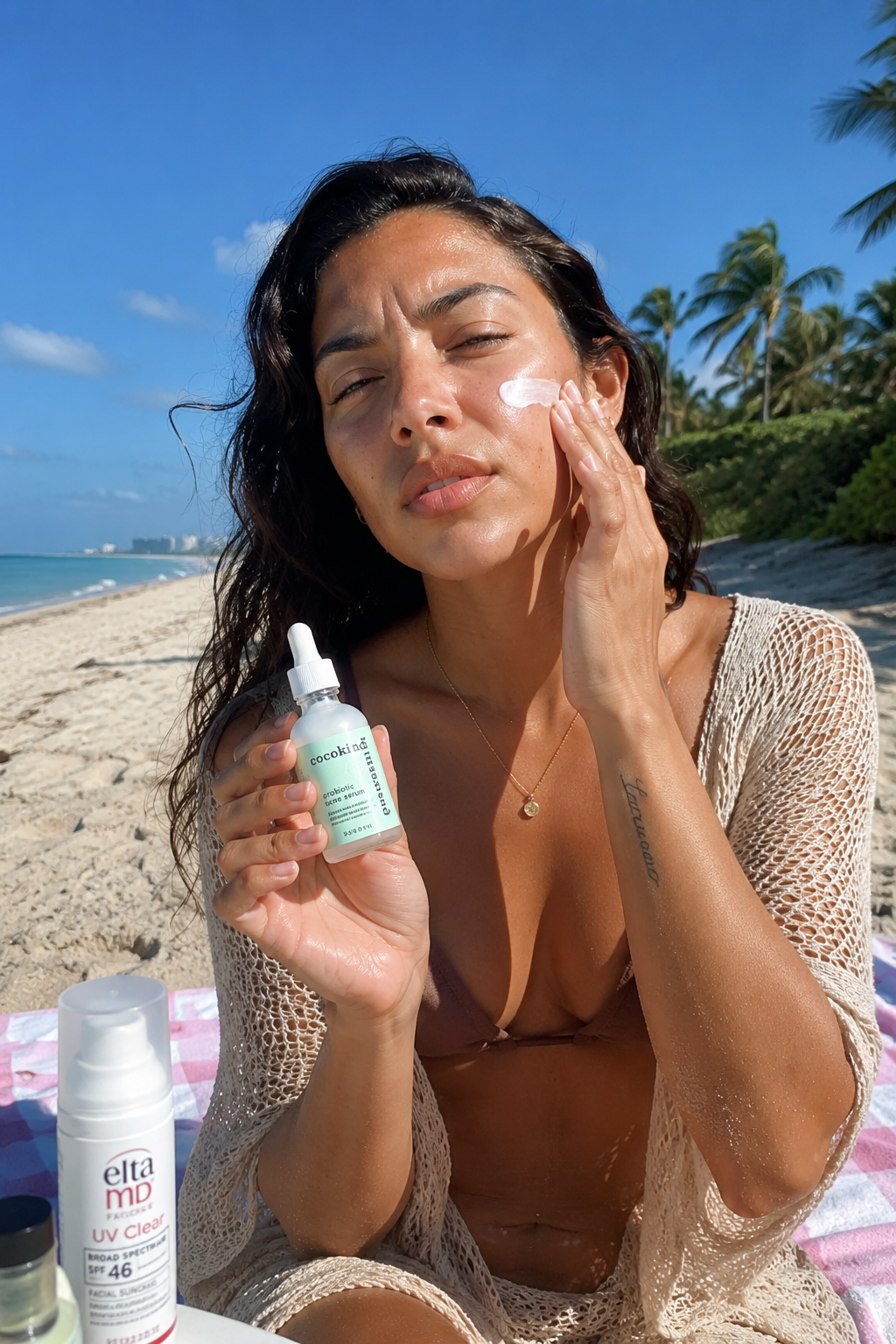
- Post-cleanse tightness — Even with a gentle cleanser, my skin felt like a stretched canvas. A textbook sign of a disrupted lipid barrier.
- Sensitivity to previously tolerated products — A toner I’d used for a year suddenly made my skin tingle. My barrier was no longer protecting nerve endings adequately.
- Oiliness + dehydration simultaneously — The skin’s confused response to barrier damage: overproducing oil to compensate for lost moisture.
- Redness without obvious trigger — Fleeting cheek and nose redness signaled increased transepidermal water loss (TEWL).
- Rough texture despite regular exfoliation — I kept exfoliating thinking texture was buildup. I was sanding already raw wood.
- Products pilling more than usual — Happens when the skin surface is too disrupted to absorb product properly.
The cruel irony? I kept throwing more product — including more niacinamide — at these symptoms, likely extending the very problem I was trying to solve.
The 30-Day Timeline: What Actually Happened
I stripped to three steps: a gentle non-foaming cleanser, a ceramide-rich moisturizer, and SPF 30 in the morning. No actives. No serums. No acids. No niacinamide. Here’s what unfolded.
The Adjustment — Skin Confusion
Days one through seven were unsettling. Skin looked uneven. A brief breakout surge around day four as sebum regulation recalibrated without niacinamide. The urge to add products back was overwhelming. I resisted.
The Calm Begins — Redness Retreats
By day ten, something notable shifted. The low-grade cheek flush calmed visibly. Products stopped tingling. My cleanser felt genuinely comfortable for the first time in months. Post-cleanse tightness reduced by an estimated 70%.
The Revelation — Skin Memory Returns
Week three was revelatory. My skin started demonstrating genuine competence — regulating moisture more effectively without actives. The oiliness-dehydration paradox disappeared. Old breakouts faded without acid intervention.
The Transformation — What Rebuilt Skin Feels Like
Days 22 through 30 were the most interesting. My skin didn’t become perfect — that was never the goal. But it became genuinely balanced. Products absorbed beautifully. Tone more even than in months. Texture smoothed naturally.
What Was Actually Happening in My Skin
Understanding Transepidermal Water Loss (TEWL)
The skin barrier’s primary function is to regulate transepidermal water loss — the process by which water evaporates through epidermal layers. A healthy barrier, rich in ceramides, cholesterol, and free fatty acids, keeps TEWL minimal.
When the barrier is compromised — through over-exfoliation, ingredient overload, or pH disruption — TEWL increases significantly. This creates the simultaneous experience of oiliness and dehydration so many people mistake for a skin type issue when it is actually a barrier health issue.
Niacinamide supports ceramide synthesis, which genuinely benefits barrier function. However, layered within a complex routine of multiple actives, the cumulative effect on surface pH and lipid structure can negate these benefits entirely — creating a counterproductive cycle.
What I Learned About Ingredient Overload
Modern skincare marketing has convinced us that more sophisticated routines equal better skin. A cleanser, toner, essence, vitamin C serum, niacinamide serum, hyaluronic layer, peptide moisturizer, and SPF — all before 8 AM. It sounds intelligent. But for a compromised barrier, it is the precise opposite of what’s needed.
- Every additional active introduces a new variable that the skin must process — with cumulative effects rarely studied at an individual level.
- The skin’s acid mantle has an optimal pH between 4.5 and 5.5. Multiple toners and serums applied sequentially can temporarily disrupt this balance even when each product is correctly formulated.
- Ceramide depletion is cumulative and silent. You don’t feel it depleting day by day — you feel the result six months later when your barrier is visibly struggling.
- Active ingredients require a healthy barrier substrate to perform properly. Applying niacinamide or acids to a compromised barrier is like painting a mural on a crumbling wall — the surface won’t hold it.
- The skin has its own recovery intelligence. Given minimal but adequate support, it will consistently work toward homeostasis — but it cannot do this while processing a constant influx of actives.
The Routine I Built After My Reset
I did eventually reintroduce niacinamide — but with a fundamentally different philosophy. A single, well-formulated 4% serum, used four evenings per week, within a routine that prioritizes barrier fundamentals first.

“The goal of skincare is not to layer as many beneficial ingredients as possible. The goal is to create conditions in which your skin can function optimally. Those two objectives are very different — and confusing them is the source of most skincare frustration.”
Barrier-First Products Worth Trusting
Carefully selected for their ceramide-rich formulations and barrier-repair credentials — these are what carried my skin through the reset and beyond.
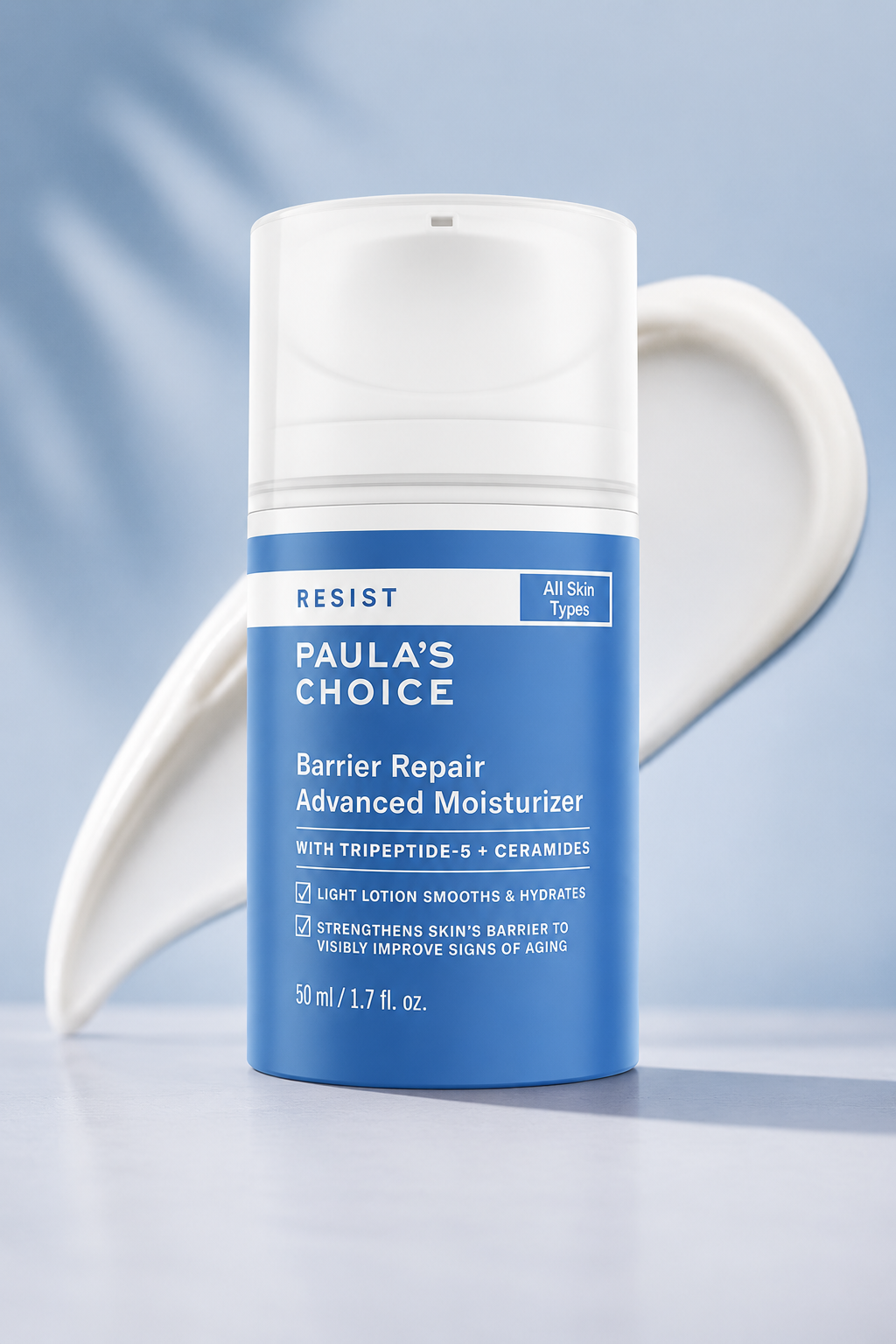 GlowingSkinHub Pick
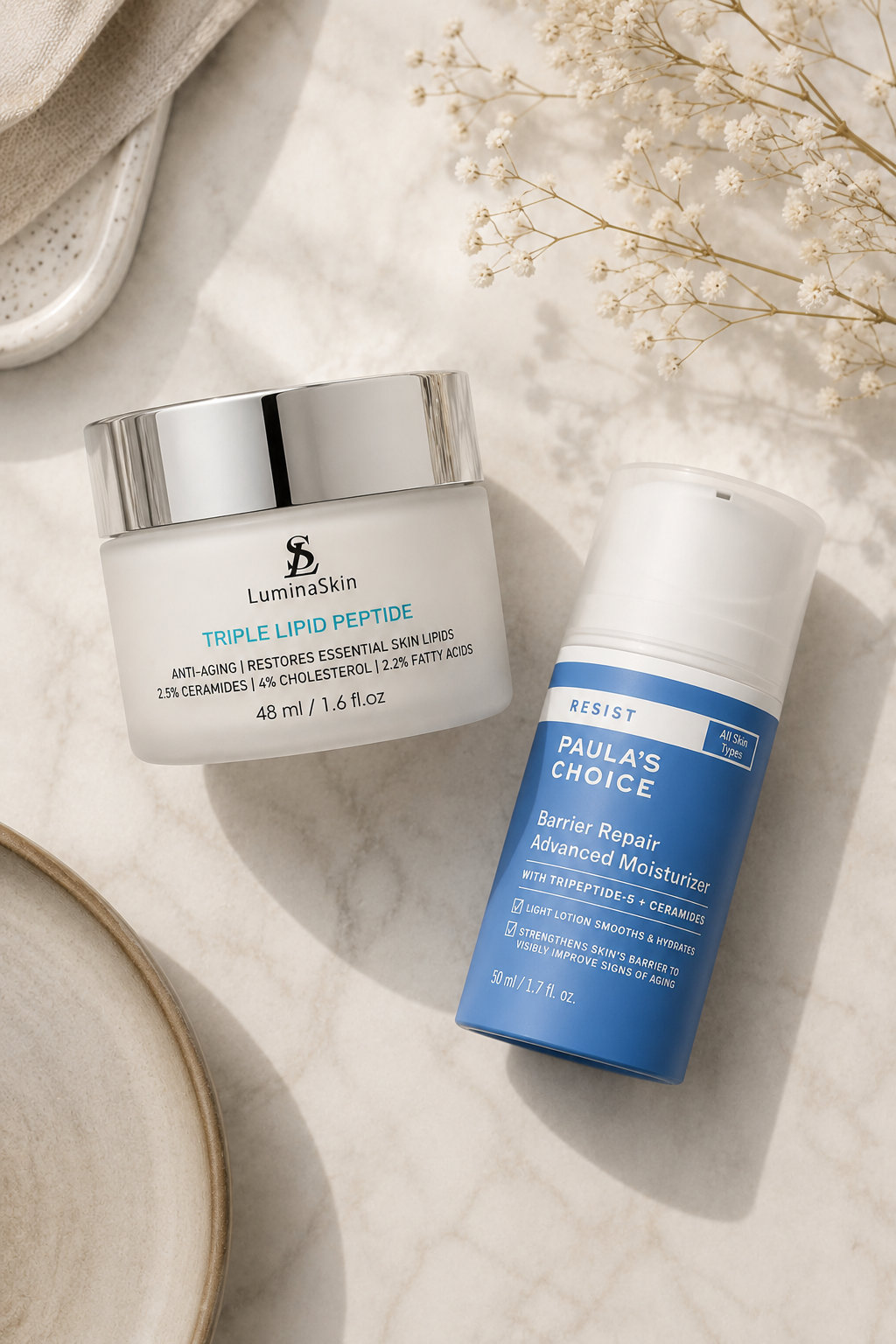
Paula’s Choice Resist Barrier Repair Advanced Moisturizer
A ceramide-rich, fragrance-free formula engineered to restore the skin’s protective lipid structure. Ideal for the reset phase and beyond — this is the moisturizer that carried my barrier through 30 days.
- Ceramide-rich for barrier restoration
- Fragrance-free and non-irritating
- Suitable during active barrier recovery
- Absorbs without heaviness or greasiness
Best for: Anyone experiencing barrier compromise, sensitivity, post-active recovery, or over-exfoliation damage.
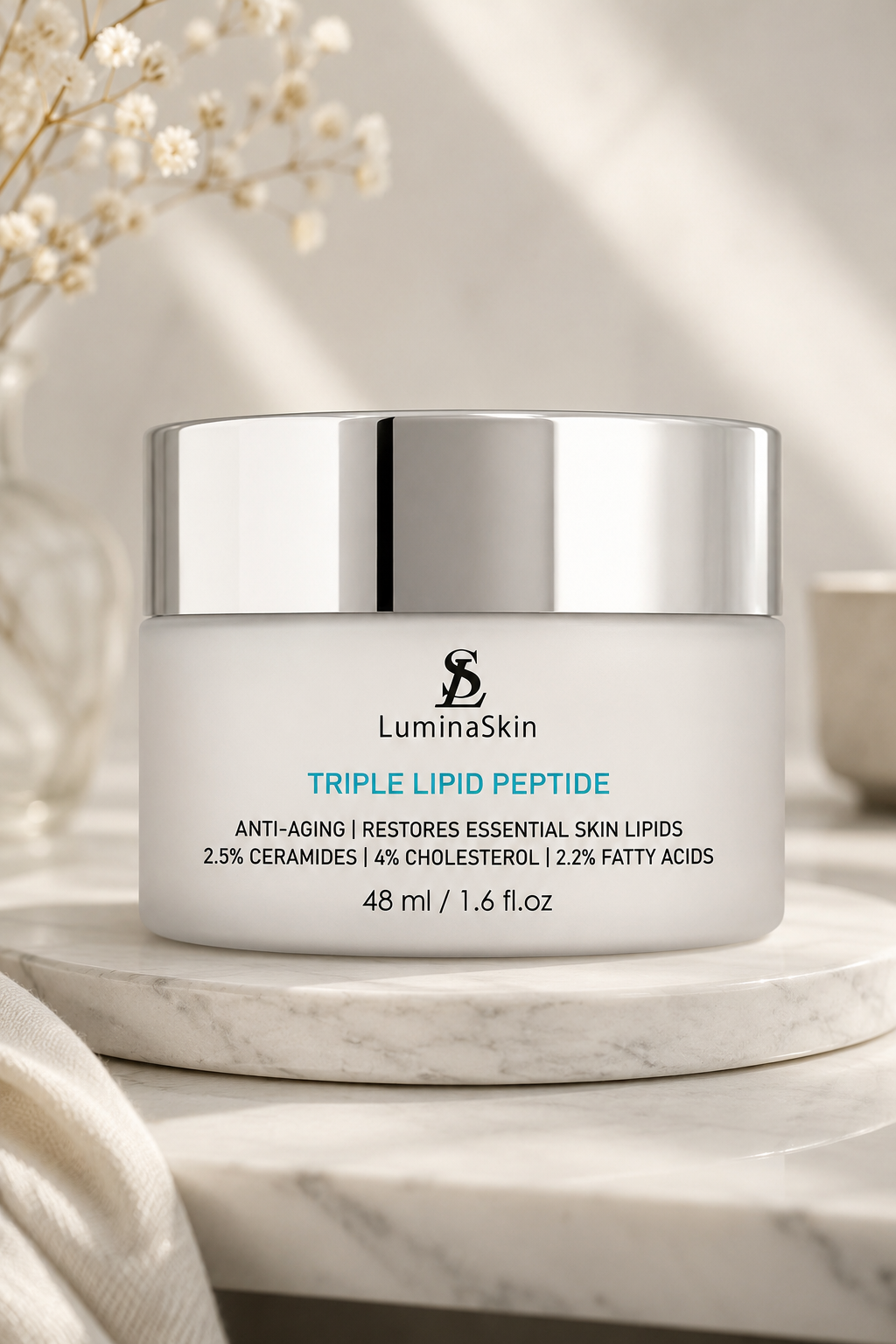 Advanced Formula
Triple Lipid Peptide — Restore & Fix Mature Skin Advanced Anti-Aging Cream
A high-performance barrier restoration cream combining triple lipid complex with peptides for visibly radiant, smooth skin. Excellent for post-reset routines or those navigating mature skin concerns alongside barrier sensitivity.
- Triple lipid complex strengthens barrier long-term
- Peptides support skin structure and firmness
- Addresses mature skin alongside barrier repair
- Visibly improves radiance and smoothness
Best for: Mature skin types, those seeking barrier repair with anti-aging benefits, or anyone 35+ wanting a comprehensive recovery cream.
GlowingSkinHub may earn a small commission from purchases made through affiliate links above, at no extra cost to you. We only feature products we genuinely believe in and would recommend to a close friend.
Signs Your Barrier Needs a Reset
- Products that previously felt comfortable now sting, tingle, or burn on application
- Skin feels dry and tight despite consistent moisturizer use
- Redness or flushing without an obvious trigger like heat or exercise
- Persistent texture despite regular exfoliation (which is likely worsening the issue)
- Skin looks dull or grey even with adequate sleep and hydration
- Experiencing both excessive oiliness and dry patches simultaneously
- Makeup pilling or looking patchy by midday
- Constantly chasing balance by adding more products to your routine
If three or more of the above resonate, it may be worth considering a period of intentional simplification — not as a permanent retreat from active ingredients, but as a diagnostic reset that allows you to understand your skin’s true baseline.
So — Should You Quit Niacinamide?
Probably not permanently — but possibly temporarily. Niacinamide, at appropriate concentrations, within a simple barrier-supportive routine, is genuinely one of the most well-researched skincare ingredients available. The science is sound.
Rather than asking “should I stop using niacinamide,” ask yourself: “Is my current routine creating more complexity than my barrier can absorb?” If you’ve been adding, layering, and experimenting without giving your skin time to stabilize — a reset period may be exactly what your skin has been asking for.
Get FREE: The Skincare Detox Guide PDF
Your complete step-by-step barrier reset roadmap — what to stop, what to start, and exactly how to rebuild your skin intelligently. Delivered instantly to your inbox.
Frequently Asked Questions
What 30 Days Without Niacinamide Truly Taught Me
This experiment changed the way I approach skincare — not just in what I use, but in the fundamental relationship I have with my skin. I spent years treating it like a canvas to be corrected and optimized. My 30-day break taught me to treat it like a living, communicating partner with its own language and profound capacity for self-regulation.
The luxury of great skin, I’ve come to understand, is not found in a ten-step routine featuring the most celebrated ingredients of the moment. It’s found in the discipline of simplicity — in knowing your skin well enough to distinguish between what it needs and what the skincare industry has convinced you it needs. Those are, very often, different things.
“The most sophisticated thing you can do for your skin in an era of infinite options is to choose fewer, better, and with genuine intention. Simplicity is not a compromise — it is a philosophy. And it is, perhaps, the most radical act in modern skincare.”