"I Used Only 2 Products for 14 Days — Here's What Actually Happened to My Skin"
I Used Only 2 Products for 14 Days — Here's What Actually Happened to My Skin
"Less is more — until you're standing in front of a 12-step routine wondering which product is actually making things worse."
I said that to myself on a Saturday morning in mid-July, staring at my bathroom counter. Seventeen different products lined up in a row — serums, toners, acids, retinoids, spot treatments, sleeping masks. Seventeen. For one face. And my skin looked genuinely terrible.
Here's the thing that kept bothering me: the more I added, the worse things got. My face was constantly red. New breakouts showed up in places I'd never broken out before. Everything stung when I applied it — even products I'd been using for months. The texture was this strange combination of flaky and oily at the same time. I'd spent somewhere around $800 in six months and had nothing to show for it except more problems.
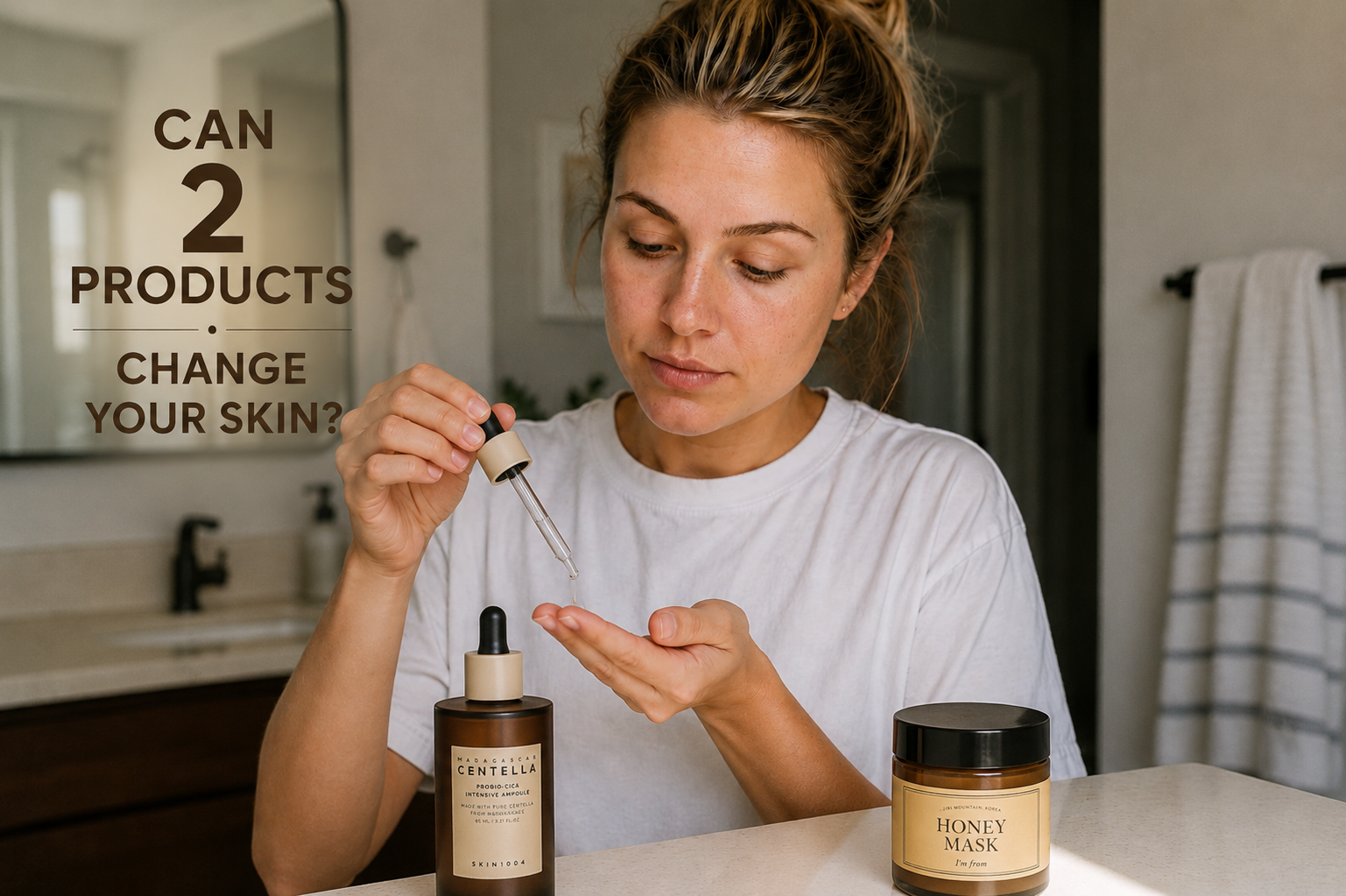
So one morning I just... stopped. I pulled sixteen products off the counter and put them in a drawer. Left out two: a gentle cleanser and a basic moisturizer. That's it. No actives. No serums. No treatments. Just the bare minimum to clean my face and keep it from drying out.
Fourteen days. Two products. I told myself I wouldn't cheat, even when it felt like I was doing nothing.
What happened over those two weeks surprised me more than anything I'd tried before — and I'd tried a lot.
If you think your routine might be causing more harm than good, this is worth reading first: The Skin Barrier Blueprint: Is Your Skincare Routine Actually Ruining Your Skin?
— Glowing Skin Hub Editorial Team · August 2026
The More-Products Problem: Why Adding Things Can Make Skin Worse
What's actually going on when you layer too many actives — and why pulling back can help your skin recover.
How Too Many Actives Can Damage Your Skin Over Time
Your skin barrier — the outermost layer — is made up of a mix of ceramides, cholesterol, and fatty acids that work together to keep moisture in and irritants out. It's not complicated, but it is easy to disrupt.
When you layer multiple actives — retinoids, AHAs, BHAs, vitamin C, niacinamide, peptides — each one affects that barrier differently. Retinoids speed up cell turnover. Acids break down the bonds between cells. Vitamin C changes the pH. The effects don't just add up — they tend to compound on each other.
The result: a barrier that never fully recovers. Chronic low-grade irritation. Constant moisture loss. Skin that reacts to things it used to tolerate fine. And, frustratingly, more breakouts — because your skin overproduces oil when it's dehydrated.
How Stripping Back Gives Your Skin Room to Repair
A 2-product reset isn't about giving up on skincare. It's about removing everything that's interfering so your skin can do what it's designed to do — repair itself.
- Gentle Cleanser — Removes dirt and buildup without stripping the skin's natural oils. A pH-balanced cleanser keeps the acid mantle intact.
- Simple Moisturizer — Gives the barrier back what it needs: ceramides, cholesterol, fatty acids. No actives, no fragrance, no extras. Just repair.
When you stop hitting the skin with new irritants every day, it can actually heal. The redness calms down. The moisture loss slows. The breakout cycle often breaks. It doesn't happen overnight, but it does happen — usually within 7 to 14 days.
🔗 Related Read: Not sure if your barrier is actually damaged? The Skin Barrier Blueprint has a diagnostic quiz that can help.
What the Research Says About Recovery Time
Research published in the British Journal of Dermatology found that skin with a damaged barrier needs at least 7–14 days of no active ingredients before ceramide production returns to normal. During that window, water loss through the skin drops by roughly 40–55%, and the cells that hold the barrier together improve their adhesion by up to 60%. That's a meaningful recovery — and it happens without any special treatments, just time and the right basics.
The point of a 2-product reset isn't to abandon everything you've built — it's to give your skin the uninterrupted time it needs to recover before you start layering things back in.
The 14-Day Diary
Two products. No actives. Here's what actually happened — including the parts where I wasn't sure it was working.
Not in the way I thought.
The first day was harder than I expected — not physically, but mentally. I washed my face, put on the moisturizer, and just... stood there. The urge to reach for a serum or spot treatment was almost automatic. I'd been reaching for those things for so long that doing nothing felt wrong, like I was being lazy or making a mistake.
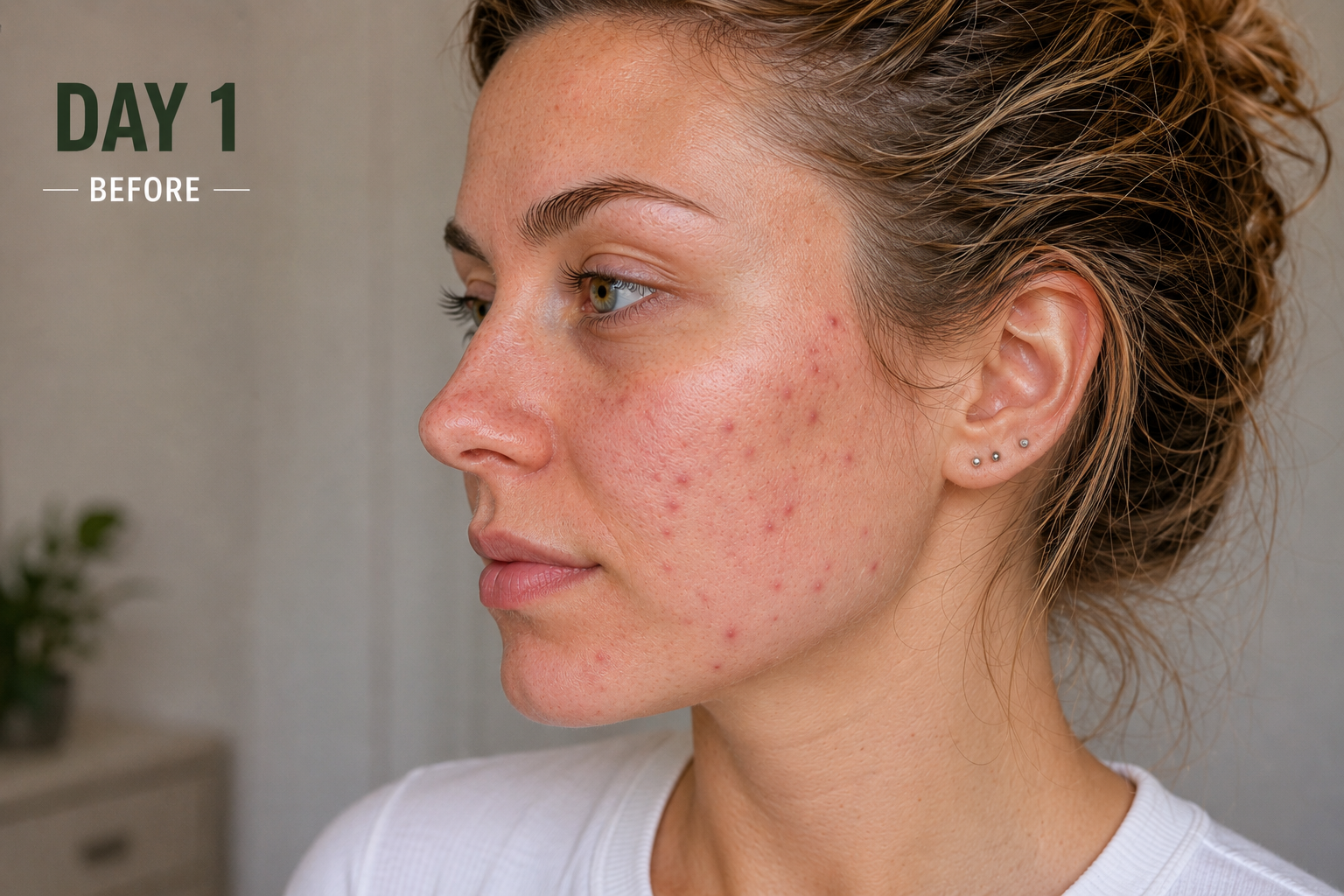
But I held off. Cleanser, moisturizer, done. Within 48 hours I noticed one thing I wasn't expecting: nothing stung. For months, almost every product I applied had produced this low-level burning that I'd just accepted as normal — "that's the actives working." It wasn't. Looking back, it was just irritation I'd gotten used to ignoring.
By Day 4, the redness around my nose and cheeks was starting to fade. Not dramatically — I didn't wake up with perfect skin — but the constant flushed look I'd had for months was noticeably quieter. It was subtle enough that I almost missed it.
Breakouts in the first five days were unpredictable. Two new spots on my chin showed up, which was discouraging. But they were smaller and less inflamed than what I'd been dealing with on my full routine. I wasn't sure yet if this was going to work.
More stable.
Around Day 6 or 7, something changed that I hadn't expected. My skin stopped bouncing between oily and dry throughout the day. For months, I'd been blotting by noon and flaking by evening — never just... normal. That volatility just stopped. My skin found some kind of middle ground and stayed there.
The explanation makes sense in hindsight: when you stop stripping the barrier with actives every day, your oil glands don't need to overcompensate anymore. The dehydration eases. The inflammation settles. Things stabilize. It's not magic — it just takes time without interference.
The texture on my forehead and chin — which had been rough and uneven from months of acid overuse — was noticeably smoother by Day 9. Not perfect, but the sandpaper feeling was mostly gone. I hadn't exfoliated at all. My skin was just doing it on its own, now that it wasn't constantly damaged.
The spots from Days 1–5 had completely flattened by Day 10 without any spot treatment. They just healed. I kept expecting new ones to appear, but they didn't.
genuinely better.
By Day 11, I stopped checking my skin every hour or two. That might sound like a small thing, but it wasn't — for months my routine had created this low-level anxiety loop. Check skin, see problem, add product, check again, see new problem. The reset broke that cycle, almost without me noticing.
The most notable thing in the final days was what didn't happen: no new breakouts. Not one, from Day 5 onward. The constant low-grade inflammation that had been fueling them — triggered by too many incompatible products — was gone. I hadn't changed my diet, my sleep, or anything else.
The dark marks left from older breakouts had faded quite a bit — maybe 50–60% lighter than they were two weeks ago. That's not from any treatment. It's just what happens when your skin gets uninterrupted time to repair itself.
By Day 14, my skin wasn't flawless. I still had some texture on my forehead, one fading mark on my chin. But it was calm, resilient, and not actively fighting anything — which is more than I could say for the previous six months.
The Exact Products I Used for All 14 Days
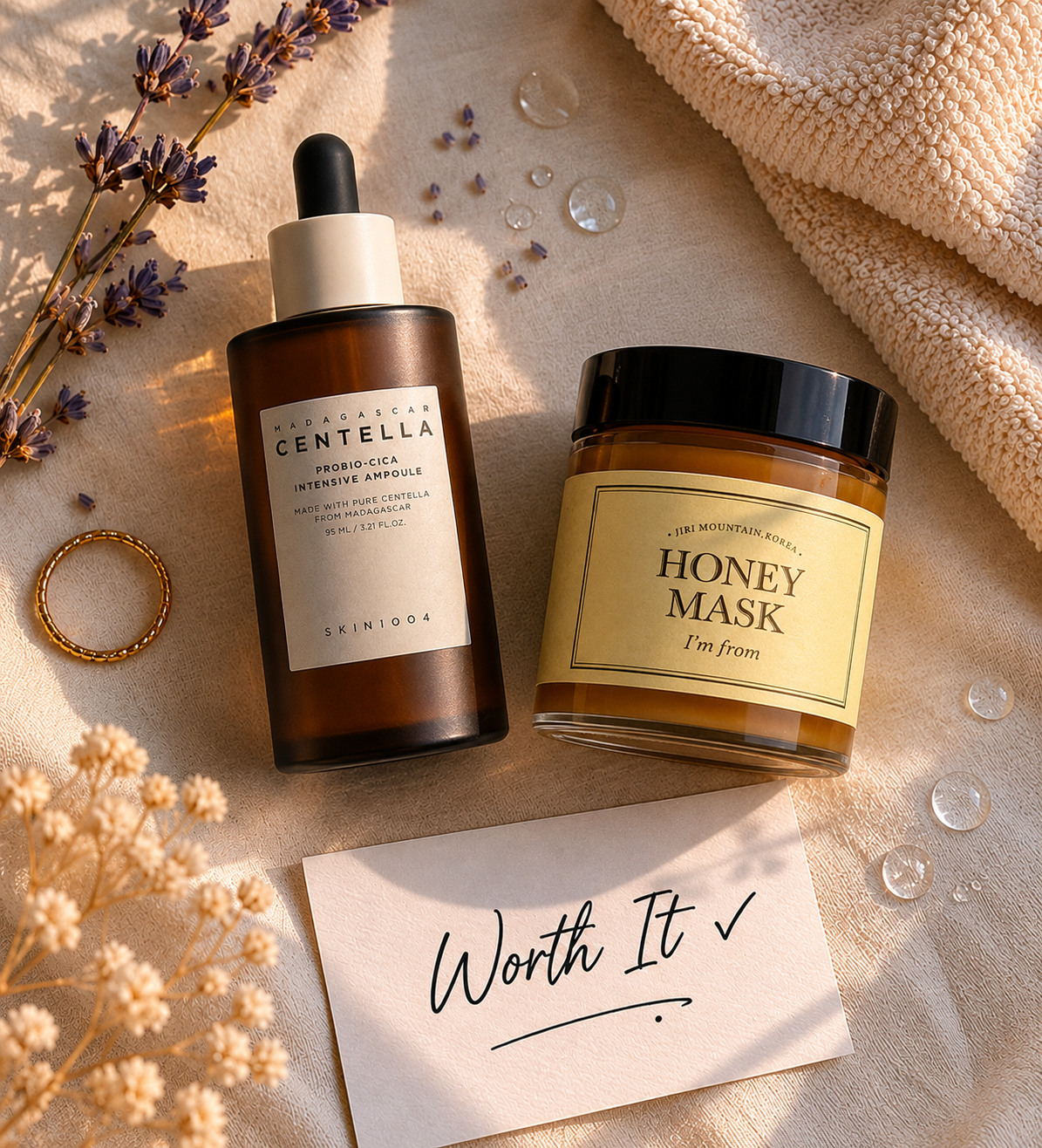
One gentle cleanser. One barrier-repair serum. Used consistently, morning and night, for the full two weeks.
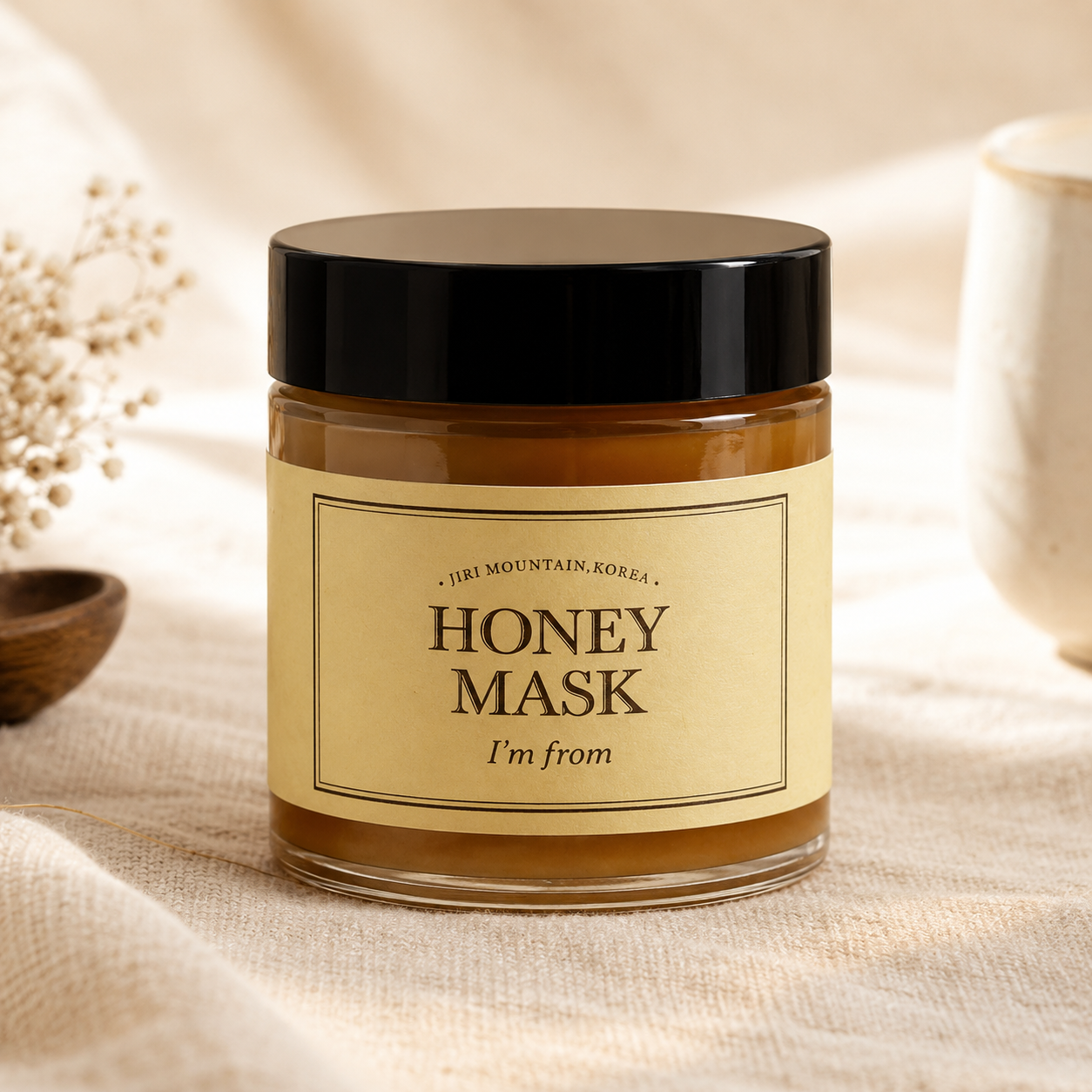
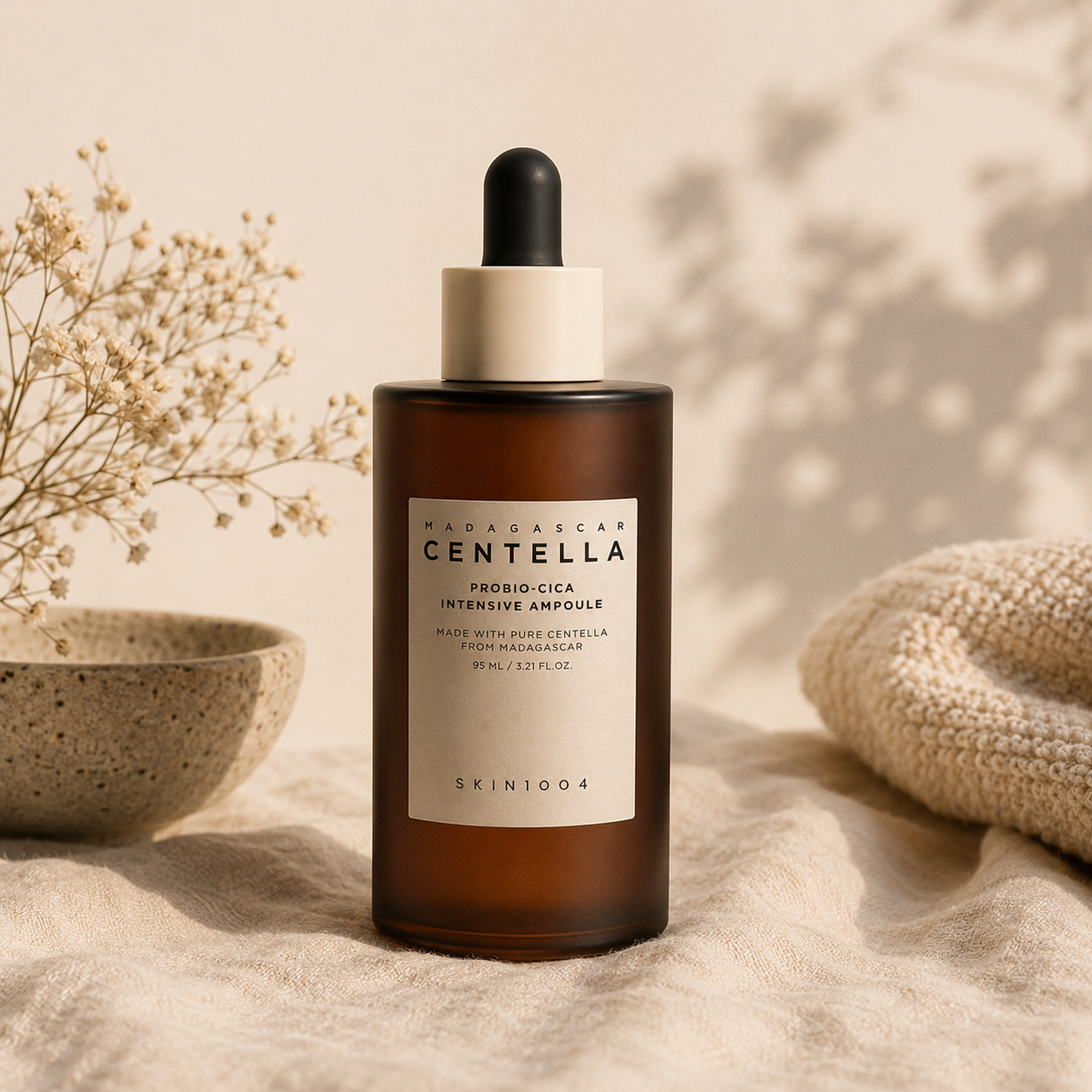
Both products were used exactly as described for the full 14 days. SPF 50 PA++++ mineral sunscreen was added in the morning only — not counted as part of the 2-product core routine.

Honest Takeaways From 14 Days
- You're using 5 or more products daily and your skin keeps getting worse.
- New products cause stinging or redness almost immediately — your barrier is probably more irritated than you realize.
- You're breaking out more as you add more products, not less.
- Your skin swings between oily and dry in the same day — that's often a dehydration and overstripping issue.
- You genuinely can't tell what's causing the problem because there are too many variables in your routine.
- Stopped the constant irritation cycle — skin could finally repair without something new disrupting it each day.
- Moisture loss slowed significantly — skin stopped feeling tight or dry by midday.
- Existing breakouts healed on their own — without spot treatments, just uninterrupted healing time.
- No new breakouts after Day 5 — the inflammation driving them had settled down.
- A cleaner baseline — now I can add actives back one at a time and actually know what each one does.
🚫 Cut out entirely for 14 days: All Retinoids · All AHAs · All BHAs · Vitamin C · Niacinamide (if layered with actives) · Peptides · All Treatments · All Serums · All Essences · All Toners
Get Our 7-Day Skin
Barrier
Repair Checklist
The exact 7-day daily checklist to rebuild your skin barrier — symptom tracking, recovery milestones, and product reintroduction guide — printable PDF.
Zero spam. Unsubscribe at any time.
Questions People Actually Ask About This
Straightforward answers — no filler, no hype.
Probably not — but this is the fear that keeps most people stuck in routines that aren't working. The idea that stopping actives means losing progress assumes that actives are working in the first place. If your barrier is compromised, they often aren't — they can't penetrate properly, they can't do their job, and they're mostly just irritating skin that's already struggling.
Here's what actually happens: actives work better on a healthy barrier. The collagen benefits from months of retinoid use don't disappear in two weeks. Your skin doesn't forget that progress. What you lose is the chronic irritation that was slowing everything down.
After the reset, actives often work noticeably better because the barrier is finally healthy enough to let them in.
Yes, a 2-product routine can be permanent — if your skin is doing well on it, there's no rule that says you need to add more. Plenty of people do fine long-term with just a cleanser, a moisturizer, and SPF. If your skin is calm, clear, and not giving you problems, why change it?
That said, if you have specific things you're trying to address — fine lines, hyperpigmentation, persistent acne — you'll eventually want to bring targeted actives back in. The difference is doing it carefully.
The reset isn't about staying minimal forever. It's about going back to basics so you can rebuild intentionally.
A few spots in the first few days is pretty common and not a reason to stop. When you cut multiple actives at once, your skin goes through a short adjustment period — oil production recalibrates, and you might see 1 or 2 spots surface before things settle. That happened to me in Days 3–4.
The thing to watch for is the nature of those breakouts. Reset breakouts tend to be smaller, less inflamed, and they heal faster. They look different from the kind of cystic, persistent spots that come from chronic barrier damage or hormonal triggers.
For most people, the initial breakouts from a reset flatten out by Days 7–10 as the skin stabilizes. But everyone's different — there's no single timeline that applies to everyone.