I Put Beef Tallow on My Face for 21 Days | Glowing Skin Hub ↑ Affiliate Disclosure: This article contains affiliate links. We may earn a commission if you purchase through our links — at no extra cost to you. Read full disclosure ↓ Glowing Skin Hub Skin Science 21-Day Experiment ✦ 21-Day Experiment — TikTok vs Science I Put Beef Tallow on My Face for 21 Days — Here’s What Actually Happened I gave TikTok’s most controversial skincare trend a full 21-day trial — with daily photos, a dermatologist’s perspective, and zero filter on the results. 🕑 16 min read 📅 Updated 2026 🔬 Experiment-Based 🇺🇸 US Audience 📷 Daily Photo Documented 🔬 Science Referenced 🚫 No Brand Sponsorship ✓ Honest Results Only 🌿 Ashwani Soni...
Get link
Facebook
X
Pinterest
Email
Other Apps
Why Your Acne Keeps Coming Back (Even After Using “Good” Products)
Get link
Facebook
X
Pinterest
Email
Other Apps
-
Why Your Acne Keeps Coming Back (Even After Using "Good" Products)
⚠️ Affiliate Disclosure: This post contains affiliate links. If you click through and make a purchase, I may earn a small commission — at no extra cost to you. I only recommend products I genuinely trust.
Acne Science · Why Products Fail You
Why Your Acne Keeps Coming Back (Even After Using "Good" Products)
Research-Backed
8 min read
Evidence-Based
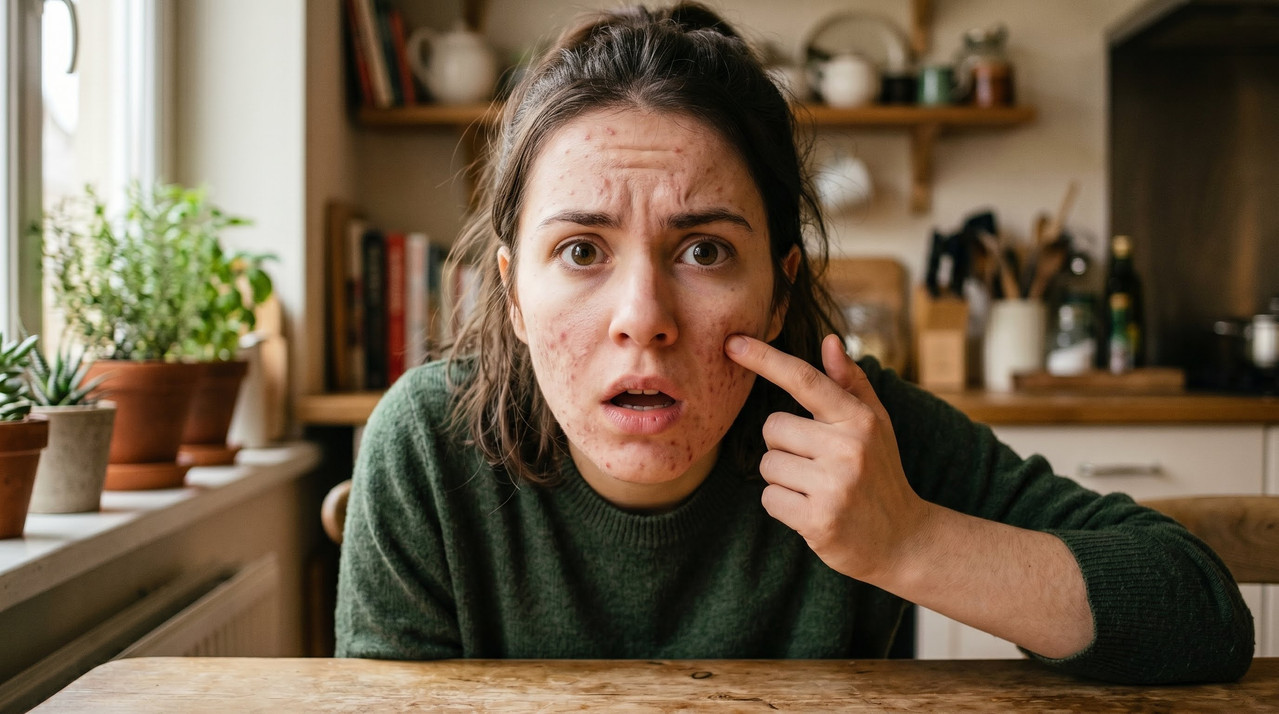
You're using the right products. So why does acne keep returning?
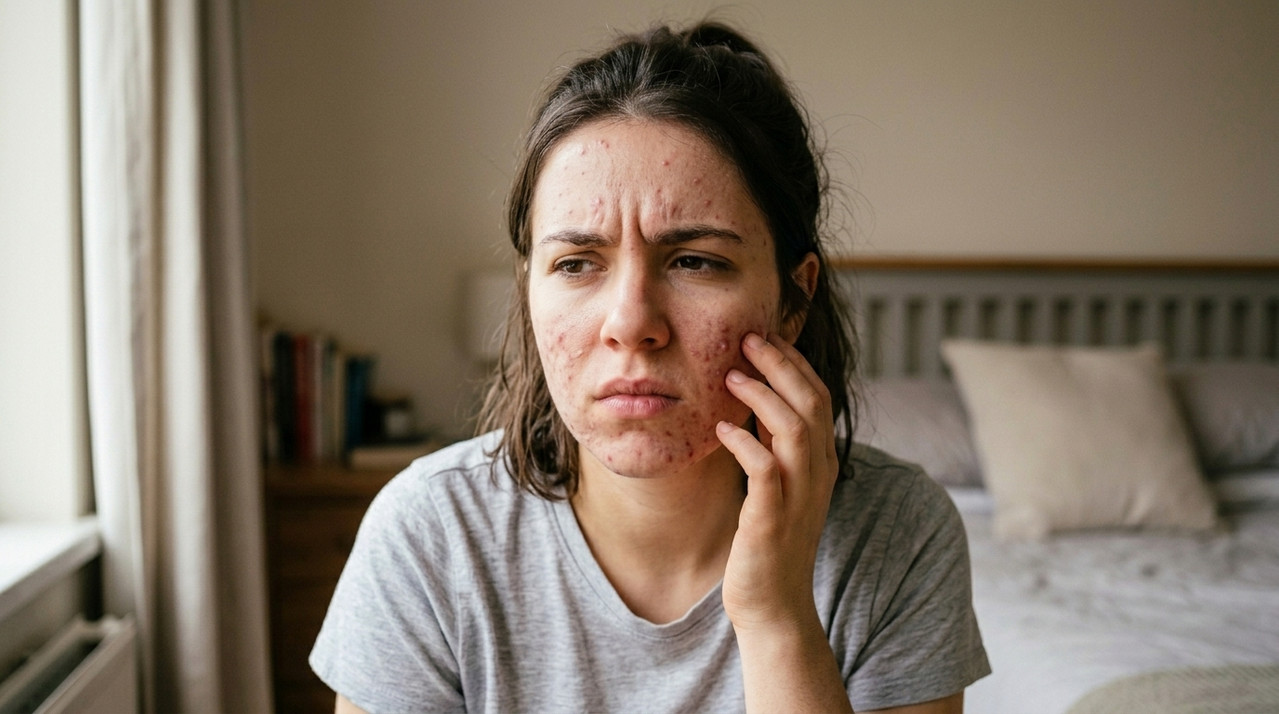
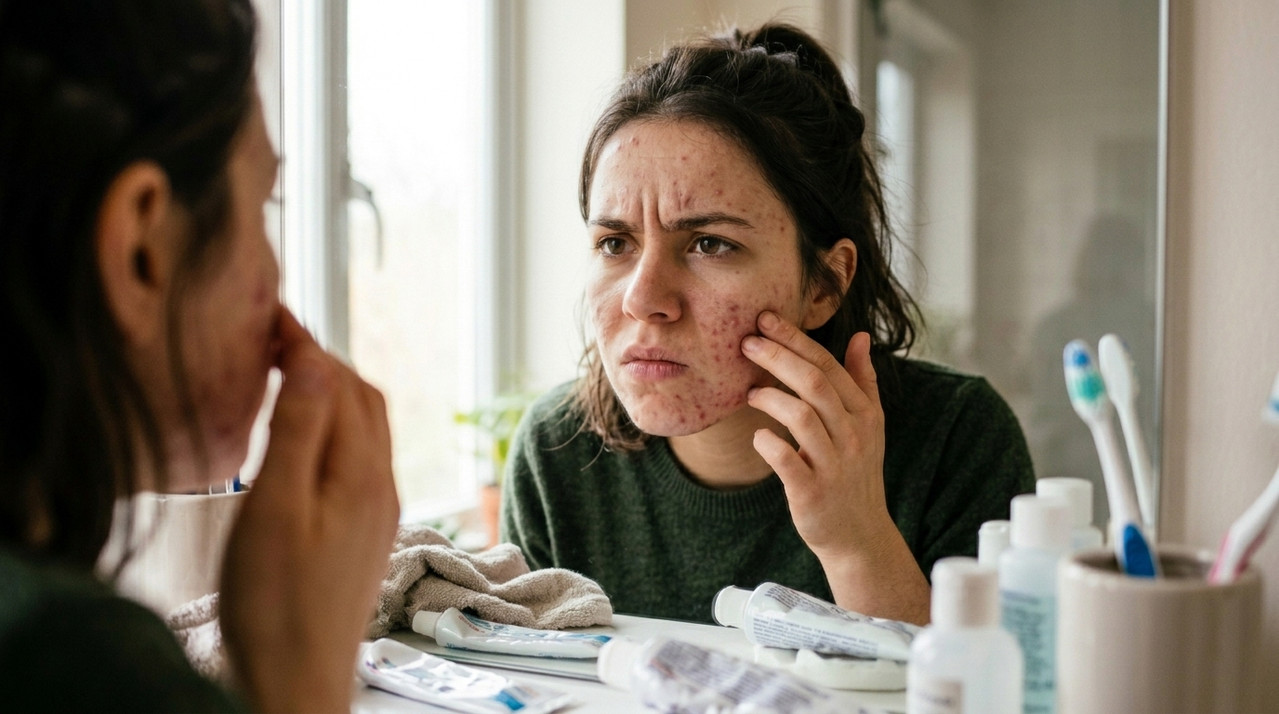
You've done everything "right." You bought the recommended cleanser. You use the dermatologist-approved moisturizer. You follow the routine exactly as you're supposed to. And yet — three weeks later, another breakout. Another round of inflammation. Another moment looking in the mirror wondering what you're doing wrong.
Here's what most people don't realize: acne isn't just a surface problem that topical products can fix alone. The reason your breakouts keep coming back has nothing to do with the quality of your products, and everything to do with what's actually triggering the acne in the first place.
Once you understand the real causes, using "good" products finally makes sense — and your skin finally clears.
The Real Reasons Your Acne Returns (No Matter What You Use)
It's not about the products. It's about what's beneath.
Acne forms for three core reasons: excess oil production, clogged pores, and bacteria growth. But here's what most skincare routines miss — these three things happen because of deeper triggers.
Hormonal fluctuations — Even small changes in androgens can spike oil production without any product being able to stop it
Chronic inflammation — Your skin barrier is compromised, so it stays in a reactive state regardless of what you apply topically
Dietary and lifestyle factors — High-glycemic foods, lack of sleep, and stress trigger internal inflammation that no cleanser can address
The wrong routine for your skin type — Using products that don't match your actual skin condition (not your perceived one)
Ingredient sensitivity you haven't identified — You might be using "good" products that your specific skin is reacting to
Here's the truth: products are meant to support skin health, not override what's actually causing your acne. If the root cause isn't addressed, even the best-formulated product will feel like you're patching a leak while the pipe is still broken.
The Acne Recurrence Cycle — Why It Keeps Happening
Most people experience acne in cycles:
🆕
Start New Product
→
✅
Clears for 2-4 Weeks
→
😕
Breakout Returns
→
🔄
Try New Product
Why? Because short-term improvement from a product feels like a win, but if the underlying trigger isn't gone, your skin falls back into the same pattern. You're treating the symptom, not the cause.
The three scenarios where good products still fail:
You're using 4-5 active ingredients at once — Your barrier is too compromised to handle them, so irritation makes acne worse
You're not addressing lifestyle factors — Diet, sleep, and stress account for 40-60% of hormonal acne but zero skincare product addresses this
You have undiagnosed sensitivities — An ingredient like niacinamide, salicylic acid, or even hyaluronic acid might be triggering inflammation in your specific skin
What Actually Needs to Change (Beyond Just Products)
The framework that actually stops acne from coming back
To break the cycle, you need three things working together:
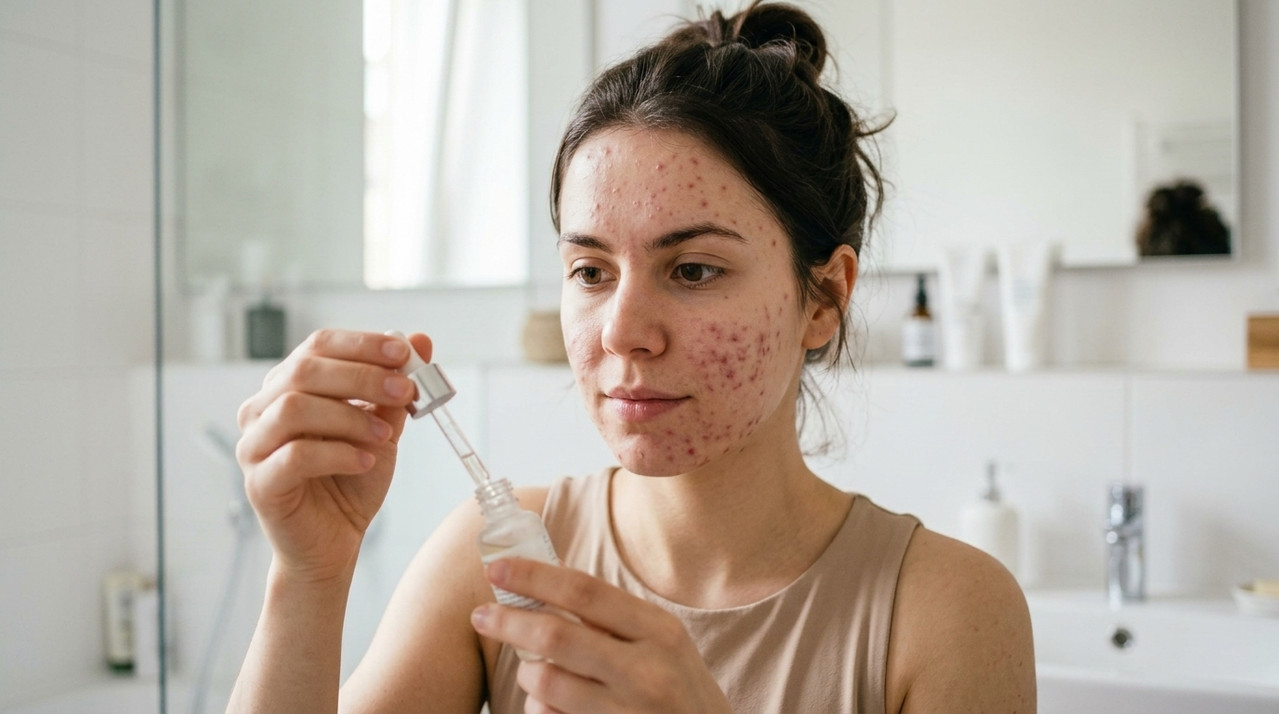
Stabilize your barrier — Use gentle, minimal products for 3-4 weeks. This stops the inflammation feedback loop.
Identify your actual triggers — Track what you eat, your sleep, your stress levels, and your skin's response. One of these is your primary culprit.
Then introduce targeted treatment — Only after your barrier is stable and you've found your triggers should you add active ingredients like retinoids or acids.
This is why people say "it got worse before it got better" when they simplify their routine. They're actually letting their barrier heal. Once it does, even light treatments work better because your skin isn't fighting itself anymore.
A Routine Built to Break the Cycle
Cycle-Breaking Routine — 4 Week Foundation Phase
☀️ Morning
Gentle Rinse or Mild CleanserLightweight MoisturizerSPF 30+
🌙 Evening
Gentle CleanserLightweight Moisturizer
Notice what's missing: no actives, no treatments, no "hero" ingredients. This is intentional. For 4 weeks, your skin needs to stabilize. During this time, also track:
What you eat (especially refined carbs and dairy — common trigger foods)
Your sleep schedule (aim for 7+ hours)
Stress levels and stress response (journaling helps)
Hormonal patterns if you menstruate
This is not "doing nothing"
Giving your skin 4 weeks to heal is one of the most active things you can do. This is where the real change happens.
Identifying Your Acne Trigger (The Real Reason It Keeps Coming Back)
After your barrier stabilizes, 80% of people fall into one of these categories:
Type 1: Hormonal Acne
Signs: Breakouts along jawline/chin, worse around your cycle, cystic bumps rather than surface breakouts
Root cause: Androgens triggering excess oil production (which no topical product fully controls)
Solution: A dermatologist may recommend spironolactone or oral contraceptives alongside skincare. Products alone won't fix this.
Type 2: Inflammatory/Dietary Acne
Signs: Clusters of small pustules, worse after specific foods, improves with dietary changes
Root cause: High-glycemic diet, dairy sensitivity, or chronic inflammation from food choices
Solution: Track and eliminate trigger foods (usually refined carbs or dairy). Even the best products can't override a pro-inflammatory diet.
Type 3: Barrier-Damage Acne
Signs: Persistent inflammation, sensitive to most products, takes weeks to calm down
Root cause: Overuse of actives, harsh cleansing, or damaged barrier from previous routines
Solution: Barrier repair (3-4 weeks), then slow introduction of gentle actives
Type 4: Ingredient Sensitivity Acne
Signs: Breakouts develop after using "good" products, pattern is tied to specific ingredients
Root cause: Your skin is sensitive to a common ingredient (salicylic acid, niacinamide, fragrance, essential oils)
Solution: Patch testing and elimination to find your specific triggers
The Right Products (For When Your Barrier Is Ready)
Read this first
Products work best when your barrier is stable and you've identified your trigger. If you're in active breakout mode, focus on barrier repair first. Then use these.
Step 1: Barrier Repair (Weeks 1-4)
Use only these two products to give your skin space to heal.
Phase 1
Cleanser · Barrier Support
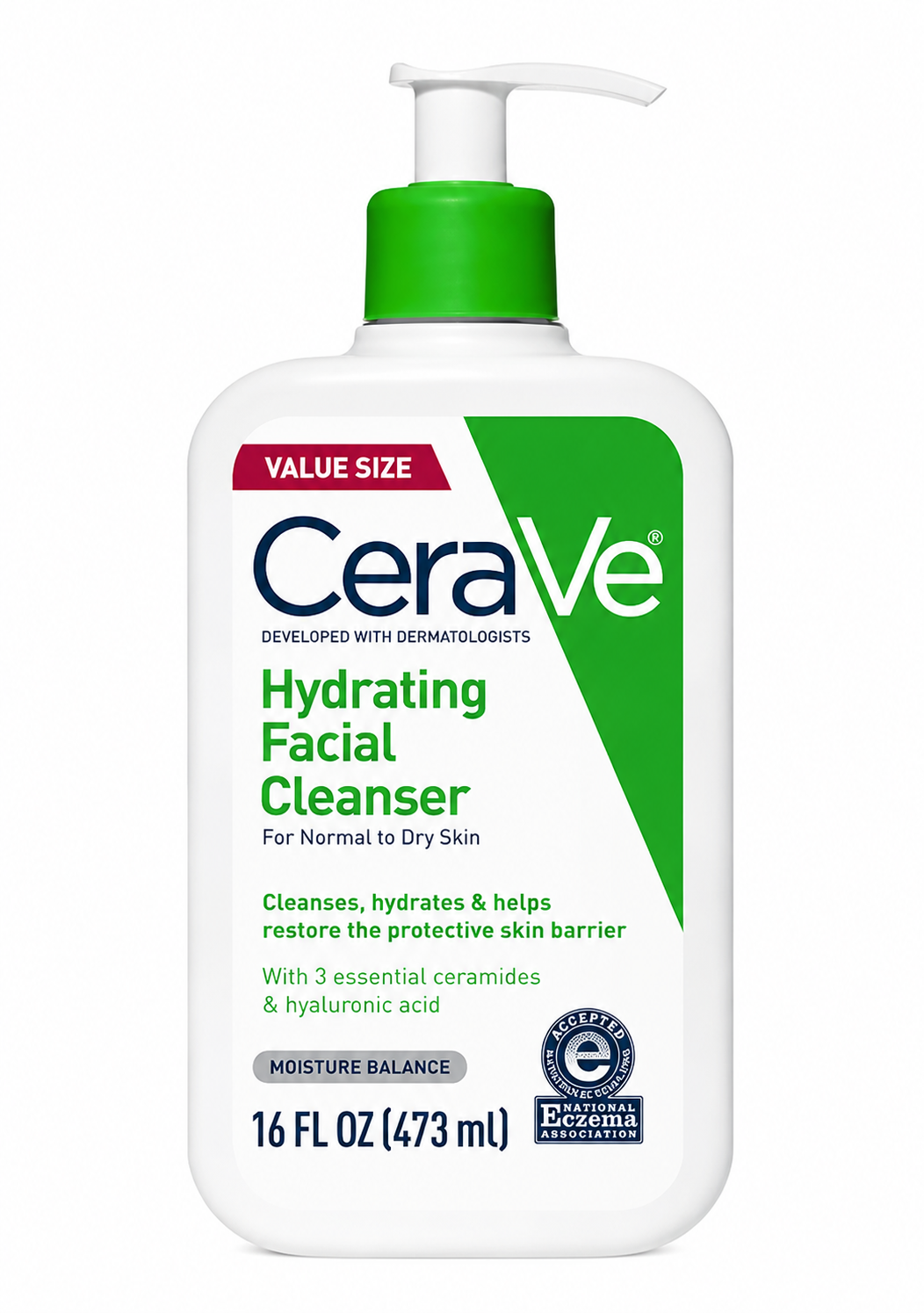
CeraVe Hydrating Facial Cleanser
CeraVe · Dermatologist Developed
Non-foaming, ceramide-rich cleanser that removes oil without stripping. Hyaluronic acid supports moisture retention. The least irritating option available.
Affiliate link. Commission earned at no extra cost to you.
The breakthrough insight: Your acne comes back because you're treating acne as if it's a product problem. Once you shift to seeing it as a root-cause problem (hormones, diet, barrier damage, or sensitivity), the right products finally have something stable to work with.
You've been buying good products. That's not the problem. The problem is you're trying to solve an internal or barrier issue with external products alone.
Spend 4 weeks stabilizing your barrier and identifying your trigger. Then introduce one treatment at a time. This is how acne actually stops coming back — not because you found the "perfect" product, but because you fixed what was actually causing it.
The products are the second step. Identifying your trigger is the first.
How to Remove Sun Tan Naturally at Home in 7 Days | GlowingSkinHub ✦ www.GlowingSkinHub.com ✦ Your Natural Beauty Guide This post may contain affiliate links. If you purchase through these links, I may earn a small commission at no extra cost to you. I only recommend what I genuinely believe can help. Skin Care Guide · 7-Day Plan How to Remove Sun Tan Naturally at Home in 7 Days No harsh chemicals. No expensive treatments. Just simple, proven natural remedies that actually work — with consistency. GlowingSkinHub.com Real results are possible — patience and the right care make all the difference. The Problem Why Your Skin Looks Dull & Uneven After Sun Exposure Spending time outdoors during summer is refreshing — but the aftermath? Not so much. Sun exposure leaves your skin darker, dull, and noticeably uneven. This is one of the most common skincare struggles during warmer mo...
Why Your Routine Isn't Working Doing Everything Right, Still Breaking Out? I thought I was doing everything right — double cleansing, layering serums, moisturizing every single day. But instead of improving, my skin kept getting worse. If this sounds like you, you're not alone. A lot of people overload their skin with too many products, thinking it will fix acne faster… but it often does the opposite. Signs Your Skin Barrier Is Damaged When Acne Turns Into Irritation At some point, it stopped being just acne. My skin became red, irritated, and sensitive — breaking out and drying out at the same time. That's usually a sign of a damaged skin barrier. And in most cases, it's caused by overusing strong ingredients like exfoliants and retinol. [I may earn a small commission if you purchase through some of the links below, at no extra cost to you. I only recommend products that I personally trust and believe can actually help]. The 4-Night Skin Cycling R...