The Skin Barrier Blueprint: Is Your Skincare Routine Actually Ruining Your Skin? ⚠️
Get link
Facebook
X
Pinterest
Email
Other Apps
-
\
The Skin Barrier Blueprint: Is Your Skincare Routine Actually Ruining Your Skin? ⚠️ — Glowing Skin Hub
Glowing Skin Hub — Barrier Science Deep-Dive
The Skin Barrier Blueprint:
Is Your Routine Actually Ruining Your Skin? ⚠
* * *
Your 12-step routine might be the reason your skin won’t clear up. The clinical science behind barrier damage, the one ingredient that fixes everything, and a 14-day protocol that actually works.
I need to be honest with you about something — and it’s going to sting a little.
That 12-step routine you’ve been perfecting? The one with the glycolic toner, the AHA/BHA peel, the vitamin C serum layered under retinol, all sealed with a snail mucin essence? It might be the exact reason your skin won’t clear up.
I know because I lived it. For over a year, I was religiously following every “dermatologist-approved” routine I found on skincare forums and TikTok. I had the products. I had the discipline. And I had the worst texture of my life — hundreds of tiny, skin-colored bumps across my forehead and jawline that no amount of exfoliation could touch. Closed comedones. The kind that don’t come to a head, don’t respond to spot treatments, and make your skin look permanently rough under any light.
Here’s what nobody told me: my skin barrier was shattered. Not damaged — shattered. Every acid, every active, every “glow-boosting” step was stripping away the very architecture my skin needed to heal itself.
The turning point wasn’t adding another product. It was removing almost everything — and replacing it with a single ingredient I’d never heard of.
This article is the protocol that changed my skin in 14 days. No exaggeration. No filter. If you’re dealing with stubborn texture, persistent redness, or skin that somehow feels oily and dehydrated at the same time — you need to read every word of what follows.
Section 01 — The Problem
The Deception of Over-Exfoliation
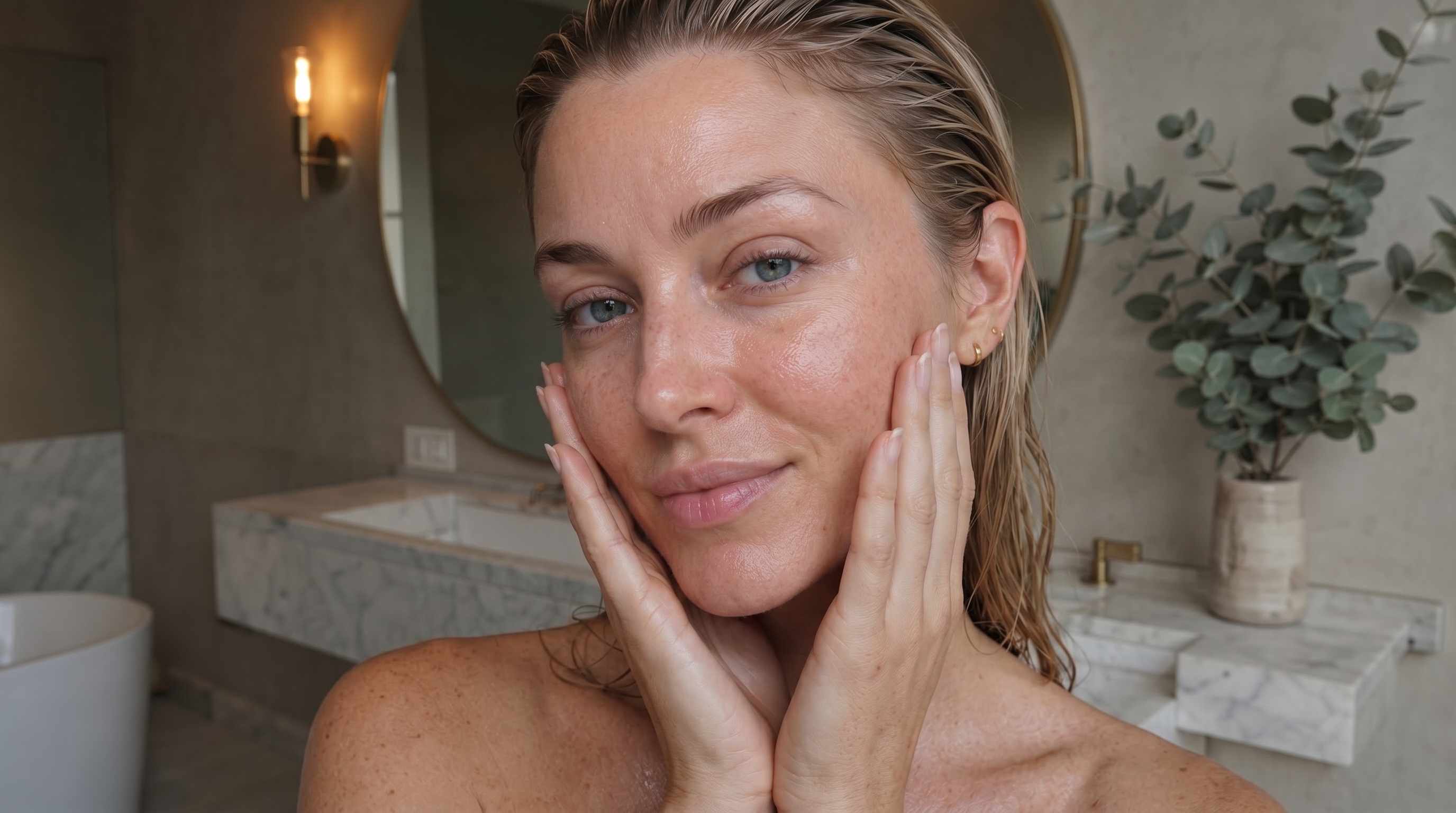
The raw reality of a compromised stratum corneum — redness, texture bumps, and dehydration lines that no filter can hide.
Let’s talk about what’s actually happening beneath the surface when your skincare routine crosses the line from effective to destructive.
Your skin barrier — clinically known as the stratum corneum — is not just a “layer.” It’s a meticulously organized lipid matrix made up of ceramides, cholesterol, and fatty acids arranged in a brick-and-mortar structure. The “bricks” are your corneocytes (dead skin cells that still serve a critical protective function), and the “mortar” is that lipid mixture holding everything together. This architecture is what keeps moisture locked in and irritants locked out.
When you over-exfoliate — and most skincare enthusiasts are doing exactly that — you dissolve the mortar.
Stage 1: Lipid Depletion
Harsh actives like high-concentration glycolic acid (anything above 10% used more than twice weekly), daily salicylic acid washes, and improperly buffered retinoids strip the intercellular lipids faster than your skin can replenish them. Your barrier goes from a fortified wall to Swiss cheese.
Stage 2: Transepidermal Water Loss (TEWL)
With the lipid matrix compromised, water evaporates from your deeper skin layers at an accelerated rate. This is why your skin can feel tight and dry within 20 minutes of washing — even if you have oily skin. That “squeaky clean” feeling after cleansing? That’s damage. Your skin should feel supple and neutral after washing, never tight.
Stage 3: Vascular Inflammation
As the barrier weakens, your skin mounts an inflammatory response. Blood vessels near the surface dilate, producing that persistent redness — especially the characteristic flushing around the nose, chin, and nasolabial folds that so many people mistake for rosacea. The flaking you see in these areas isn’t just “dry skin.” It’s your compromised stratum corneum literally shedding faster than it can rebuild.
Stage 4: Comedogenesis
Here’s where it gets insidious. A damaged barrier triggers your sebaceous glands to overproduce oil as a desperate compensatory mechanism. But this excess sebum, combined with the micro-inflammation and impaired desquamation (natural cell shedding), creates the perfect environment for closed comedones — those maddening, tiny, skin-colored bumps that sit just beneath the surface and refuse to budge.
The Cruel Irony
Most people respond to these bumps by exfoliating more aggressively — which deepens the damage, triggers more oil production, and creates more bumps. It’s a self-perpetuating cycle that no amount of BHA or benzoyl peroxide can break. The dehydration lines that appear under your eyes and across your cheeks aren’t wrinkles. They’re visible evidence that your stratum corneum has lost its water-holding capacity.
A truly healthy barrier produces that luminosity naturally — from properly hydrated, intact skin cells reflecting light evenly. The solution isn’t more actives. It’s a full barrier reconstruction.
Section 02 — The Ingredient
Enter Beta-Glucan
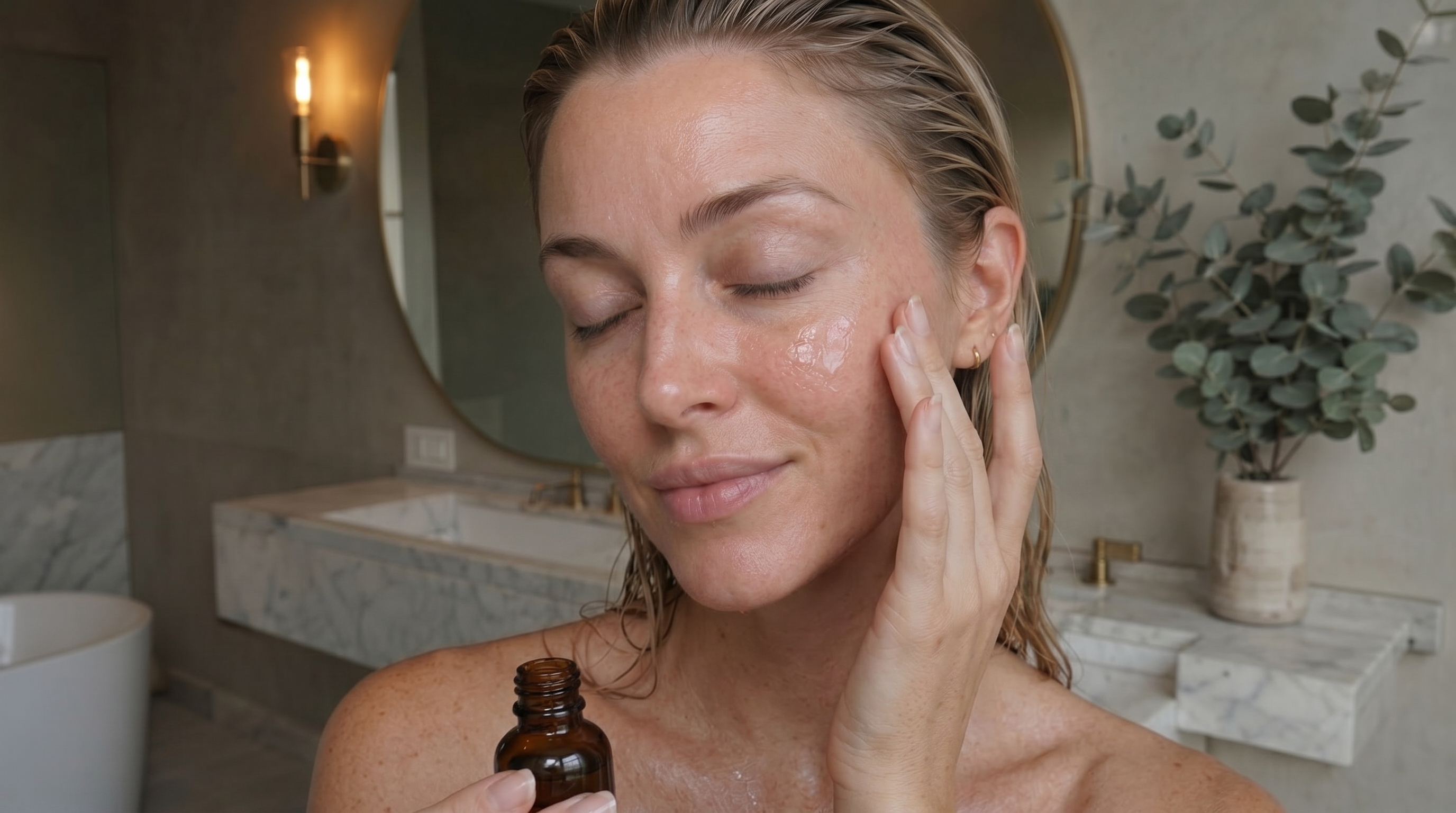
The ritual of barrier repair — a single serum drop changing the entire conversation.
Peer-Reviewed Science
The Barrier-Repair Molecule That Outperforms Hyaluronic Acid
If you’ve spent any time in the skincare world, you’ve been told that Hyaluronic Acid is the gold standard of hydration. It’s in everything — serums, moisturizers, sheet masks, even foundations. And while HA is a perfectly fine ingredient, there’s a critical limitation that almost nobody talks about:
Hyaluronic Acid is a large molecule. In most formulations, it sits on the surface of your skin, drawing moisture from the environment (or worse, from your deeper skin layers in dry climates) and holding it on top. It hydrates the surface. It does very little for the actual barrier architecture beneath.
Beta-Glucan is fundamentally different. It’s a polysaccharide — a complex sugar molecule derived from the cell walls of oats, mushrooms, and yeast. Peer-reviewed research published in the Journal of Cosmetic Dermatology and International Journal of Biological Macromolecules has demonstrated that Beta-Glucan holds up to 20% more moisture than Hyaluronic Acid by weight — and critically, it penetrates into the deeper epidermal layers rather than sitting on the skin’s surface.
This means it doesn’t just hydrate. It restructures. Beta-Glucan activates Langerhans cells — the immune sentinels of your epidermis — and modulates the inflammatory cascade that drives barrier damage. It stimulates fibroblast activity, directly triggering the production of collagen and ceramides — the exact building blocks your damaged lipid matrix needs.
Key Benefits of Beta-Glucan
Superior Moisture Retention — Holds 20% more water than Hyaluronic Acid and delivers it to deeper epidermal layers, not just the surface
Anti-Inflammatory Powerhouse — Clinically shown to reduce IL-6 and TNF-α inflammatory markers, calming redness, rosacea-like flushing, and irritation at the cellular level
Collagen & Ceramide Stimulation — Directly activates fibroblast proliferation, rebuilding the lipid “mortar” that acids destroyed
100% Vegan & Plant-Derived — Sourced from oat kernel or mushroom cell walls; no animal byproducts, no snail mucin cross-reactivity concerns
Completely Non-Comedogenic — A rating of 0 on the comedogenicity scale. Will not clog pores, trigger breakouts, or contribute to closed comedone formation
Wound-Healing Acceleration — Originally studied in medical wound care for its ability to speed epithelial regeneration — now applied to post-acid, post-peel barrier recovery
Universal Compatibility — Safe for every skin type including sensitive, eczema-prone, and rosacea-diagnosed skin. No pH dependency, no purging period, no photosensitivity
Section 03 — Recommended Products
The Barrier Repair Edit
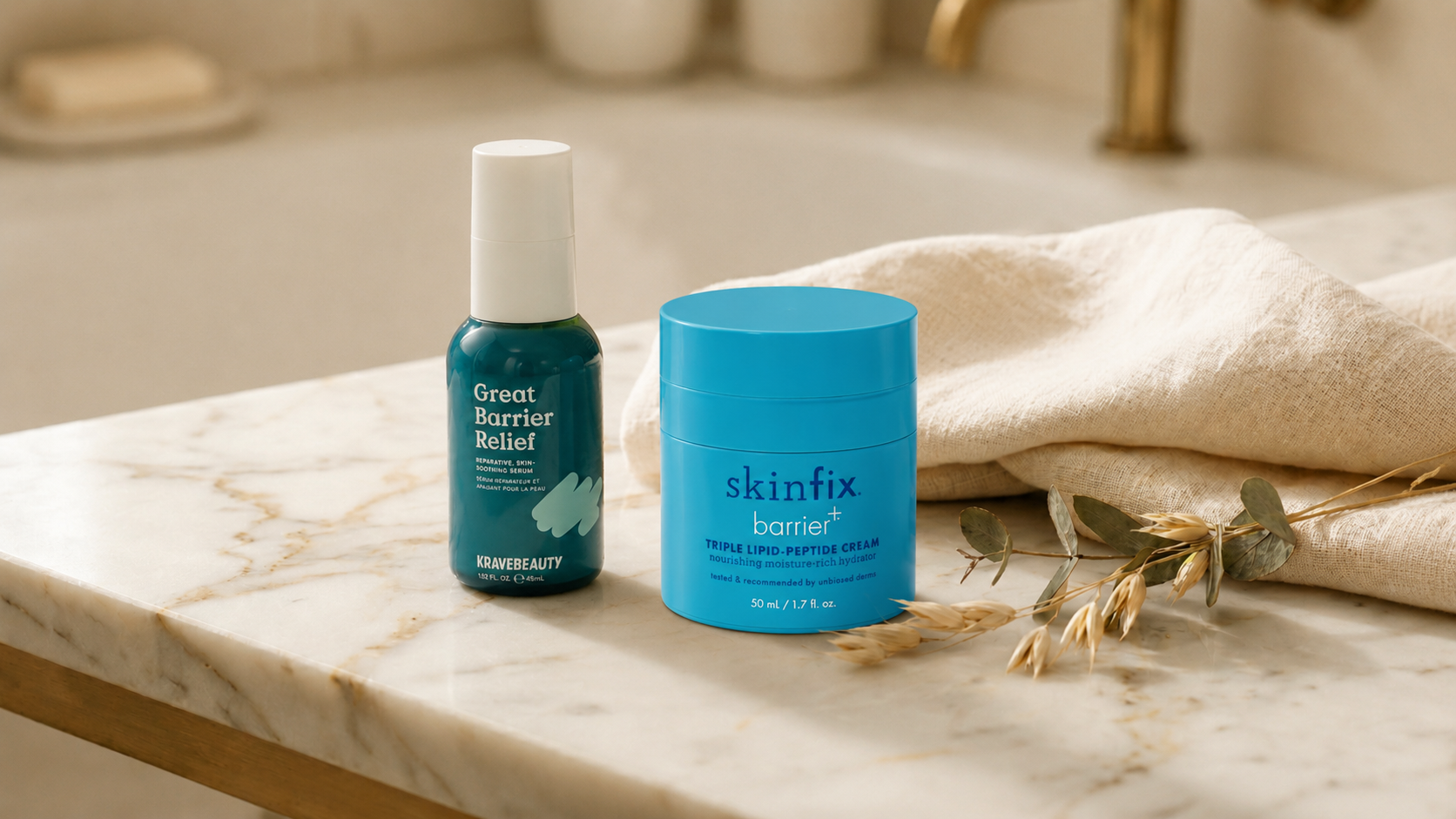
After testing dozens of formulations over the course of this protocol, these two products delivered the most clinically significant results. Both are formulated around Beta-Glucan as a hero ingredient, both are non-comedogenic, and both are available without a prescription.
Top Pick — Serum
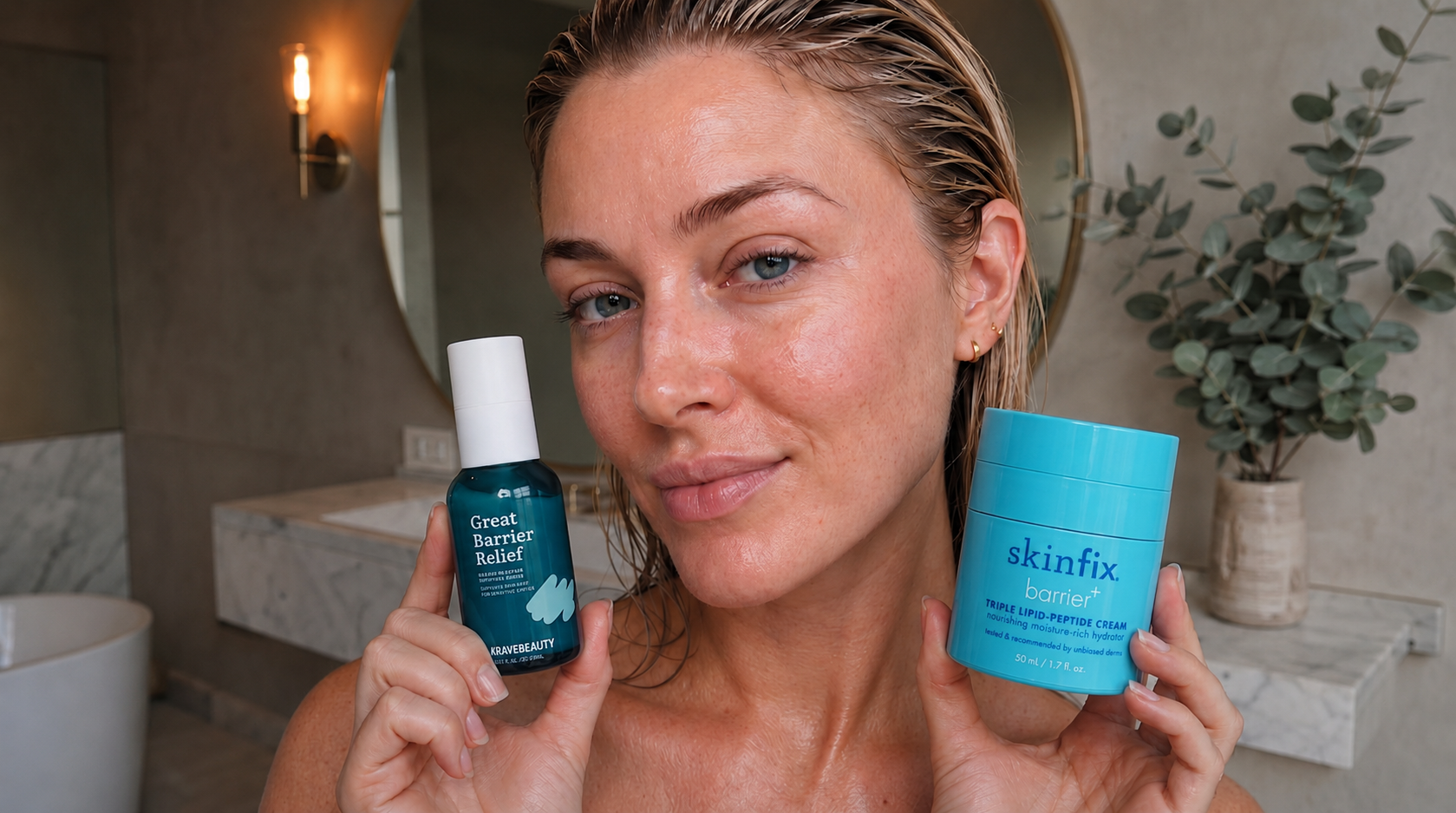
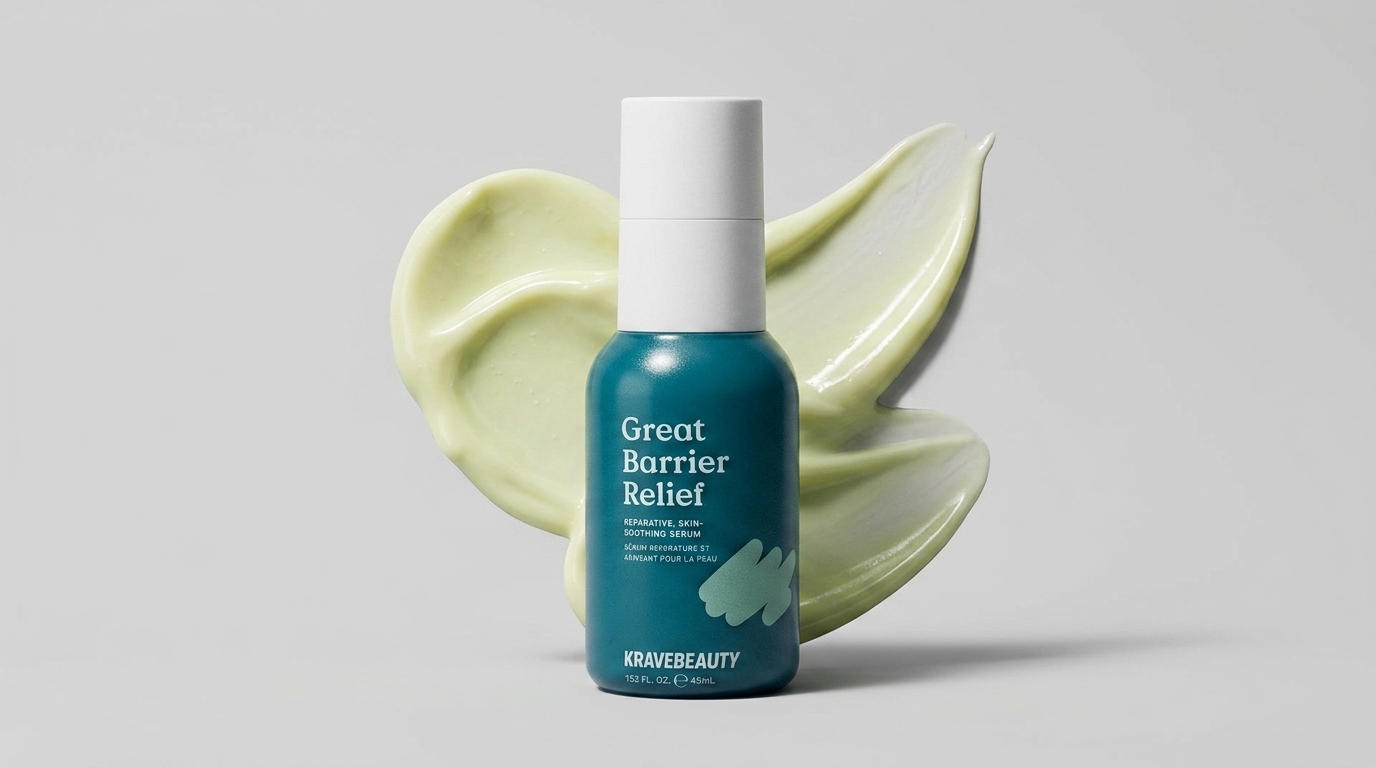
KraveBeauty — Great Barrier Relief
~$28–$35
A lightweight, barrier-repairing face oil-serum hybrid formulated with Beta-Glucan, Squalane, and Rosehip Oil. Absorbs instantly without greasiness. Ideal as the treatment layer in a stripped-back barrier repair routine. Non-comedogenic, fragrance-free, and suitable for all skin types including acne-prone and rosacea-diagnosed skin.
ⓘ Affiliate link — we may earn a small commission at no extra cost to you. We only recommend products we’ve personally tested.
Top Pick — Moisturizer
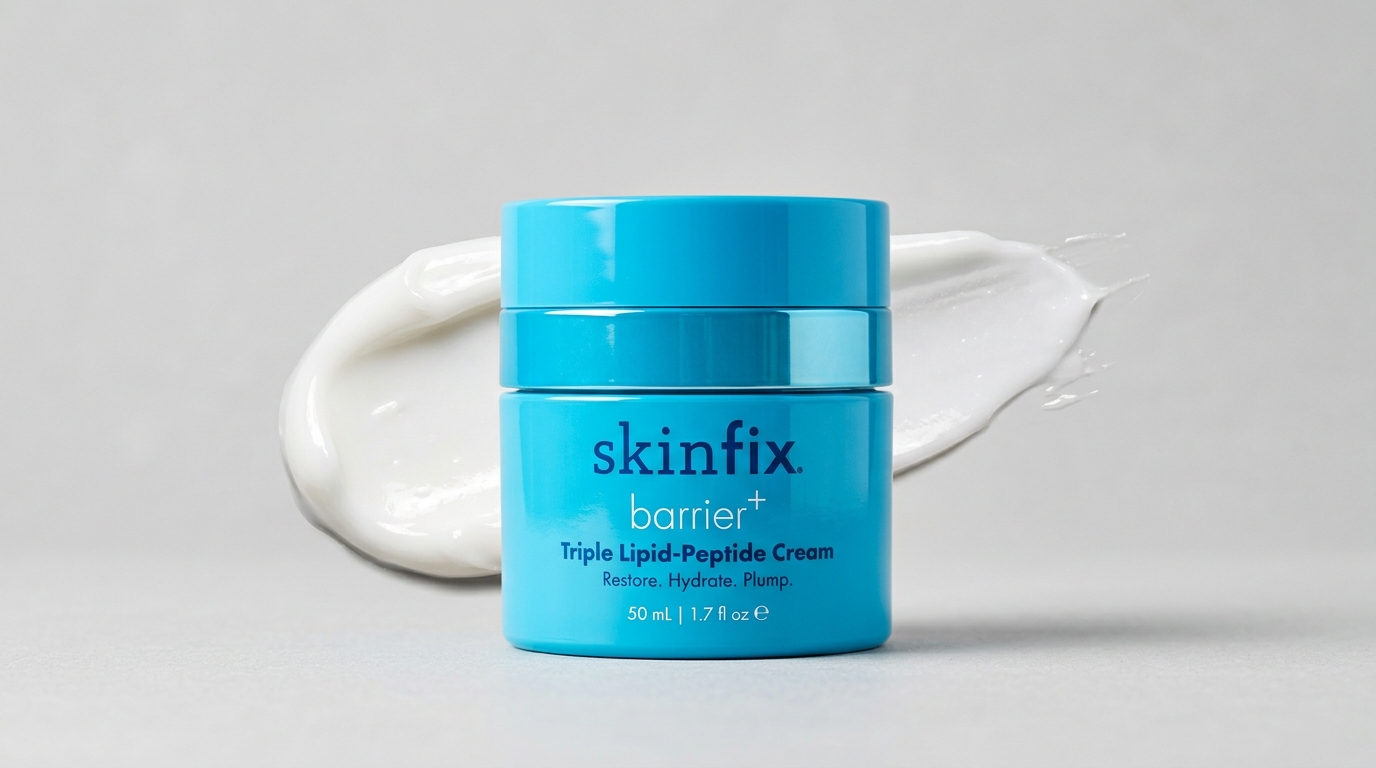
Skinfix — Barrier+ Triple Lipid-Peptide Cream
~$42–$52
A clinically-validated, dermatologist-recommended barrier cream featuring a triple lipid complex (ceramides, cholesterol, fatty acids) alongside peptides and Beta-Glucan. Directly replenishes the lipid “mortar” that over-exfoliation destroys. Rich but non-greasy texture. Perfect as the sealing moisturizer layer in the 14-day protocol — morning and evening.
ⓘ Affiliate link — we may earn a small commission at no extra cost to you. We only recommend products we’ve personally tested.
Free Download
Get Our 7-Day Skin Barrier Repair Checklist
The exact printable calendar with product categories, application zones, and barrier recovery checkpoints — night by night.
Night-by-night checklist
Zone application map
Barrier recovery tracker
Hormonal cycle adaptation guide
✓ You’re in! Check your inbox for the 7-Day Barrier Repair Checklist.
Zero spam. Unsubscribe at any time.
Important
Using Gmail? Check Your Promotions Tab
Gmail routes our guides to Promotions. Drag our email to Primary and click “Yes” — you’ll never miss an update from Glowing Skin Hub.
Section 04 — The Protocol
The 14-Day Barrier Reconstruction Protocol
Day 10 — the barrier rebuilds itself. Calmer, plumper, and finally at peace.
Here’s exactly what happened — day by day — when I stripped my routine down to Beta-Glucan-based products and committed to a full 14-day barrier recovery protocol. No actives. No acids. No exfoliation. Just barrier repair.
Phase 1 — Days 1–4
First Impressions
Day 1: The first thing I noticed was the texture of the serum itself. Unlike Hyaluronic Acid serums that leave a tacky, film-like residue, the Beta-Glucan serum absorbed in under 8 seconds. Zero stickiness. Zero residue. Just a clean, weightless layer that immediately felt like it sank into my skin rather than sitting on top.
Day 2–3: A subtle shift I wasn’t expecting: my skin stopped feeling “tight” after cleansing. That familiar 15-minute window where my face felt stripped and desperate for moisturizer? Gone. My skin held its own hydration through the cleansing process.
Day 4: The oiliness in my T-zone noticeably decreased. Not from mattifying agents — but because my skin was finally receiving adequate internal hydration and reducing its compensatory sebum production. My forehead, usually shiny by noon, stayed balanced until evening.
Phase 1 Snapshot
Hydration Depth
6.5/10
Texture Improvement
3.0/10
Redness Reduction
4.0/10
Absorption Quality
9.5/10
Overall Comfort
7.5/10
Phase 2 — Days 5–9
The Barrier Test
Day 5–6: This is where things got real. The persistent redness around my nose and chin — the flushing I’d been told was “just rosacea” — started visibly fading. Not covered up. Not masked by green-tinted primers. Actually fading. The underlying inflammation was being addressed at the cellular level.
Day 7: A milestone moment. The dry, flaky patches along my nasolabial folds and the corners of my mouth — the ones I’d been battling with heavier and heavier moisturizers — disappeared entirely. My skin’s surface felt uniformly smooth for the first time in months.
Day 8–9: My makeup applied differently. Foundation wasn’t catching on dry patches or separating over oily zones. My skin had reached what I can only describe as a neutral state — not oily, not dry, not reactive. Just… balanced. The dehydration lines under my eyes were noticeably softer.
Phase 2 Snapshot
Hydration Depth
8.5/10
Texture Improvement
6.0/10
Redness Reduction
8.0/10
Barrier Integrity
7.5/10
Overall Comfort
9.0/10
Phase 3 — Days 10–14
The Final Reveal
Day 10–11: The closed comedones. The bumps I’d been fighting for over a year. The ones that laughed at my BHAs and shrugged off my retinol. They started flattening. Not all at once — it started with the ones along my jawline, then my forehead. They weren’t being “purged.” The inflammation driving their formation was simply gone.
Day 12–13: I took a photo in direct sunlight — the lighting that usually exposed every flaw. My skin looked plump. Not puffy or swollen — genuinely, healthily plump. The kind of natural bounce and luminosity that comes from properly hydrated, structurally intact skin. The texture was roughly 80% resolved.
Day 14: I looked at my skin under harsh bathroom fluorescents — the ultimate test. The forehead bumps were nearly gone. The redness was reduced to a faint, healthy flush. My pores appeared visibly smaller. My skin looked like it belonged to someone who hadn’t spent 18 months chemically assaulting it.
If your skin has texture that won’t respond to actives — you don’t need stronger products. You need Beta-Glucan.
Switch immediately if: You’ve been using AHAs, BHAs, or retinoids for 3+ months and your texture hasn’t improved — or has gotten worse.
Switch immediately if: You experience persistent redness, flushing, or flaking around the nose, chin, or nasolabial folds that moisturizer alone doesn’t fix.
Switch immediately if: You have closed comedones across your forehead, jawline, or cheeks that refuse to purge or clear.
Switch immediately if: You’ve been using snail mucin and suspect a dust-mite cross-reactivity — Beta-Glucan delivers comparable (and superior) hydration without the allergenic risk.
Switch immediately if: Your skin simultaneously feels oily and dehydrated — the hallmark sign of a compromised moisture barrier.
Switch immediately if: You’ve been diagnosed with or suspect rosacea and need an anti-inflammatory hydrator that won’t trigger flare-ups.
The Barrier-First Layering Protocol: Use a Beta-Glucan serum (3–4 drops pressed into damp skin) as your treatment layer, followed by a ceramide-based moisturizer to seal. AM: add SPF 50. PM: slightly thicker serum application for overnight recovery. Eliminate all AHAs, BHAs, retinoids, physical scrubs, and alcohol-based toners for the full 14 days. Your barrier needs a complete ceasefire to rebuild.
This isn’t about abandoning actives forever. It’s about giving your skin the structural integrity it needs to actually benefit from those actives — instead of being destroyed by them.
Section 06 — Your Questions Answered
Frequently Asked Questions
How long does it take to fully repair a broken skin barrier?
Clinical research published in the Journal of Investigative Dermatology indicates that a moderately compromised skin barrier requires approximately 2–4 weeks to restore functional lipid architecture, assuming all irritating actives are ceased and a barrier-supportive routine is followed consistently. Mild barrier impairment (occasional tightness, slight sensitivity) can resolve in as little as 7–10 days. Moderate damage (persistent redness, flaking, closed comedones) typically requires the full 14–21 day window. Severe barrier destruction — the kind caused by months of daily high-concentration acid use or improperly managed prescription retinoid therapy — can take 6–8 weeks for full recovery. The key variable is consistency: using barrier-supportive ingredients like Beta-Glucan and ceramide-based moisturizers every single day without interruption, while maintaining a complete moratorium on exfoliating actives.
Can I use Beta-Glucan alongside my retinol or vitamin C?
Yes — and Beta-Glucan is one of the best ingredients to pair with retinoids and L-ascorbic acid. Both retinol and vitamin C are inherently irritating to the skin barrier. Beta-Glucan’s anti-inflammatory and moisture-binding properties act as a protective buffer — reducing the irritation these actives cause without diminishing their efficacy. The optimal layering strategy: apply your vitamin C serum first (AM), wait 60 seconds, then layer Beta-Glucan serum on top. For retinol (PM), apply the retinoid first to clean, dry skin, wait 15–20 minutes, then layer Beta-Glucan followed by moisturizer. Important caveat: if your barrier is currently damaged, repair it fully with Beta-Glucan before reintroducing retinoids or vitamin C. Don’t try to do both simultaneously on compromised skin.
Why do active acids make a damaged barrier worse?
Active acids — including glycolic acid (AHA), salicylic acid (BHA), mandelic acid, and lactic acid — work by dissolving the desmosomes (protein bonds) that hold corneocytes together in the stratum corneum. In healthy, intact skin, this controlled dissolution promotes beneficial exfoliation. But when the barrier is already compromised, those desmosomes are one of the few remaining structural elements. Dissolving them on damaged skin is like removing the last support beams from a building that’s already structurally unsound. The result is accelerated transepidermal water loss, deeper penetration of irritants, amplified inflammatory signaling, and paradoxically increased sebum production as the skin desperately compensates. This is also why acids “sting” more when your barrier is damaged — they’re penetrating deeper than intended, reaching nerve endings that intact skin would protect. The rule is absolute: never exfoliate compromised skin. Rebuild first. Exfoliate later.