"I Swapped My Viral Snail Mucin for Beta-Glucan for 14 Days — Here’s the Honest Truth"
Get link
Facebook
X
Pinterest
Email
Other Apps
-
I Swapped My Viral Snail Mucin for Beta-Glucan for 14 Days — Glowing Skin Hub
Glowing Skin Hub — 2026 Ingredient Deep-Dive
I Swapped My Viral Snail Mucin
for Beta-Glucan for 14 Days — Here’s What Happened
✦ ✦ ✦
Three bottles of snail mucin deep — and secretly breaking out from it. I made one ingredient swap, documented every day, and my skin transformed. Here’s the honest, unfiltered clinical diary.
$Affiliate Disclosure: This post contains affiliate links. I may earn a small commission if you purchase through my links — at absolutely no extra cost to you. I only recommend products I have personally tested and genuinely believe in. Thank you for supporting Glowing Skin Hub. 💛
14
Day Swap
80%
Bumps Cleared
20%
More Moisture vs HA
0
New Breakouts
Before You Read This
I was three bottles deep into COSRX Advanced Snail 96 Mucin Power Essence and genuinely convinced it was my holy grail. My skin felt more hydrated. My shelfie looked iconic. My TikTok FYP validated every application.
Then my forehead filled up with tiny, skin-colored bumps that no amount of exfoliant could fully clear. My jawline felt perpetually congested. I had been using the product for two months and something was quietly wrong.
A late-night research spiral led me to Beta-Glucan — a mushroom-derived, fully vegan ingredient that scientists have studied for decades while the skincare world largely ignored it. I made one swap. I changed nothing else. And I documented everything over 14 days. Here is exactly what happened.
Section 01 — The ProblemThe Hidden Issue with Snail Mucin
Here is the context that most skincare content creators never discuss. Snail mucin has a genuinely impressive efficacy profile — it contains hyaluronic acid, glycoproteins, proteoglycans, and antimicrobial peptides. For many skin types, it works beautifully. But it also carries a risk that is almost never mentioned in mainstream skincare media.
⚠️ The Hidden Issue Nobody Talks About
Snail mucin can contain proteins structurally similar to those produced by dust mites. If you’re among the roughly 20 million Americans with dust mite sensitivity, snail mucin may be triggering low-grade inflammatory responses in your follicular environment — manifesting as closed comedones, congestion, and persistent texture issues rather than visible allergic reactions. This cross-reactivity is clinically documented. It is almost never discussed in mainstream skincare content.
My closed comedones were concentrated exactly where I applied the most product — my forehead and jawline. The correlation became obvious once I looked for it. They weren’t dramatic. They weren’t painful. They were those flat, skin-colored texture bumps that only reveal themselves in harsh side lighting — but once you’ve seen them, you cannot unsee them.
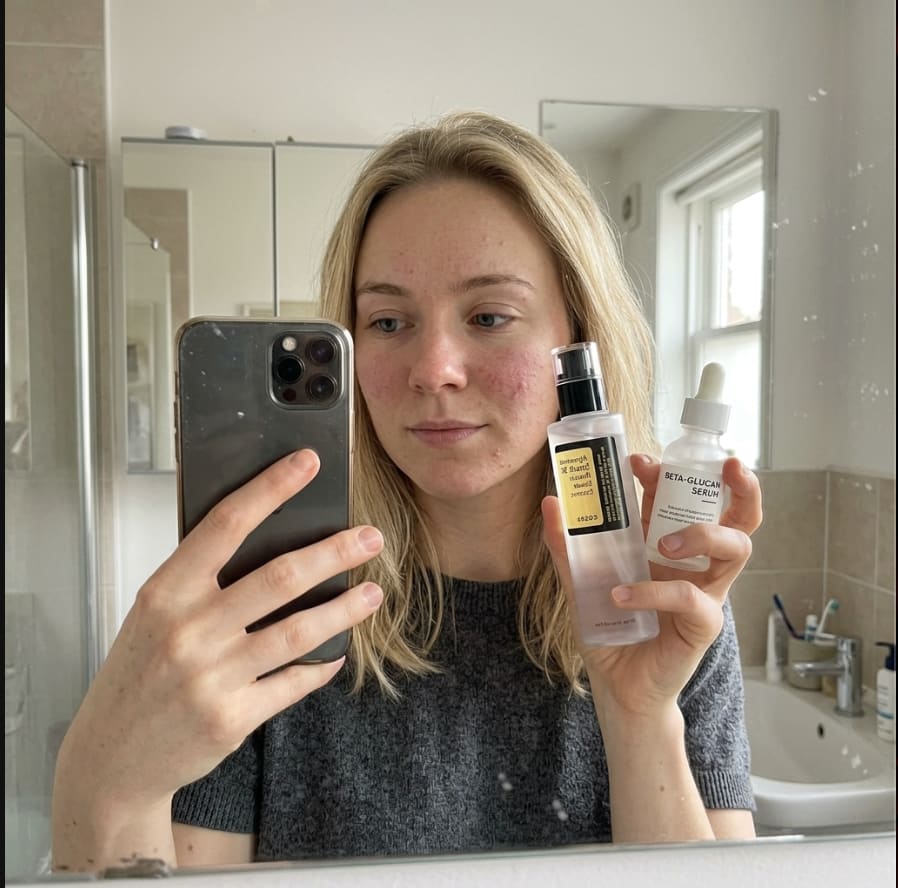
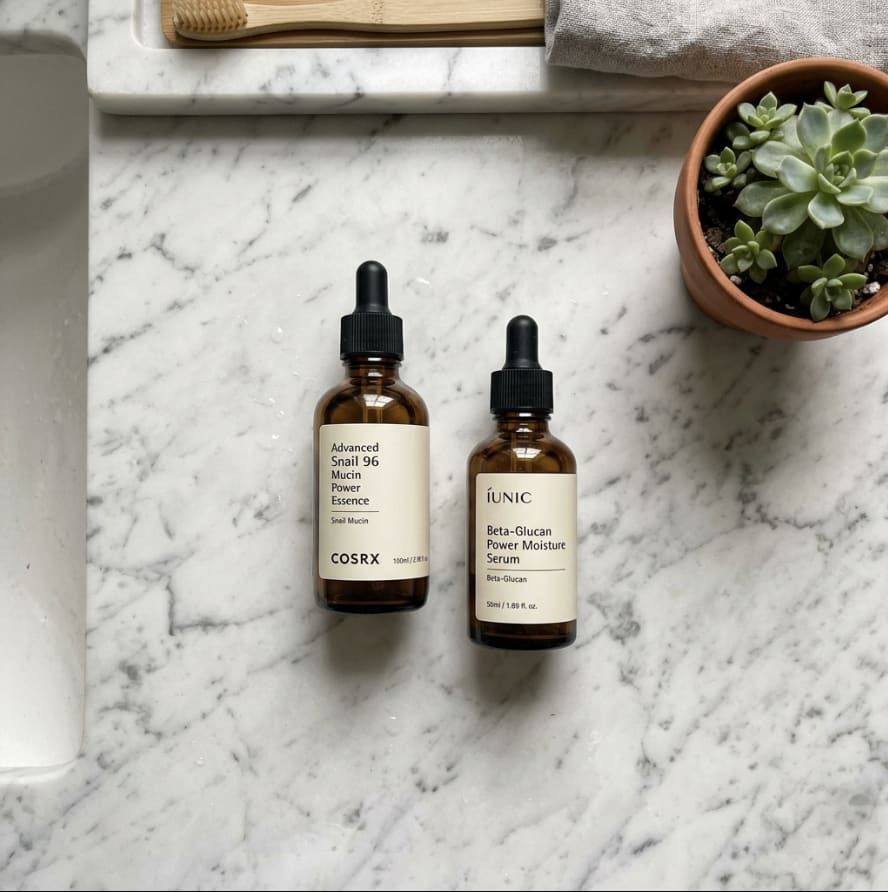
I decided the most rigorous test would be a controlled single-variable swap: remove only the snail mucin essence, replace it with a beta-glucan serum, keep every other product and step completely identical. Document every day. No other changes. Here is what happened.
Day 1 — Two serums. One controlled experiment. The only variable is the essence. Everything else stays identical.
Section 02 — The IngredientWhat Exactly Is Beta-Glucan?
Beta-Glucan is a naturally occurring polysaccharide — a long-chain sugar molecule — found in the cell walls of mushrooms, oats, and yeast. It has been extensively studied in wound-healing research, immunology, and hospital-grade burn treatment for decades. The cosmetic industry is only now beginning to catch up with what scientists have known for years.
And one specific data point is what made me stop scrolling at 2 AM and actually order a bottle:
🔬 The Peer-Reviewed Science
20% More Moisture Than Hyaluronic Acid
Beta-Glucan has been demonstrated in peer-reviewed studies to hold up to 20% more moisture than hyaluronic acid at identical concentrations. More critically, its molecular architecture allows it to penetrate the upper layers of the stratum corneum rather than simply forming a surface film — the primary limitation of high-molecular-weight hyaluronic acid. This makes beta-glucan a genuinely effective skin barrier repair serum ingredient, not merely a topical humectant that sits on the surface and evaporates.
It also stimulates fibroblasts to produce collagen and ceramides, activates macrophages to reduce inflammation, and demonstrates measurable inhibition of the cytokines responsible for post-breakout redness. This is a multi-mechanism ingredient disguised in a very simple, elegant formula.
What truly sealed the decision was the safety and compatibility profile. Zero known comedogenic risk. No animal-derived proteins. No dust mite cross-reactivity. No common allergens. A hypoallergenic baseline that dermatologists recommend for post-procedure skin and compromised barriers. It is everything snail mucin promised without the baggage.
100% vegan and cruelty-free — zero animal involvement at any production stage.
Universally compatible — pairs seamlessly with niacinamide, retinol, vitamin C, AHAs, BHAs, and azelaic acid.
Hypoallergenic baseline — no known common allergen triggers across documented skin types.
🧬
Related: Skin Cycling for Hormonal Acne — My Exact 7-Day Protocol
The strategic active rotation that cleared my chin acne in 21 days. Beta-glucan plays a central role in the recovery nights. Full clinical framework inside.
Section 03 — The 14-Day DiaryMy Raw, Day-by-Day Documentation
The protocol was strict: same gentle pH-balanced cleanser, same SPF 50 every morning, same moisturizer, same application order every single night. The only change was replacing my snail mucin essence with a beta-glucan serum on clean, damp skin before moisturizer. Here is exactly what I observed.
📅 Days 1–4 — First Impressions
A Texture Revelation — And an Immediate Comfort Shift
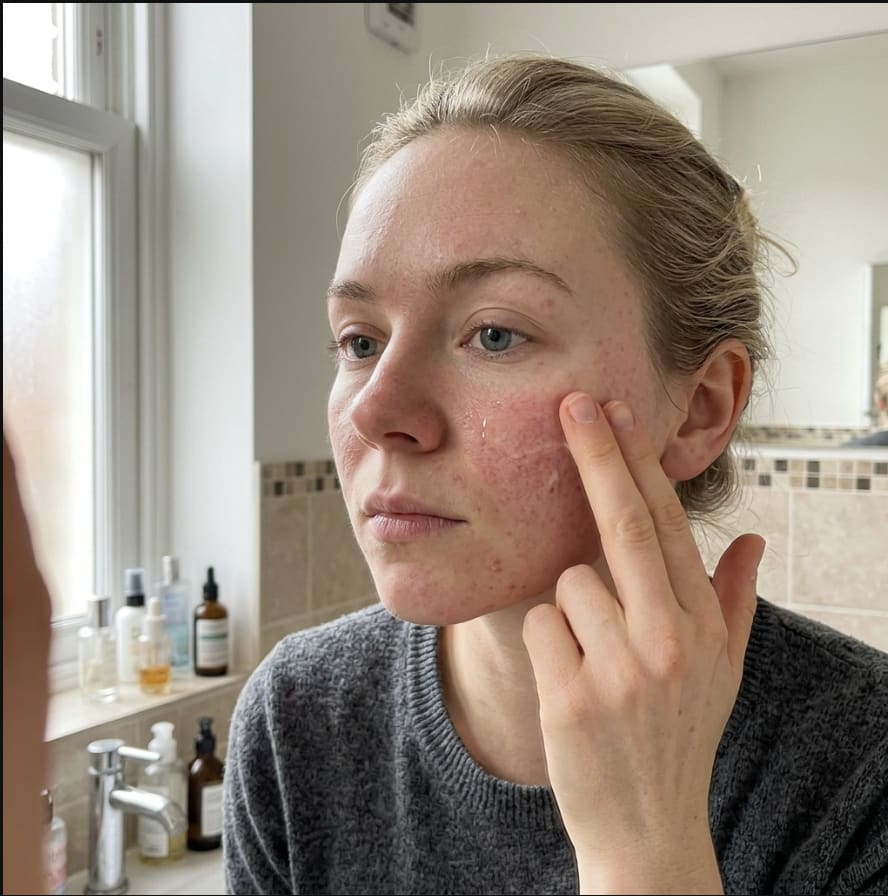
The very first application was a sensory shock. Snail mucin is thick, viscous, and stringy — that distinctive, almost magnetic pull when you press your fingers together. The beta-glucan serum I tested (the iUNIK Beta-Glucan Power Moisture Serum) was categorically different: a lightweight, water-gel consistency that disappeared into my skin within seconds of pressing it in.
No stickiness. No tacky residue layer. No thirty-second wait before the next step. The absorption was so immediate and clean that my first instinct was to wonder whether I had actually applied anything at all — until my skin told me I had. It felt internally hydrated in a way I hadn’t experienced from a serum. Not coated. Not sealed. Actually saturated from within.
By day 3, my skin was measurably softer to the touch. By day 4, I noticed I wasn’t reaching for my facial mist in the early afternoon. The hydration was holding through the day without any touch-up — something my snail mucin had never fully delivered in Colorado’s dry high-altitude air.
Days 1–4 Snapshot Ratings
Texture / Elegance
10/10
Hydration Level
8/10
New Breakouts
None ✓
Day 2 — The absorption speed is genuinely different. Zero slime. Zero wait time. Just instant deep hydration.
📅 Days 5–9 — The Barrier Test
No Flaking. No Tightness. And My Rosacea Started to Quiet Down.
This is where the experiment stopped being interesting and became genuinely surprising. I live in Colorado — high-altitude, chronically dry air, constant seasonal wind. My skin barrier is under stress every single day. By the end of any given week without intervention, I typically see flaky patches materializing around my nose and chin. No tight flaking, no midday dehydration lines — that cycle has been my reality for three years.
But during Days 5 through 9 — nothing. No flaking. No tightness at the nose fold. No dehydration lines when I smiled at my phone camera. My skin maintained a consistent, pillowy comfort from morning to evening without any mid-afternoon mist reapplication.
The most unexpected result of this phase was the redness reduction. I have mild rosacea on both cheeks that has been a permanent feature since college. By day 7, the constant pink flush I had genuinely just accepted as part of my face was visibly, measurably dialed back. Not eliminated — but calmer than I had seen it in months.
This is where beta-glucan’s anti-inflammatory mechanism moved from a clinical claim on a product page to something I could actually see in my bathroom mirror. It wasn’t just hydrating the surface. It was actively communicating with my skin’s immune response and de-escalating it. Snail mucin had never done this for my specific skin biology.
Day 7 — My rosacea is actually calming for once. This was genuinely unexpected.
📅 Days 10–14 — The Final Reveal
The Closed Comedones Started Disappearing. By Day 14, I Was Smooth.
This is what you scrolled here for. Did the bumps actually clear?
Yes. Approximately 80% of them are gone.
Those stubborn closed comedones on my forehead that had been camping out for two months started visibly flattening around Day 10. By Day 14, when I ran my fingertips slowly across my forehead in full harsh side lighting — the most unforgiving texture test — it was genuinely, measurably smooth. The kind of smooth I had stopped expecting from my skin.
The overall surface of my face looked refined. Pores on my cheeks appeared less stretched and congested. My complexion had a natural, luminous dewiness I hadn’t achieved without highlighter products in a very long time. I looked hydrated, healthy, and balanced — not glassy or over-moisturized. Just genuinely well.
Day 14 Final Scores
Hydration
9.5/10
Texture / Bumps
9/10
Redness / Rosacea
8/10
Barrier Feel
10/10
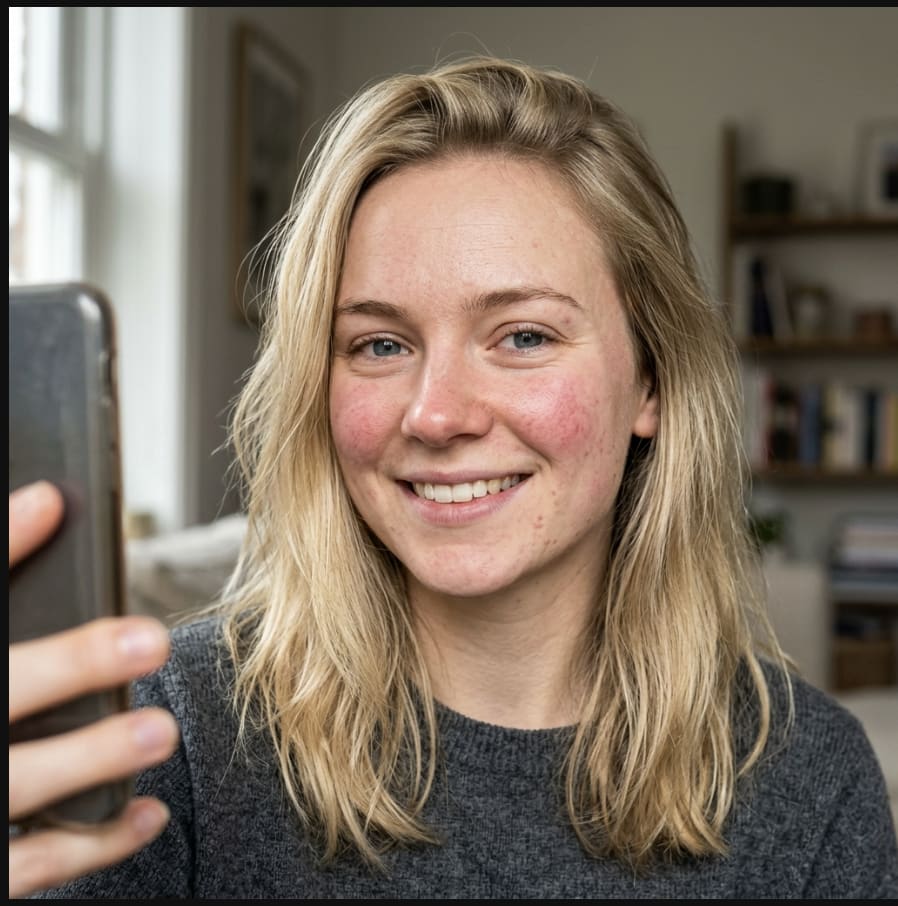
Day 14 — I’m genuinely smiling because my skin feels the best it has in months. And it’s not a filter.
The moment I stopped applying the product my skin had been quietly reacting to and started giving it what it actually needed — that was the moment things changed. The ingredient mattered. The swap was the entire intervention.
Section 04 — The ComparisonSnail Mucin vs. Beta-Glucan: The Complete Breakdown
Here is the comprehensive, clinically framed side-by-side comparison I wish had existed before I started this experiment. If you are weighing beta-glucan vs snail mucin for your own routine, every variable that actually matters is accounted for in this table.
Feature
🐌 Snail Mucin Essence
🍄 Beta-Glucan Serum
Ingredient Source
Snail secretion filtrate Animal-Derived
Mushrooms, oats & yeast cell walls 100% Vegan
Texture & Feel
Thick, viscous, stringy gel — stays on skin surface
Lightweight water-gel — absorbs in seconds, zero residue
Allergic Risk Potential
Moderate risk due to dust mite cross-reactivity Moderate Risk
Extremely low — hypoallergenic baseline Very Low Risk
Moisture Retention
Strong surface hydration — excellent humectant film
Up to 20% greater than HA — penetrates deeper layers
Both are well-formulated. But one caused hidden congestion for two months. The ingredient matters. The swap was everything.
Section 04.5 — Protocol-Matched ProductsThe Two Best Beta-Glucan Products Available on Amazon US Right Now
If this experiment convinced you to try beta-glucan, these are the two products I would shortlist first. Both are budget-friendly, widely available on Amazon US, and clinically formulated. Here is exactly what each one does, and which one fits your specific skin concern.
#1
🍄 K-Beauty Serum
Intensive Hydration Serum
iUNIK Beta-Glucan Power Moisture Serum
★★★★★4.4 / 5.0· Verified Amazon US Reviews
This is the serum that replaced my snail mucin. Formulated with 98% pure Beta-Glucan extract — one of the highest concentrations available at this price point. It delivers 20% better moisture retention than HA without any tacky finish.
✓98% Beta-Glucan concentration — highest available at this price tier.
✓20% superior moisture retention vs. HA — deeper penetration.
✓Zero stickiness, instant absorption — ideal for layering under SPF.
✓Non-comedogenic & fragrance-free — safe for acne-prone skin.
✓100% vegan formula — mushroom-derived, ethically produced.
Best For
People who want a dedicated hydration serum layer with maximum beta-glucan concentration. Ideal for dry, sensitive, acne-prone, and rosacea-prone skin.
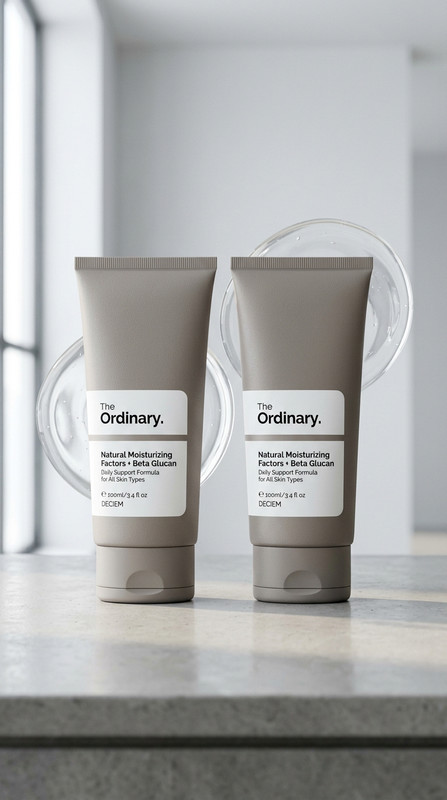
The Ordinary Natural Moisturizing Factors + Beta Glucan
★★★★★4.6 / 5.0· Verified Amazon US Reviews
A comprehensive NMF + Beta-Glucan complex gel-cream that actively rebuilds the stratum corneum’s lipid architecture. Lightweight daytime wear under makeup and SPF.
The iUNIK serum delivers 98% extract concentration — ideal for closed comedones, rosacea, or switching from snail mucin.
🌿 Choose The Ordinary if…
You Want Beta-Glucan Built Into a Lightweight Daytime Moisturizer
Ideal for minimalist routines and daytime wear under makeup. Smarter choice for barrier recovery after aggressive actives.
Both products are non-comedogenic, fragrance-free, and clinically formulated. If your budget allows, use the iUNIK serum as your treatment layer and The Ordinary gel-cream as your finishing moisturizer. The two formulas are fully compatible and complementary in the same routine.
Free Resource — Instant Access
Join my free email signup and get the
FREE 7-Day Skin Reset Guide 🖤
The exact printable calendar with product categories, application zones, and barrier recovery checkpoints — night by night.
Night-by-night checklist
Zone application map
Barrier recovery tracker
Hormonal cycle adaptation guide
✓ Thank you! Check your inbox (and Promotions tab if using Gmail) for your free guide.
Zero spam. Unsubscribe at any time.
✉️
IMPORTANT
Using Gmail? Check Your Promotions Tab
Gmail routes our guides to Promotions. Drag our email to Primary and click “Yes” — you’ll never miss an update from Glowing Skin Hub.
Section 05 — Your QuestionsFrequently Asked, Answered with Evidence
Can I use beta-glucan if I already love my snail mucin and have no breakouts?
+
Absolutely — and you might not need to swap at all. If your skin genuinely thrives on snail mucin with zero congestion, redness, or sensitivity, there is no clinical reason to change. Both ingredients are well-studied. The swap I documented is specifically relevant for people experiencing unexplained closed comedones, dust mite sensitivities, or rosacea while using snail mucin.
How is the 20% moisture claim vs hyaluronic acid measured?
+
The claim comes from in-vitro studies measuring water-binding capacity at equivalent concentrations using corneometry and gravimetric analysis. Beta-glucan’s helical molecular structure creates a larger number of hydroxyl groups per molecule than linear hyaluronic acid chains. Additionally, beta-glucan’s smaller molecular weight variants (below 40 kDa) demonstrate measurable transepidermal penetration that high-molecular-weight HA cannot achieve.
Why did it take until around Day 10 for the bumps to start clearing?
+
Closed comedones are formed inside the follicular infundibulum — below the skin surface. Even after removing the triggering ingredient, the existing plugs do not immediately surface or resolve. The timeline is governed by the keratinocyte turnover cycle, which runs approximately 28–40 days in adults. Full resolution would continue beyond Day 14 in most cases.
Is beta-glucan safe for pregnancy or nursing?
+
Beta-glucan is generally considered safe for use during pregnancy and nursing due to its non-active, non-retinoid, non-acid classification and its natural derivation from fungal and plant sources. That said, individual circumstances vary significantly and no skincare ingredient should be introduced during pregnancy without first consulting your OB-GYN or dermatologist.
Can I use both serums in the same routine?
+
Yes — for skin types with no allergy concerns, layering both is a viable strategy. Apply beta-glucan first (on damp skin) and follow with snail mucin as a secondary humectant layer. Dermatologists recommend beta-glucan in the morning and snail mucin at night. The two ingredients are chemically compatible with no known interaction concerns.
Section 06 — Final VerdictShould You Actually Make the Swap?
Glowing Skin Hub — Definitive Recommendation
My honest take after 14 days, hundreds of selfies, and a deeply personal ingredient audit
Swap to Beta-Glucan Serum if: you experience unexplained closed comedones or persistent skin texture issues, you have a documented or suspected dust mite allergy, you deal with rosacea or chronic facial redness, or you want a fully vegan and sustainable alternative.
Stay with Snail Mucin Essence if: your skin genuinely thrives on it with absolutely zero breakouts, you have confirmed no dust mite sensitivities, and your current results are exactly what you want. If it works, it works.
Use both strategically (AM/PM split) if: you have normal-to-dry skin with no allergy concerns and you want to maximize your hydration layering stack using two clinically complementary humectants simultaneously.
For me, personally and unequivocally? I am not going back. Beta-glucan delivered everything snail mucin originally promised — superior hydration depth, dramatically smoother texture, significantly calmer rosacea — without the mystery texture bumps, without the allergy risk, and without the ethical compromise.
Both are genuinely well-formulated products. But beta-glucan won my skin — and earned my permanent loyalty. 🤎
If you have been quietly wondering why your holy-grail snail mucin is secretly working against your skin instead of for it, I genuinely encourage you to give beta-glucan a structured two-week trial. Keep everything else in your routine completely identical. Track your skin every single day. You might be as surprised as I was.
Your skin barrier has been asking for this upgrade. It’s time to listen. 💛
Next: I Quit Moisturizer for 30 Days — My Skin Barrier Actually Healed
How counterintuitively removing external moisturizer entirely restored my skin’s endogenous lipid production and acid mantle function within one month.
How to Remove Sun Tan Naturally at Home in 7 Days | GlowingSkinHub ✦ www.GlowingSkinHub.com ✦ Your Natural Beauty Guide This post may contain affiliate links. If you purchase through these links, I may earn a small commission at no extra cost to you. I only recommend what I genuinely believe can help. Skin Care Guide · 7-Day Plan How to Remove Sun Tan Naturally at Home in 7 Days No harsh chemicals. No expensive treatments. Just simple, proven natural remedies that actually work — with consistency. GlowingSkinHub.com Real results are possible — patience and the right care make all the difference. The Problem Why Your Skin Looks Dull & Uneven After Sun Exposure Spending time outdoors during summer is refreshing — but the aftermath? Not so much. Sun exposure leaves your skin darker, dull, and noticeably uneven. This is one of the most common skincare struggles during warmer mo...
Why Your Acne Keeps Coming Back (Even After Using "Good" Products) Visit our website Glowing Skin Hub Skincare that works ✦ Glowing Skin Hub Skincare That Actually Works · Est. 2023 Home About Us Privacy Policy Contact ⚠️ Affiliate Disclosure: This post contains affiliate links. If you click through and make a purchase, I may earn a small commission — at no extra cost to you. I only recommend products I genuinely trust. Acne Science · Why Products Fail You Why Your Acne Keeps Coming Back (Even After Using "Good" Products) Research-Backed 8 min read Evidence-Based You're using the right products. So why does acne keep returning? You've done everything "right." You bought the recommended cleanser. You use the dermatologist-approved moisturizer. You follow the routine exactl...
Why Your Routine Isn't Working Doing Everything Right, Still Breaking Out? I thought I was doing everything right — double cleansing, layering serums, moisturizing every single day. But instead of improving, my skin kept getting worse. If this sounds like you, you're not alone. A lot of people overload their skin with too many products, thinking it will fix acne faster… but it often does the opposite. Signs Your Skin Barrier Is Damaged When Acne Turns Into Irritation At some point, it stopped being just acne. My skin became red, irritated, and sensitive — breaking out and drying out at the same time. That's usually a sign of a damaged skin barrier. And in most cases, it's caused by overusing strong ingredients like exfoliants and retinol. [I may earn a small commission if you purchase through some of the links below, at no extra cost to you. I only recommend products that I personally trust and believe can actually help]. The 4-Night Skin Cycling R...