
Affiliate Disclosure: GlowingSkinHub may earn a small commission on purchases made through links in this article at no additional cost to you. This does not influence our editorial recommendations. Products are selected based on ingredient evidence and clinical research only.
The Best Moisturizers for a Damaged Skin Barrier, According to Dermatologists
When your barrier breaks down, the wrong moisturizer makes everything worse. Here’s what dermatologists actually recommend — and why it matters more than most people realize.

There’s a version of this problem almost everyone with struggling skin has lived through: you buy more products, layer more actives, and your skin keeps getting worse. Tighter, more reactive, burning at things that never used to bother it. What’s usually happening isn’t an allergy or a breakout phase — it’s a barrier that’s been quietly compromised, often by the very routine you built to fix it.
The skin barrier — technically called the stratum corneum — is a thin, lipid-rich layer that does an enormous amount of work. It keeps moisture in and irritants out. When it functions properly, you barely think about it. When it doesn’t, almost everything you put on your face becomes a problem.
Repairing it isn’t complicated, but it does require choosing the right moisturizer. Not every hydrating cream is formulated to address barrier dysfunction specifically. The ingredients matter enormously, and so does what you stop using while your skin recovers. This guide covers both.
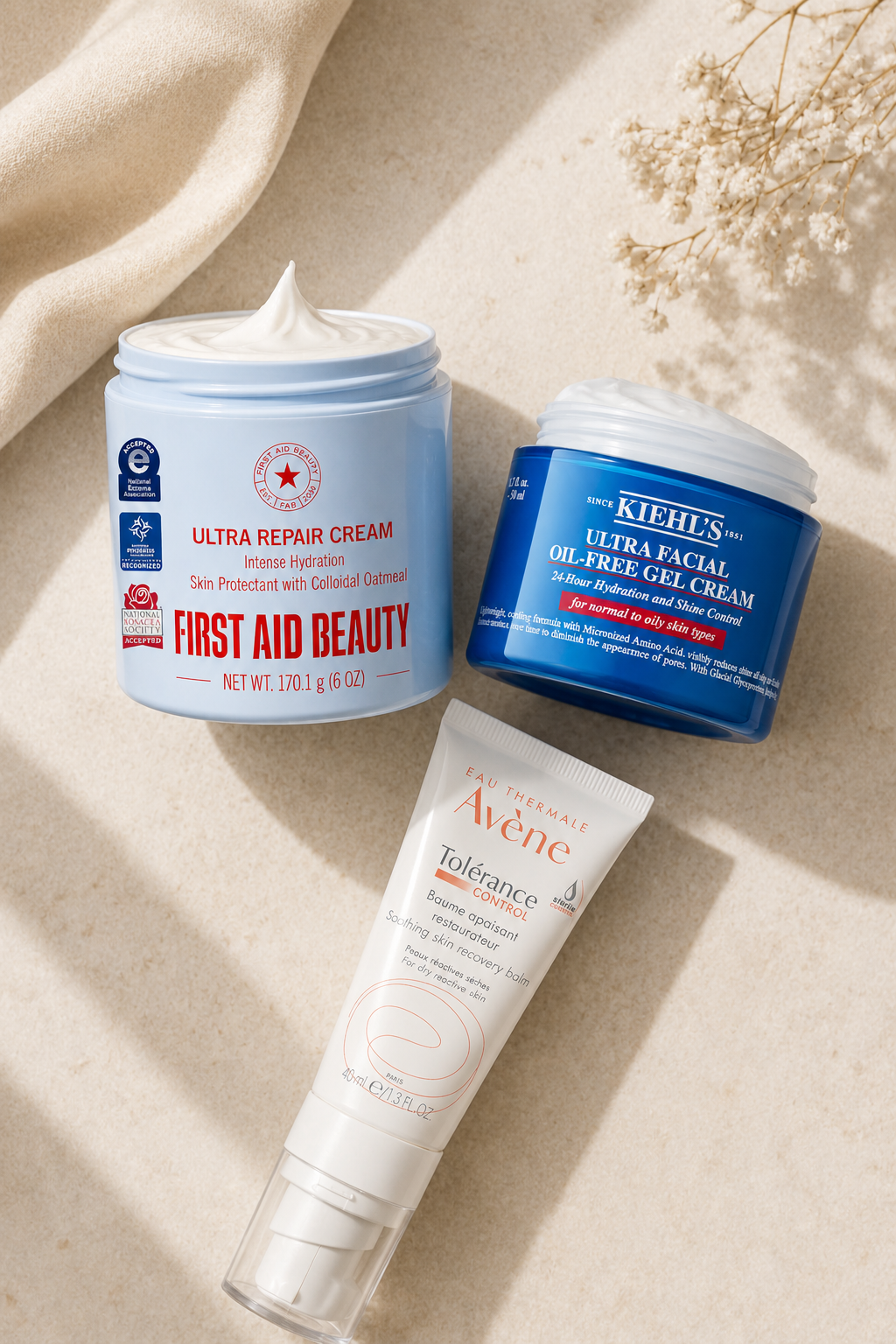
If your skin is tight, burning, or reacting to products it used to tolerate, your barrier is likely compromised. The fastest path to recovery is a simple routine built around a ceramide- or colloidal oatmeal-based moisturizer, applied twice daily to damp skin, while pausing actives like retinol and exfoliating acids. The three moisturizers most consistently recommended for this purpose are First Aid Beauty Ultra Repair Cream (best overall), Avène Tolérance Control Soothing Skin Recovery Balm (best for sensitive skin), and Kiehl’s Ultra Facial Oil-Free Gel Cream (best for oily or breakout-prone skin).
What Is the Skin Barrier, Exactly?
The outermost layer of the skin is made up of dead skin cells — called corneocytes — held together by lipids, primarily ceramides, cholesterol, and fatty acids. Dermatologists often describe it using a “brick and mortar” analogy: the cells are the bricks, and the lipid matrix is the mortar holding everything in place.

A healthy barrier retains moisture efficiently and resists environmental triggers that would otherwise cause inflammation.
When that lipid matrix is intact, water stays inside the skin and allergens, pollutants, and bacteria stay out. When the mortar starts to erode — from over-exfoliation, harsh cleansers, environmental stress, or simply skipping moisturizer too often — the structure becomes porous. Moisture escapes, irritants enter, and the inflammatory response that follows is what most people mistake for a simple sensitivity flare.
This is also why barrier repair isn’t just about hydration. You need to restore the lipid composition of that mortar, which is why ceramide-containing products and fatty acid-rich formulations outperform basic humectants for this specific purpose.
Signs of a Damaged Skin Barrier
The symptoms are easy to overlook early on because they often mimic dehydration or a minor reaction. But there’s a pattern to barrier dysfunction that, once you recognize it, becomes fairly easy to identify.
- Persistent tightness — skin feels dry and pulled even immediately after moisturizing
- Stinging or burning — products that were previously well-tolerated now cause discomfort on application
- Redness that doesn’t resolve — a low-grade flush that lingers even when you haven’t used actives
- Flaking without oiliness — dry, rough patches that aren’t related to environmental exposure
- Sudden breakouts — bacteria can penetrate more easily through a compromised barrier, triggering acne
- Itching or heightened sensitivity — even water or low-pH products feel uncomfortable
- Dullness and uneven texture — impaired barrier function disrupts normal cell turnover patterns
One important distinction: these symptoms can also indicate conditions like eczema, rosacea, or contact dermatitis. If your skin isn’t improving within four to six weeks of a simplified, barrier-focused routine, it’s worth consulting a board-certified dermatologist to rule out underlying conditions.
What Causes Skin Barrier Damage?
The causes fall into two broad categories: behavioral and environmental. Behavioral causes are more controllable, and they’re also far more common than most people expect.
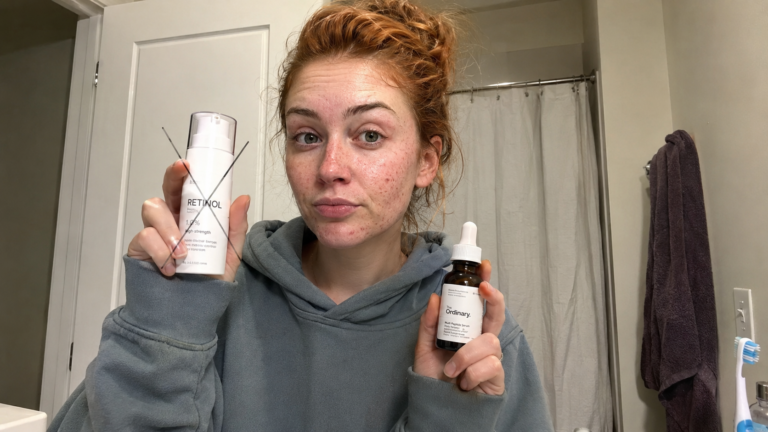
Using too many actives at once — AHAs, BHAs, retinoids — is one of the fastest ways to compromise your barrier without realizing it.
Over-exfoliation is the most frequent culprit in the US skincare community right now. The widespread adoption of AHAs, BHAs, retinoids, and physical scrubs — often in combination — strips the lipid layer faster than it can regenerate. Using even one exfoliating acid daily without an adequate recovery buffer will cause cumulative damage over weeks, even if each individual use seems fine.
Beyond that, sulfate-heavy cleansers disrupt the skin’s natural pH and remove protective oils, fragrance and alcohol in toners and serums trigger low-grade inflammation, and hot water — particularly long showers — dissolves the lipid barrier more than most people realize. Environmental factors like low humidity, cold air, UV exposure, and pollution compound the damage further.
Genetics also play a role. People with naturally low ceramide production, atopic tendencies, or conditions like eczema are more susceptible to barrier disruption regardless of their routine. For these individuals, barrier maintenance isn’t a temporary fix — it’s an ongoing skincare priority.
Ingredients Dermatologists Commonly Recommend for Barrier Repair
Not all moisturizing ingredients work the same way. Understanding the difference between what hydrates, what seals, and what structurally restores the barrier helps you evaluate any product, not just the ones listed here.
Naturally occurring lipids that make up roughly 50% of the skin’s barrier matrix. Topical ceramides help replenish what’s been lost and support structural integrity.
FDA-approved as a skin protectant. Contains avenanthramides with anti-inflammatory properties and beta-glucan, which forms a protective film and retains moisture.
A humectant that draws water into the skin. Most effective when applied to damp skin; by itself it doesn’t repair barrier structure, but it supports hydration while ceramides do the structural work.
Rich in oleic and stearic fatty acids. Acts as an occlusive to slow transepidermal water loss (TEWL) and provides lipid replenishment that mimics the skin’s natural barrier composition.
One of the most studied humectants in dermatology. Works at multiple layers of the skin and helps maintain moisture balance without clogging pores.
Used in French pharmacy formulations, particularly Avène’s. Contains trace minerals and silica that have demonstrated mild anti-inflammatory effects in clinical settings.
A stable, skin-identical lipid derived from sugarcane or olives. Supports barrier lipid replenishment and is non-comedogenic — well-tolerated by most skin types including oily.
A plant-derived compound that soothes irritation and supports skin cell regeneration. Commonly found in formulations designed for reactive or compromised skin.
The most effective barrier repair moisturizers typically combine ingredients from at least two of these categories — a humectant to pull water in, a lipid to restore structure, and an occlusive to lock it all in. Fragrance-free formulations are non-negotiable during active repair, as fragrance is one of the most common sources of low-grade skin inflammation.
How We Selected These Moisturizers
These three products were selected based on a review of published dermatological literature, ingredient analysis, formulation standards, and alignment with what board-certified dermatologists and skin-barrier researchers publicly recommend. No product was included based on brand partnerships, affiliate rates, or sponsored arrangements.
The selection criteria included: fragrance-free formulation, presence of clinically supported barrier-repair ingredients, appropriate pH for skin compatibility, minimal use of known irritants, and broad availability in the US market. Each product targets a distinct skin type — dry/normal, sensitive/reactive, and oily/combination — to address the reality that barrier damage doesn’t look the same on everyone.
Quick Comparison
A side-by-side look at how these three moisturizers differ across the most important categories for barrier repair.
| Product | Best For | Texture | Key Ingredient | Fragrance-Free |
|---|---|---|---|---|
| First Aid Beauty Ultra Repair Cream | Best Overall | Rich cream | Colloidal Oatmeal | ✓ Yes |
| Avène Tolérance Control Balm | Sensitive Skin | Smooth balm | Thermal Spring Water | ✓ Yes |
| Kiehl’s Ultra Facial Oil-Free Gel Cream | Oily Skin | Lightweight gel | Glacial Glycoprotein | ✓ Yes |
The 3 Best Moisturizers for a Damaged Skin Barrier
Each of the following products serves a different skin type and recovery context. Read through all three before deciding — the nuances matter more than the labels.
First Aid Beauty Ultra Repair Cream, Intense Hydration — Clinically Tested Face & Body Moisturizer with Colloidal Oatmeal
When someone asks what to use on a damaged barrier with no additional context — no specific skin type, no underlying condition, just compromised, reactive skin that needs to calm down — this is the product that keeps coming up in dermatology circles. It’s straightforward, clinical in its approach, and difficult to fault.
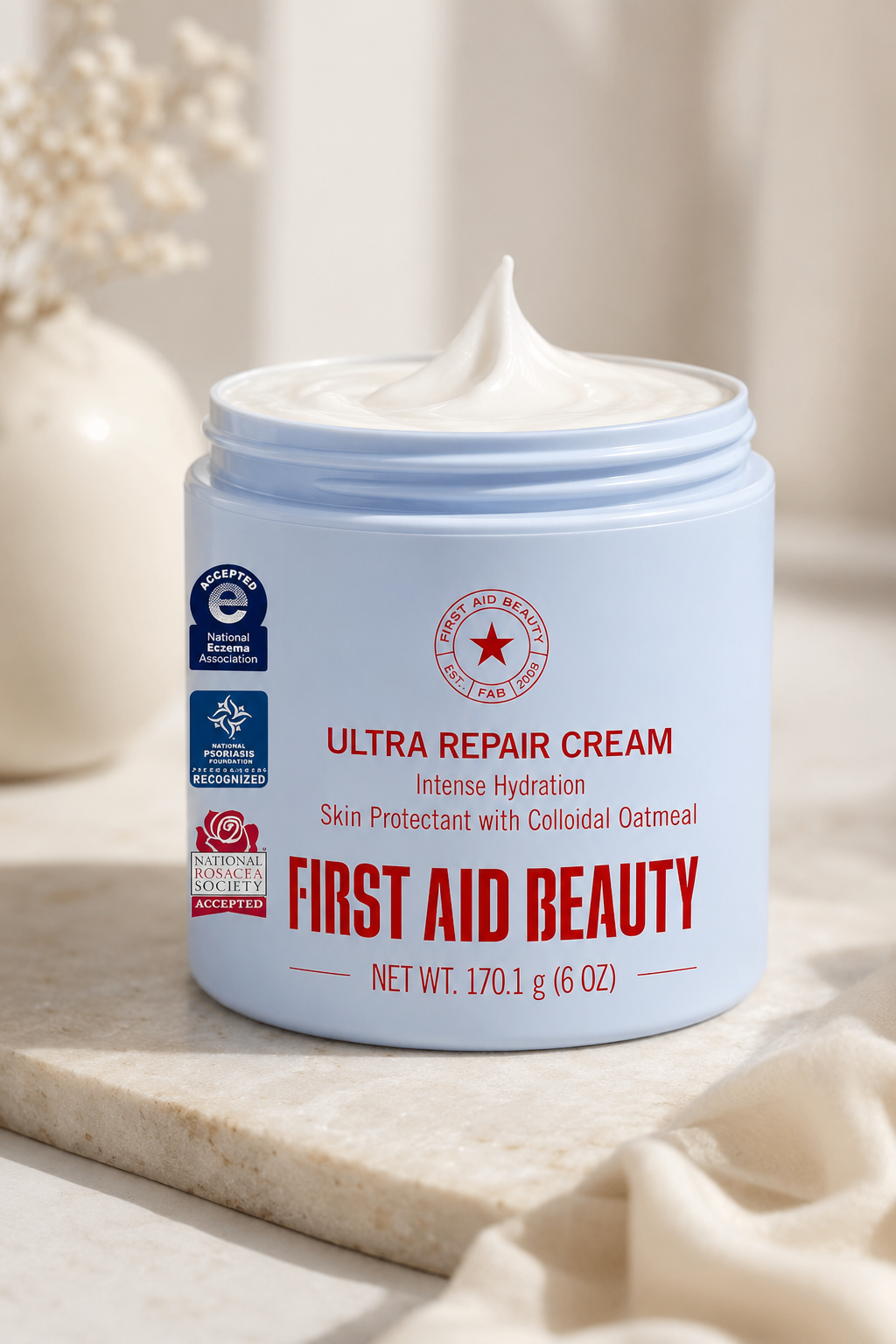
The Ultra Repair Cream is built around 1% colloidal oatmeal, which the FDA recognizes as an over-the-counter skin protectant — a meaningful distinction. Unlike most moisturizing ingredients that simply hydrate, colloidal oatmeal actively reduces inflammation at the skin’s surface and forms a physical protective film that limits further irritant exposure while the barrier heals.
The supporting cast is strong: shea butter and allantoin provide lipid replenishment and soothing properties, white tea extract adds antioxidant support, and glycerin rounds out the humectant profile. The formula is thick enough to feel genuinely protective without being occlusive to the point of suffocating the skin. It absorbs within a few minutes and leaves no residue. Both face and body use are appropriate, which makes it particularly practical for conditions like eczema-prone skin on the arms or legs.
- FDA-recognized skin protectant ingredient
- Clinically tested, eczema-safe formulation
- Works on both face and body
- Fragrance-free and dye-free
- Non-comedogenic
- Available in multiple sizes
- Too heavy for oily skin types
- Tub packaging can reduce hygiene over time
- Not ideal for layering under SPF in summer
Those with true oat allergies should patch test first, though topical oat reactions are rare. People with very oily or acne-prone skin may find this too rich for daily morning use.
Apply to damp skin after cleansing — morning and evening during active barrier repair. A small amount goes further than expected. Use consistently for at least four weeks before evaluating results.
Colloidal oatmeal contains avenanthramides that inhibit pro-inflammatory cytokines. Clinical trials demonstrate its ability to reduce TEWL and improve barrier function scores in patients with atopic dermatitis — the same mechanisms that make it useful for general barrier repair.
Avène Tolérance Control Soothing Skin Recovery Balm
Avène’s entire line is built around reactive skin. The brand’s formulations come out of decades of clinical research conducted at the Avène Hydrotherapy Center in France, where thermal spring water has been studied in dermatology for over 60 years. The Tolérance Control Balm is their most minimalist, most targeted offering — designed specifically for skin that has lost tolerance to its own routine.
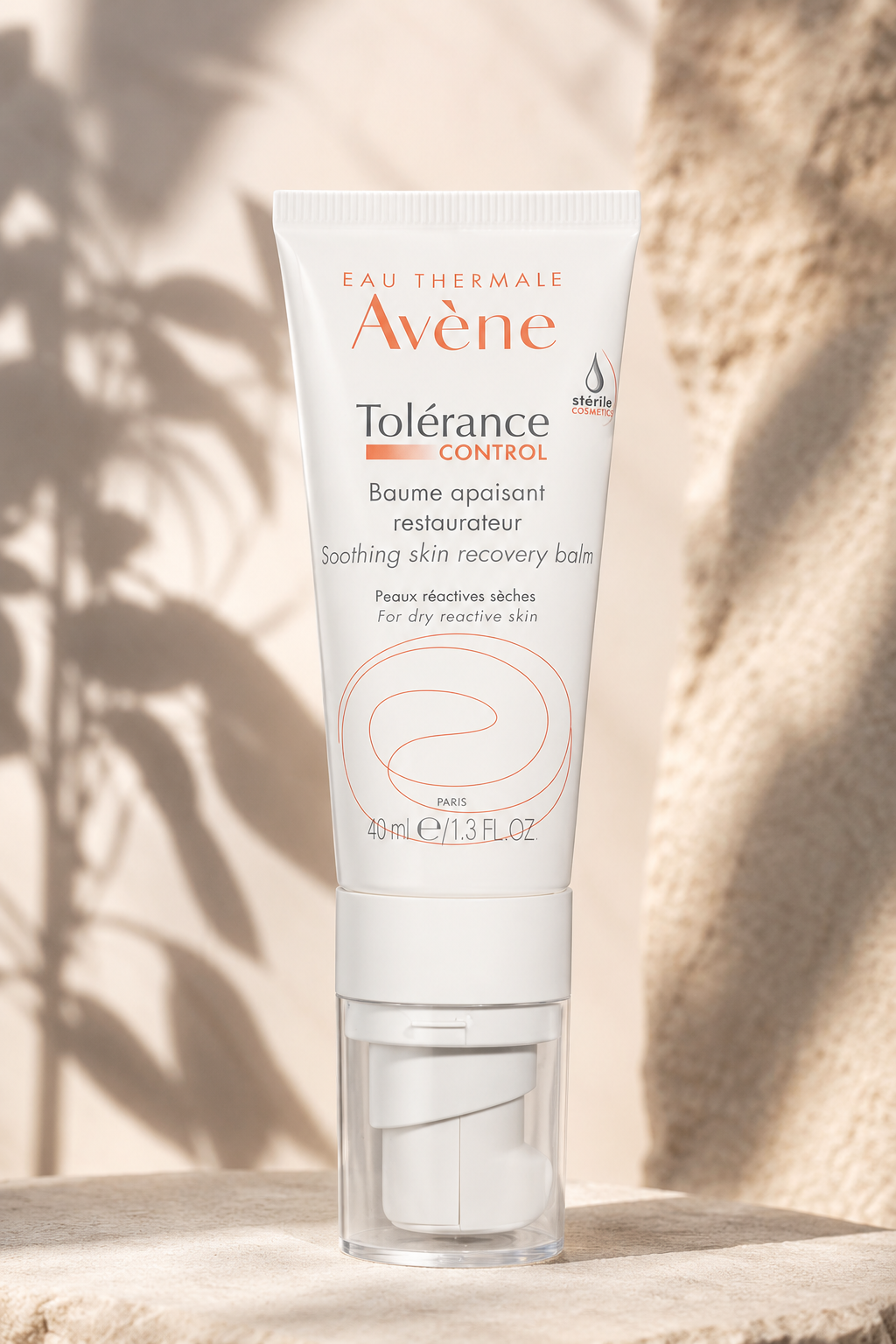
What makes this balm different from most “sensitive skin” products is its ingredient philosophy: fewer ingredients, deliberately. The formula uses Avène’s proprietary TEWL-reducing technology alongside thermal spring water to calm reactivity at the surface level, reduce redness, and support the lipid matrix without introducing potential triggers. The full ingredient list is one of the shortest you’ll find in a premium skincare product, and that restraint is entirely intentional.
The thermal spring water in Avène products is particularly noteworthy. With a unique mineral composition including silica and trace elements, it has been studied in clinical environments and shown to reduce inflammatory markers and modulate immune responses at the skin surface. This isn’t a cosmetic claim — the research exists in peer-reviewed dermatology literature. This product is particularly well-suited to post-procedure recovery — after laser treatments, chemical peels, or microneedling. Start here, stabilize, then reintroduce other elements of a routine slowly.
- Minimal ingredient list — very low irritant risk
- Backed by 60+ years of thermal spring water research
- Ideal for post-procedure recovery
- Allergy-tested and dermatologist-tested
- Works well under makeup once absorbed
- Premium price point
- Not rich enough for very dry skin in winter
- Less widely available in physical retail stores
Those who need deep occlusive moisture — severe eczema in very dry climates — may find this balm insufficient on its own and need to layer it with a heavier occlusive like petroleum jelly at night.
Use as your sole moisturizer during recovery phases. Apply morning and evening to clean, slightly damp skin. Even gentle products can cause temporary stinging on very inflamed skin — this is a sign of barrier compromise, not an adverse reaction.
Avène thermal spring water has a documented anti-inflammatory effect through modulation of skin immune responses. Multiple published studies show its ability to improve outcomes in atopic dermatitis and post-procedure inflammatory states — which is why dermatologists recommend Avène products by name, not just “any gentle moisturizer.”
Kiehl’s Ultra Facial Oil-Free Gel Cream — 24-Hour Hydration for Oily to Normal Skin
The assumption that oily skin doesn’t need moisturizer — or that a damaged barrier on oily skin will somehow self-correct — is one of the more persistent and damaging myths in skincare. Oily skin is just as vulnerable to barrier disruption as dry skin, and often more so, because people with oily or acne-prone skin tend to over-cleanse and over-exfoliate in an attempt to control sebum. The right moisturizer for oily skin isn’t optional — it’s essential.
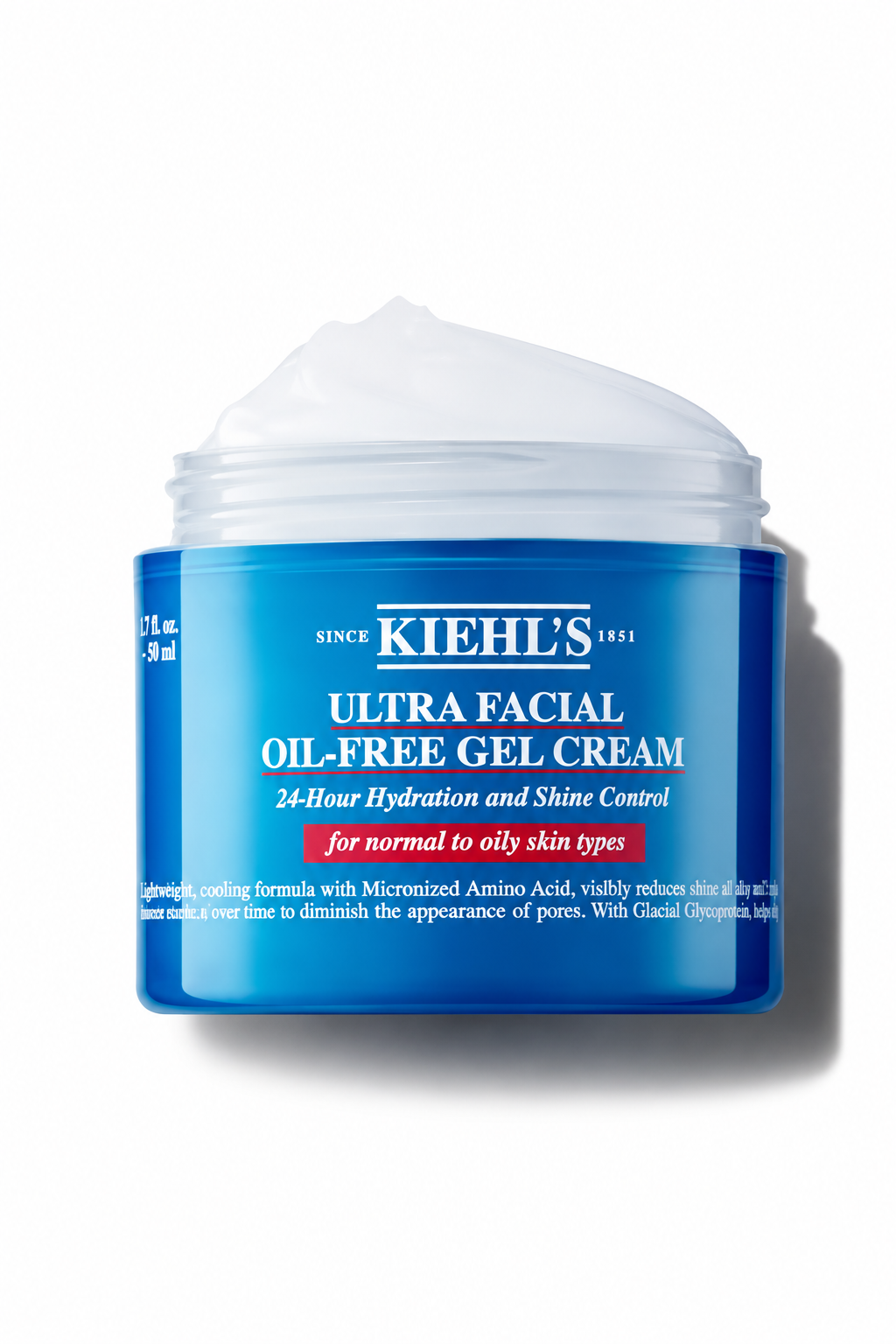
Kiehl’s Ultra Facial Oil-Free Gel Cream addresses this directly. It provides genuine 24-hour hydration through a combination of glacial glycoprotein and imperata cylindrica root extract — two ingredients with published evidence supporting moisture retention in oily skin types — without adding lipid weight that would worsen shine or congestion. The gel texture absorbs almost immediately, leaves no residue, and sits cleanly under SPF or foundation.
What separates this formula from other oil-free gels is the inclusion of imperata cylindrica root extract, a desert plant with demonstrated capacity to balance sebum production while maintaining hydration. For oily skin in a damaged barrier state, this distinction matters: you need moisture without anything that will sit on top of already-overactive sebaceous glands. Pairing it with a ceramide serum applied underneath will accelerate structural repair results.
- Non-comedogenic — won’t clog pores
- Absorbs quickly with no greasy residue
- Shine-reducing without stripping moisture
- Layers cleanly under SPF and makeup
- Fragrance-free formulation
- Less lipid-rich than ideal for severe barrier damage
- May need pairing with a ceramide serum for full repair
- Can feel insufficient in cold or very dry climates
People with very dry or severely compromised skin in arid or cold climates will likely find this insufficient as a standalone moisturizer. It’s formulated for oily to normal skin specifically.
Apply to damp skin after cleansing, morning and evening. For active barrier repair, consider applying a thin ceramide serum first, then the gel cream on top. The lightweight texture allows this layering without congestion.
Oily skin that is dehydrated often overproduces sebum as a compensatory response to moisture loss. Providing hydration through a non-comedogenic moisturizer can, over time, reduce that overproduction — a finding supported by research in sebaceous gland physiology.
Who Should Buy Which One?
The three products cover different territory. Here’s how to decide without overcomplicating it.
Buy the FAB Ultra Repair Cream if…
Your skin is dry, normal, or combination, and you need one product that covers barrier repair, deep hydration, and eczema-level sensitivity without requiring additional layering. It’s the most versatile option and the most forgiving for people who are uncertain about their exact skin type.
Buy the Avène Tolérance Control Balm if…
Your skin has become so reactive that you’re struggling to tolerate almost any product, or you’re in recovery after a procedure. The minimal formulation and clinical heritage make it the right choice when ingredient sensitivity is a genuine concern, not just a preference.
Buy the Kiehl’s Oil-Free Gel Cream if…
Your skin is oily or acne-prone, and you’ve been avoiding moisturizer altogether — or using it inconsistently because every formula you’ve tried made your skin look worse. This is the entry point for oily skin into a proper barrier-repair routine.
Common Mistakes That Prevent Barrier Repair
Choosing the right moisturizer matters, but what you stop doing is often more important than what you start. These are the patterns that keep damaged barriers stuck.
-
Continuing to use actives during recovery
Retinol, AHAs, BHAs, and vitamin C serums all require an intact barrier to be well-tolerated. Using them while you’re trying to repair disrupts the process continuously. Pause them for a minimum of two to four weeks.
-
Cleansing too aggressively
A barrier-disrupting cleanser undoes the work of even the best moisturizer. During recovery, switch to a gentle, low-pH, sulfate-free cleanser — evening only, with just water in the morning.
-
Applying moisturizer to dry skin
Moisturizers with humectants like glycerin and hyaluronic acid need ambient moisture to work. Applying to damp skin after cleansing dramatically improves absorption and moisture retention.
-
Switching products too frequently
The instinct to try something new when skin isn’t improving overnight is understandable but counterproductive. Barrier repair takes weeks, not days. Changing products every few days restarts the process and introduces new variables.
-
Skipping SPF
UV exposure directly degrades ceramide content in the stratum corneum. Skipping sunscreen while repairing your barrier is essentially working against yourself. Use a mineral SPF 30+ daily — ideally formulated for sensitive skin.
-
Over-applying moisturizer to compensate
Using more product than needed doesn’t accelerate repair. A consistent, appropriately sized application twice daily is more effective than heavy applications once a day.
Barrier Recovery Timeline
Recovery doesn’t happen linearly. Most people experience a plateau or even a brief worsening around weeks one and two before things improve. Understanding what to expect at each stage prevents premature product-switching.
Immediate Calming
Stinging and burning should reduce within the first few applications if the product is appropriate for your skin. Redness may persist — the inflammatory process doesn’t stop immediately, but the stimulus has been removed.
Stabilization Phase
Skin may still look dull or slightly flaky as old, damaged surface cells shed. This is part of the process. Resist the urge to exfoliate. Hydration levels should begin improving noticeably by the end of week two.
Active Repair
Tightness resolves significantly. Skin begins to tolerate a gentle cleanser consistently. Redness should be fading as ceramide synthesis is actively supported by your moisturizer’s ingredients.
Near-Full Recovery
Most barrier markers — TEWL, hydration levels, inflammatory response — return toward normal. Severe or chronic damage may take longer. You can begin slowly reintroducing actives in the second half of this phase.
Maintenance
A repaired barrier still requires ongoing support. Moisturizing daily, maintaining SPF use, and reintroducing actives gradually — rather than all at once — prevents a return to the compromised state.

Simplifying your routine to two or three well-chosen products is often the most effective thing you can do during active barrier recovery.
For reactive skin in an active flare, fewer ingredients almost always outperform more sophisticated routines. Stripping back to a gentle cleanser, a single well-formulated moisturizer, and a mineral SPF removes the noise — and often reveals that the skin heals far faster than expected once the irritants are removed. Complexity is the enemy of recovery.

A gel-cream texture delivers barrier-supporting hydration without the heaviness that triggers congestion in oily skin types — proof that moisturizing doesn’t have to mean heavy.
Texture preference matters more than most skincare advice acknowledges. If a moisturizer feels uncomfortable — too heavy, too tacky, too rich — you will use it inconsistently. Consistency is the entire mechanism through which barrier repair works. Choosing a texture you’ll actually apply twice a day, every day, is more clinically meaningful than choosing the product with the most impressive ingredient list.
Get Your Free Healthy Skin Guide [PDF]
A practical, research-informed guide to building a barrier-safe routine — no fluff, no filler. Delivered directly to your inbox.
Frequently Asked Questions
Answers to the questions that come up most often when dealing with a compromised skin barrier.
How long does it take to repair a damaged skin barrier?
With consistent use of the right moisturizer and no further irritation, most people notice meaningful improvement within two to four weeks. Full barrier restoration — including normalized TEWL levels — typically takes four to eight weeks, depending on the severity of the initial damage.
Can I use retinol on a damaged skin barrier?
Dermatologists generally recommend pausing retinol entirely until the barrier has recovered. Retinol accelerates cell turnover, which places additional stress on an already-compromised surface. Once your skin has stabilized, reintroduce it gradually — starting with a low concentration every three nights rather than nightly.
Is moisturizer alone enough to repair the skin barrier?
For mild to moderate damage, yes — a well-formulated moisturizer with ceramides, humectants, and occlusive support is the primary treatment. The other essential step is eliminating whatever is causing the damage. Severe or persistent cases that don’t respond after six to eight weeks of a simplified routine should be evaluated by a dermatologist.
Should I moisturize morning and night when my barrier is damaged?
Yes. Twice-daily application is important during the repair phase. Applying to slightly damp skin — rather than fully dry — significantly improves the absorption of humectant ingredients and boosts overall hydration retention throughout the day and overnight.
What should I absolutely avoid when my skin barrier is damaged?
Exfoliating acids (glycolic, lactic, salicylic), physical scrubs, alcohol-based toners or astringents, fragrance-heavy products, vitamin C in low-pH formulations, and hot water. Each of these independently impairs barrier recovery and compounds existing damage.
Can a damaged skin barrier cause breakouts?
Yes. A compromised barrier allows bacteria easier access to deeper skin layers and disrupts the microbiome balance at the skin’s surface — both of which can trigger or worsen acne. This is particularly common in people who over-exfoliate in an attempt to control blemishes, inadvertently making breakouts worse.
The Right Moisturizer Is the First Step — But Not the Only One
A damaged skin barrier heals when it’s given the right ingredients and enough time without further disruption. The three products listed here represent genuinely different approaches to the same problem — one built on an FDA-recognized skin protectant, one on clinical minimalism, and one on hydration without lipid loading for skin that needs moisture but not heaviness.
If you’re unsure where to start: First Aid Beauty Ultra Repair Cream is the most versatile choice for the widest range of skin types. Reach for Avène Tolérance Control if your skin has become so reactive it’s rejecting its own routine, or if you’re in post-procedure recovery. Use Kiehl’s Oil-Free Gel Cream if oiliness has been the reason you’ve been avoiding moisturizer altogether.
What matters most is consistency over the next four to eight weeks — and resisting the temptation to add more products before the barrier has had a real chance to recover.
This article is intended for informational and educational purposes only. The content on GlowingSkinHub.com does not constitute medical advice and is not a substitute for professional dermatological or medical consultation. Individual skin conditions vary significantly. If you are experiencing persistent skin symptoms, unusual reactions, or worsening skin health, consult a board-certified dermatologist. Do not delay seeking professional medical advice based on content read on this website.