
"I Tried the 'Skinimalism 2.0' Routine for 21 Days — Why My Dermatologist Told Me to Stop Using 6 Products"
I Tried Skinimalism 2.0 for 21 Days — Here's Why My Dermatologist Told Me to Stop Using 6 Products
I thought I was simplifying my skincare. My skin disagreed — loudly. By Day 12, it was dry, flaky, red, and angry.
Verified by Real Dermatology Advice. This article documents a real 21-day personal experience. The skincare advice is based on a board-certified dermatologist consultation. Product recommendations are derm-aligned and chosen for irritated/sensitive skin types. This is not medical advice — please consult your own doctor.
1. How I Fell into the Skinimalism 2.0 Trap
Last year, my FYP (and basically every skincare corner of the internet) was overflowing with one message: do less. Skinimalism was officially back — but this time it had a 2.0 badge on it. Fewer products. Cleaner routine. Healthier, glass-skin results. I was sold.
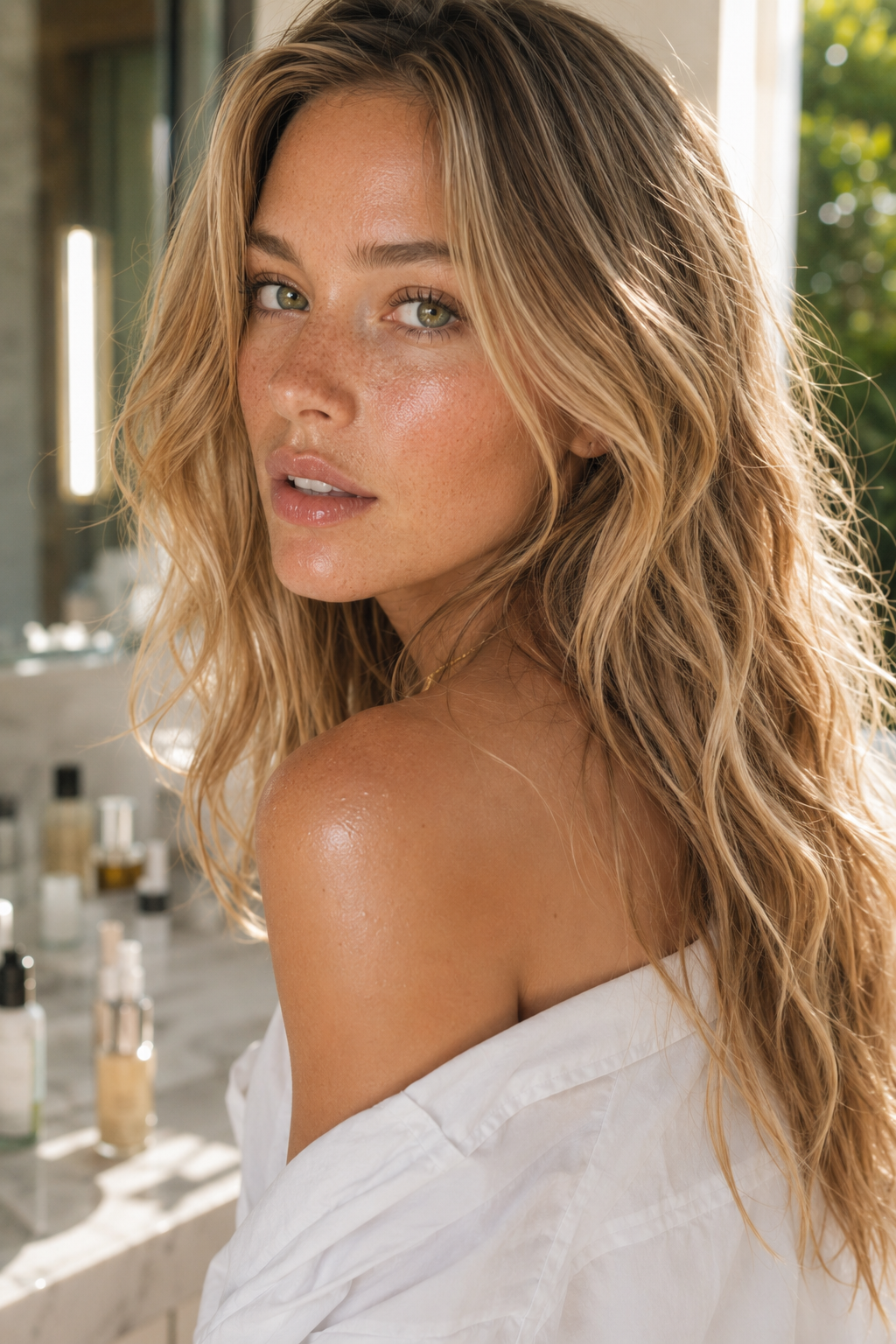
I spent two weekends researching the "perfect minimalist routine." I picked six products that every influencer, aesthetician, and Reddit thread swore by. Nothing felt excessive. It all made sense: a gentle cleanser, a brightening toner, Vitamin C in the morning, Niacinamide at night, Retinol three times a week, and an eye cream with spot treatment built in. Sounds responsible, right?
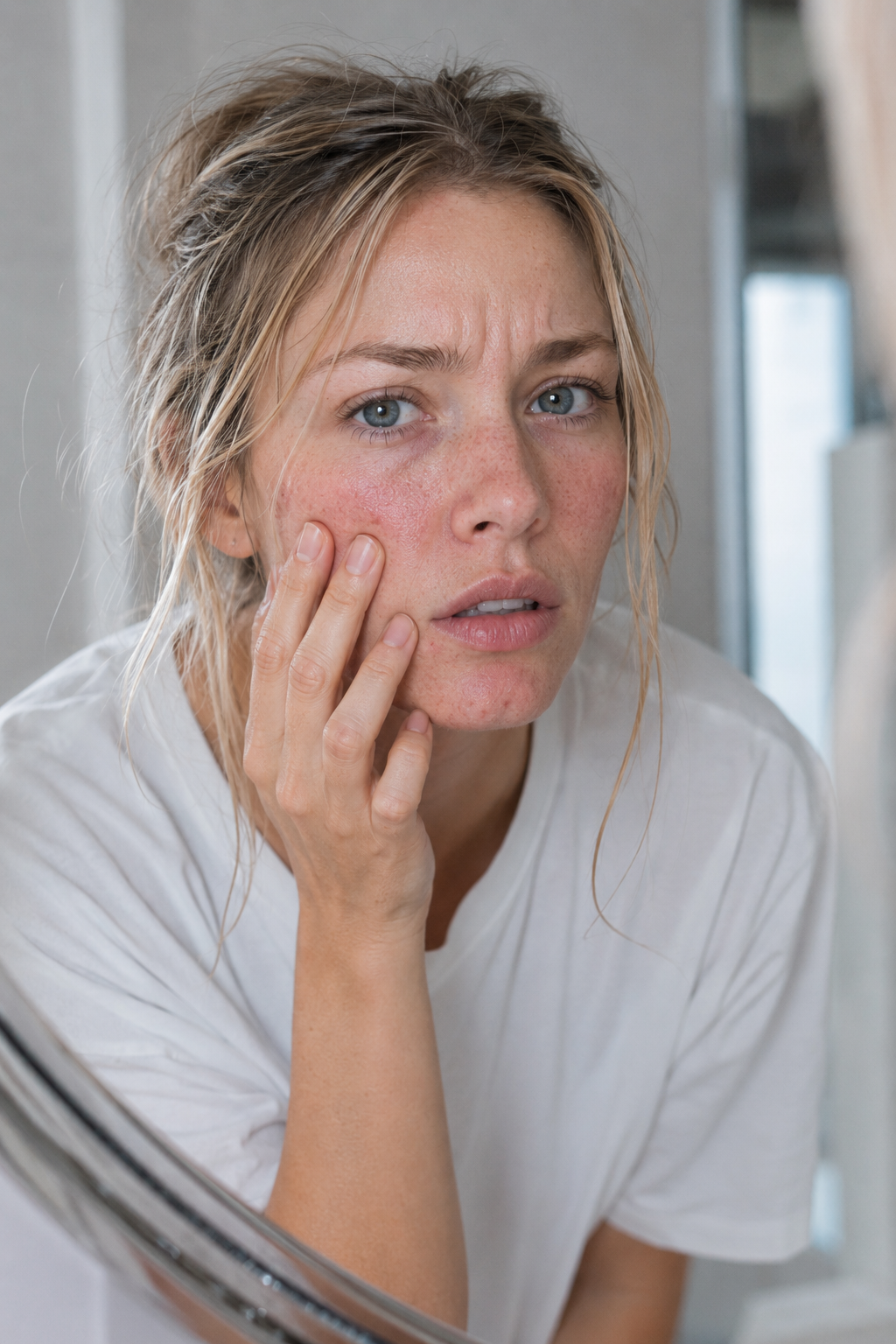
Wrong. By Day 10, my skin was not glowing. It was revolting — in every sense of the word. Dry patches appeared on my cheeks. My forehead was flaking. My nose was red and stinging. And the worst part? I'd been sold the idea that this was "minimalism."
💡 The cruel irony of Skinimalism 2.0: It markets itself as "less" — but it still layers multiple active ingredients on your face twice a day. That's not minimal. That's just well-branded overload.
When my skin refused to calm down after two more days, I booked an appointment with a dermatologist. I walked in carrying screenshots of my routine. She read it, looked up at me, and said the six words that changed everything for my skin:
"Six of these products need to go — today. Your skin barrier is damaged and it's screaming at you. The routine itself is the problem."
2. The 6 Products She Told Me to Drop Immediately
Here's the thing about Skinimalism 2.0 — it doesn't feel excessive when you're in it. Every product has a reason. Every ingredient sounds clinical and trustworthy. But when she laid out exactly why each one was working against my skin, it finally clicked.
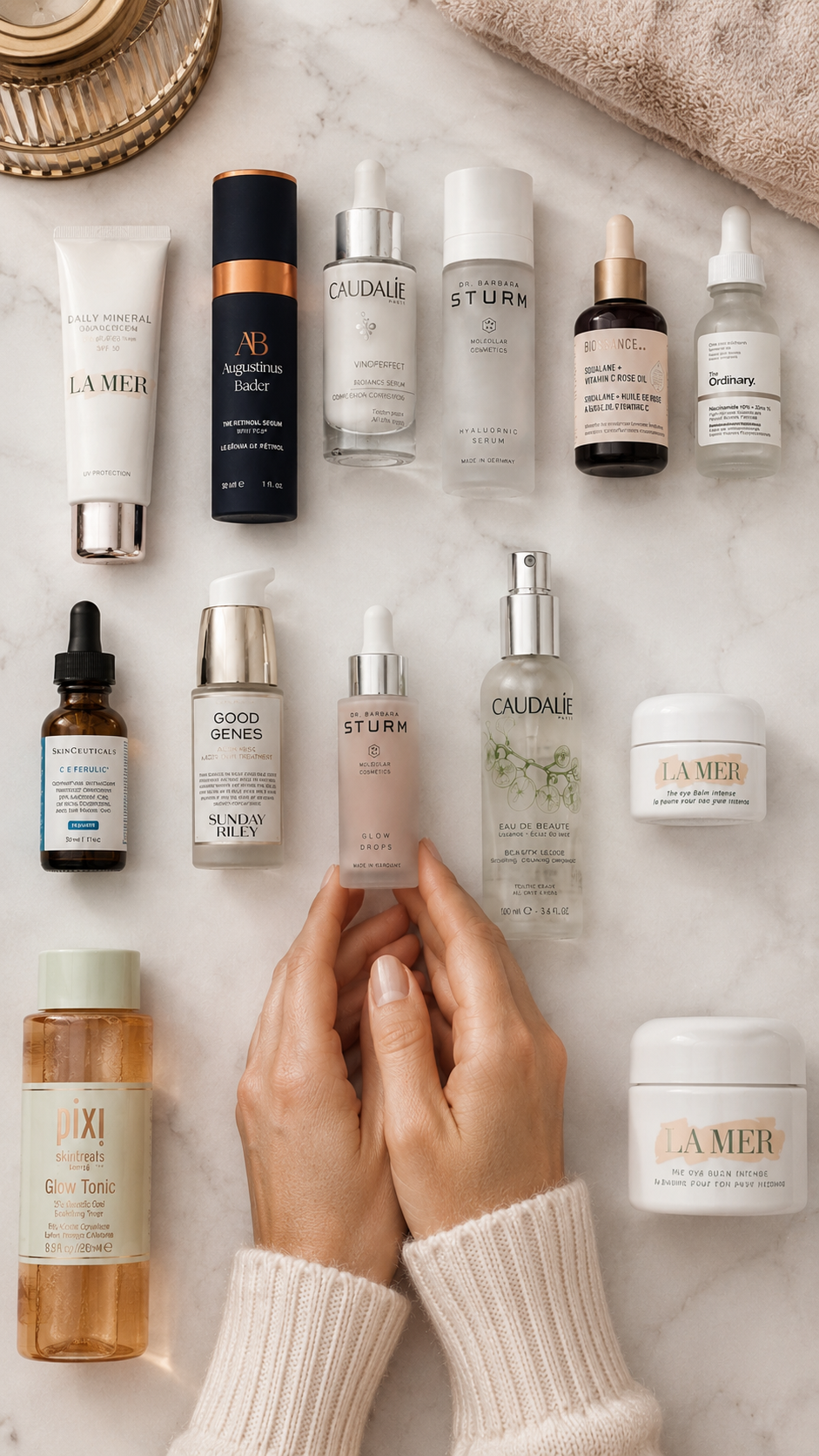
🚫 The 6 Products That Were Silently Damaging My Skin
-
1Exfoliating Face Wash (Salicylic Acid / Glycolic Acid) — Using an acid-based cleanser daily strips your skin's natural oils every single morning before anything else even touches your face.
-
2Hydrating & Brightening Toner — Sounds gentle. But most brightening toners contain AHAs, niacinamide, or alcohol — adding yet another active layer on already-sensitive skin.
-
3Vitamin C Serum (Morning) — Vitamin C is powerful and beneficial — but only when your skin barrier is intact. On a compromised barrier, it stings and causes inflammation instead of brightening.
-
4Niacinamide Serum (Night) — A great ingredient in isolation. But layering it on top of Retinol and other actives at night creates pH conflicts that cause redness and irritation.
-
5Retinol Cream (Anti-Aging / Acne) — Retinol is the gold standard — but only for a skin barrier that can handle it. On an already-irritated skin, it accelerates damage, not repair.
-
6Over-Complicated Eye Cream / Spot Treatment — These often contain peptides, caffeine, retinol derivatives, and acids — all concentrated in one product. Too much, too soon.
Looking at that list now, it seems obvious. But when you're buying into the "minimalist skincare" trend, six products feels modest. The internet had trained me to believe that six targeted products was smart. It wasn't. It was a chemical cocktail I was applying to my face twice a day, every day.
3. The Science: Why These 6 Products Were Wrecking My Skin
My dermatologist didn't just hand me a shorter list and send me home. She sat with me for 20 minutes and explained exactly what was happening under my skin. Here's the breakdown — in plain, honest terms:
-
Active Ingredient Overload
When Vitamin C (acidic, pH 2.5–3.5), Niacinamide (pH 5–7), and Retinol (fat-soluble, pH 5.5–6) are layered without proper sequencing, your skin's pH balance is completely disrupted. The skin can't neutralize all of these efficiently — so it panics. Redness and inflammation are the result.
-
The Stripped Skin Barrier
Your skin's barrier — made of lipids, ceramides, and fatty acids — is its first line of defense. Daily use of exfoliating cleansers + actives + retinol essentially sands this barrier down. Once it's compromised, your skin loses moisture rapidly and becomes hypersensitive to everything.
-
Preservative Stacking
Every skincare product contains its own set of preservatives. When you layer 6 products, you're exposing your skin to 6 different preservative systems simultaneously — parabens, phenoxyethanol, sodium benzoate. For compromised or sensitive skin, this alone can trigger reactions.
-
Transepidermal Water Loss (TEWL)
A damaged skin barrier can't hold moisture in. The more you strip it with actives, the more water escapes — leading to the tight, dry, flaky feeling that no amount of toner or serum can fix. You have to rebuild first.
🔍 Signs of a damaged skin barrier to watch for: persistent redness, unusual dryness or tightness, skin that stings when you apply products it used to tolerate, increased breakouts, and a dull or rough texture that won't respond to moisturizer.
4. The 2-Product Reset That Actually Healed My Skin
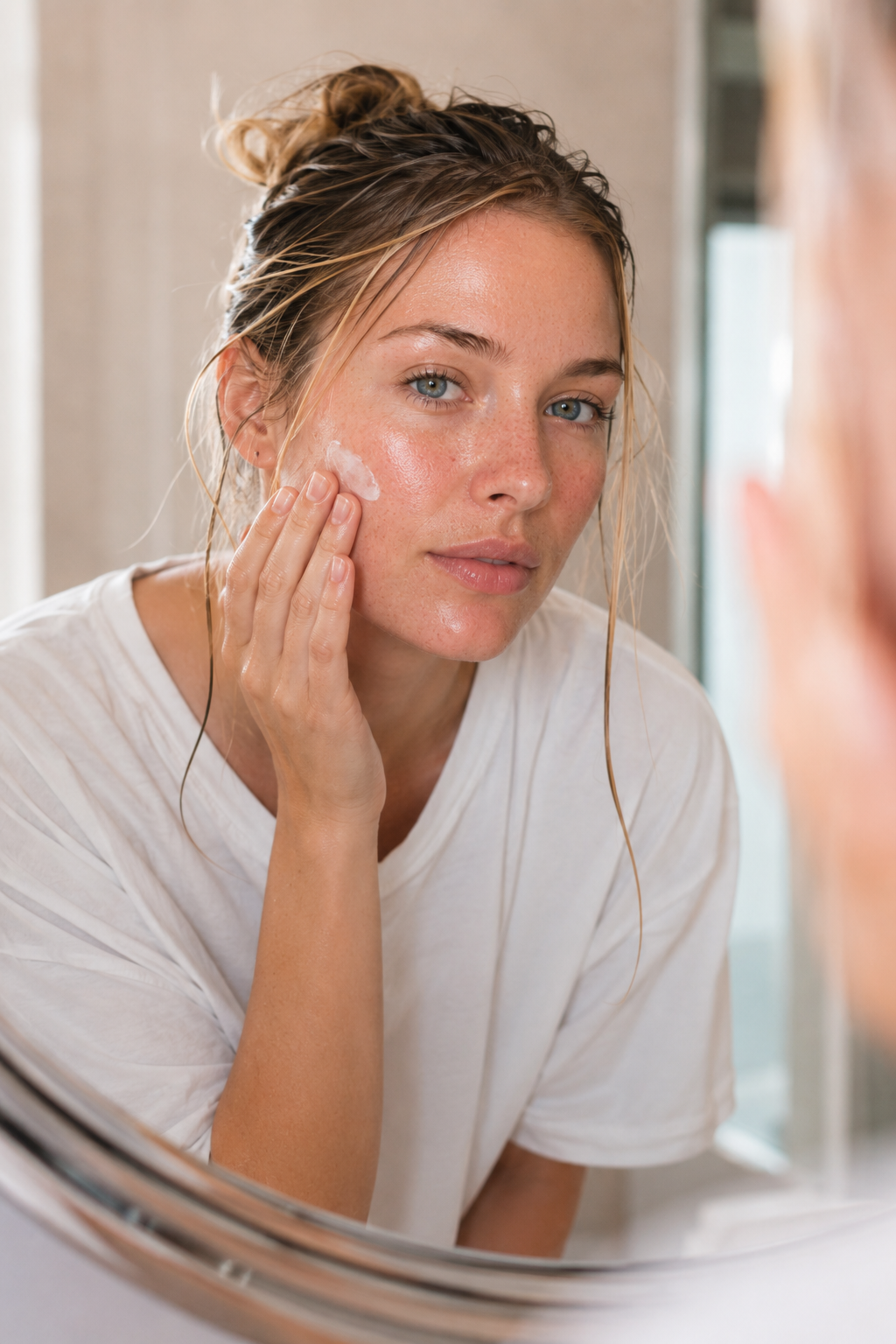
My dermatologist gave me one non-negotiable directive: stop everything and rebuild. No actives. No serums. No treatments. Just two dermatologist-chosen products — one to repair, one to protect — until my barrier was fully restored. And honestly? It was the most effective skincare I have ever done.
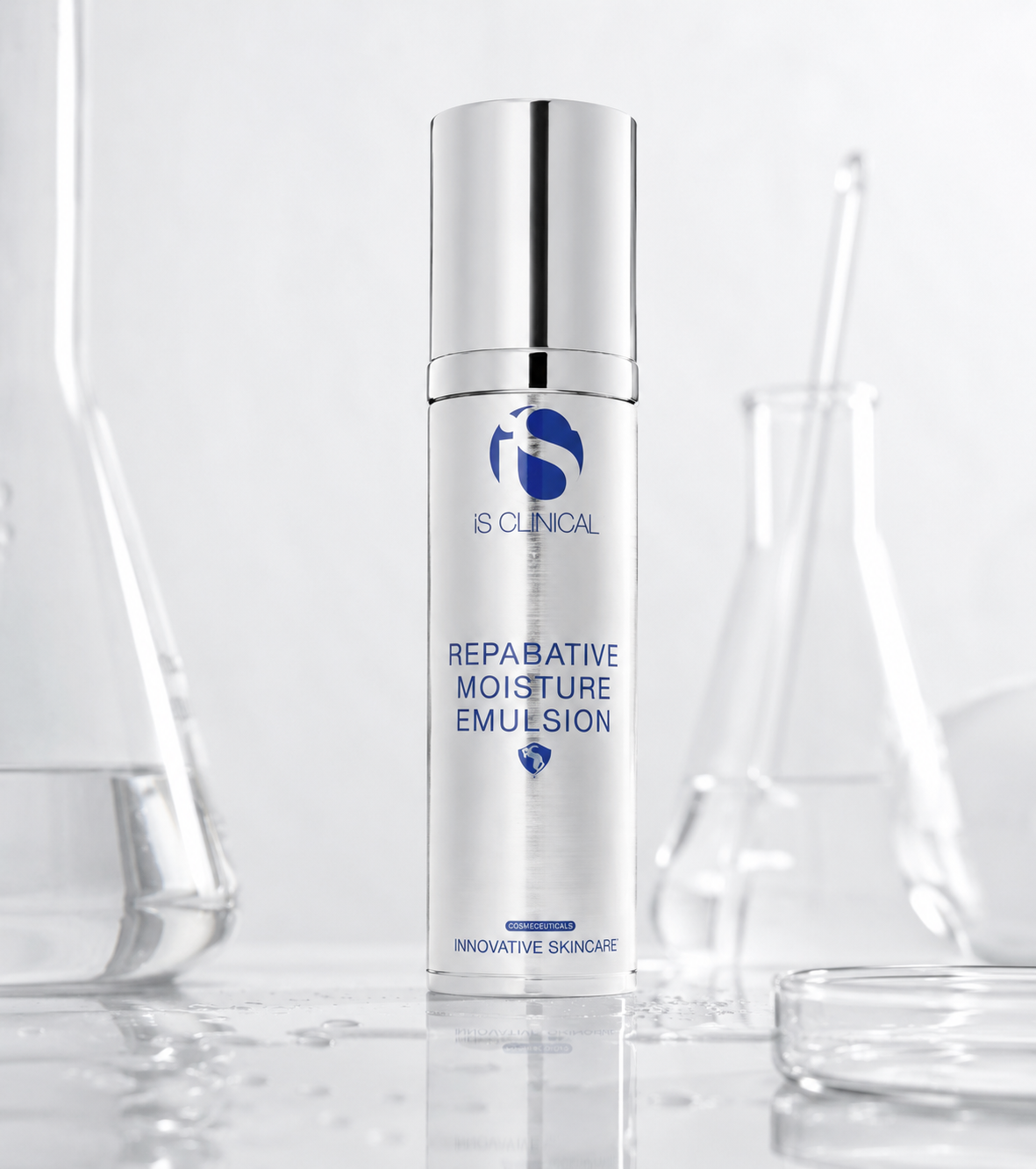
🏺 iS Clinical Reparative Moisture Emulsion
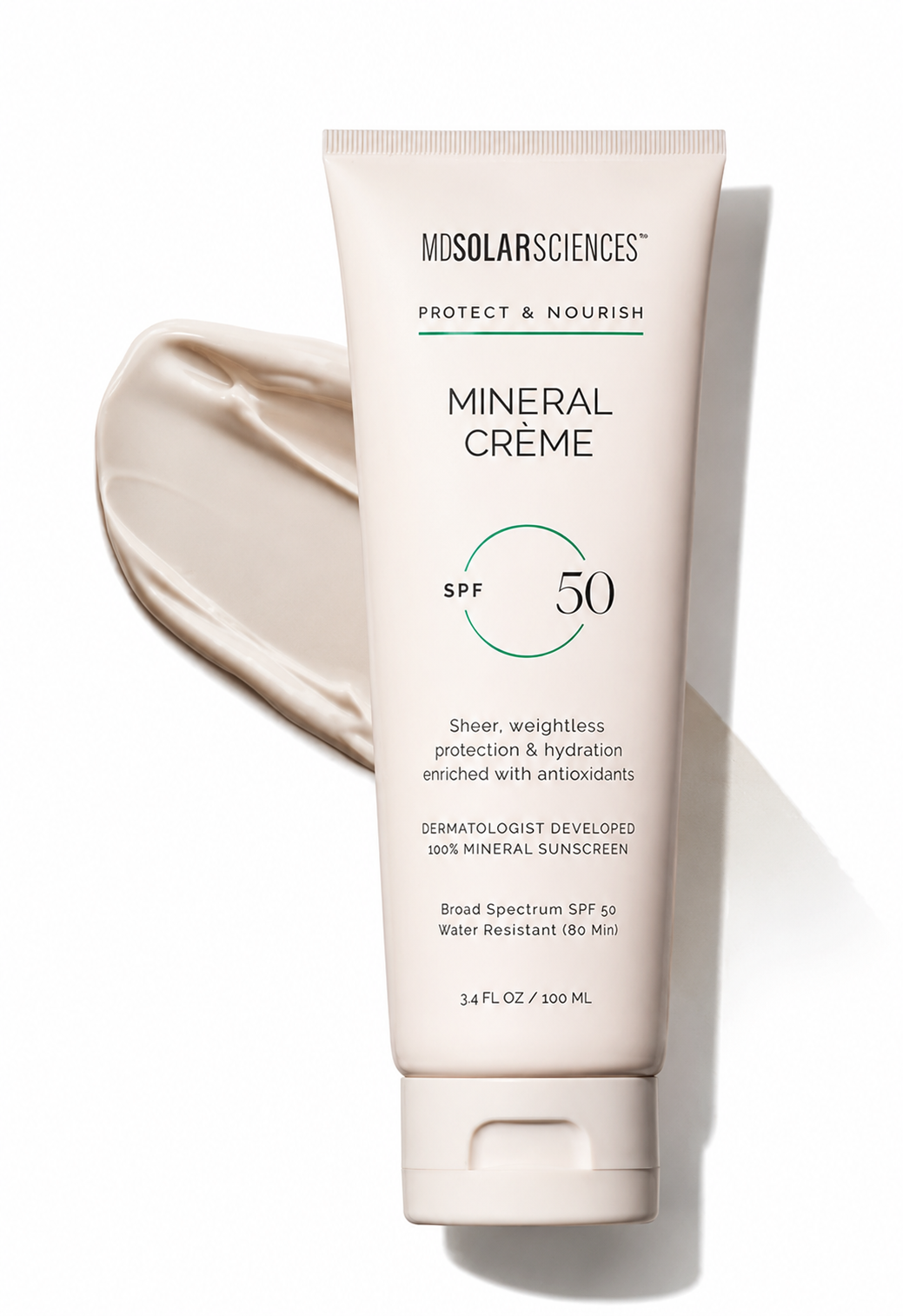
☀️ MDSolarSciences Mineral Crème SPF 50
5. Day 21: The Results (Honest, No Filter)
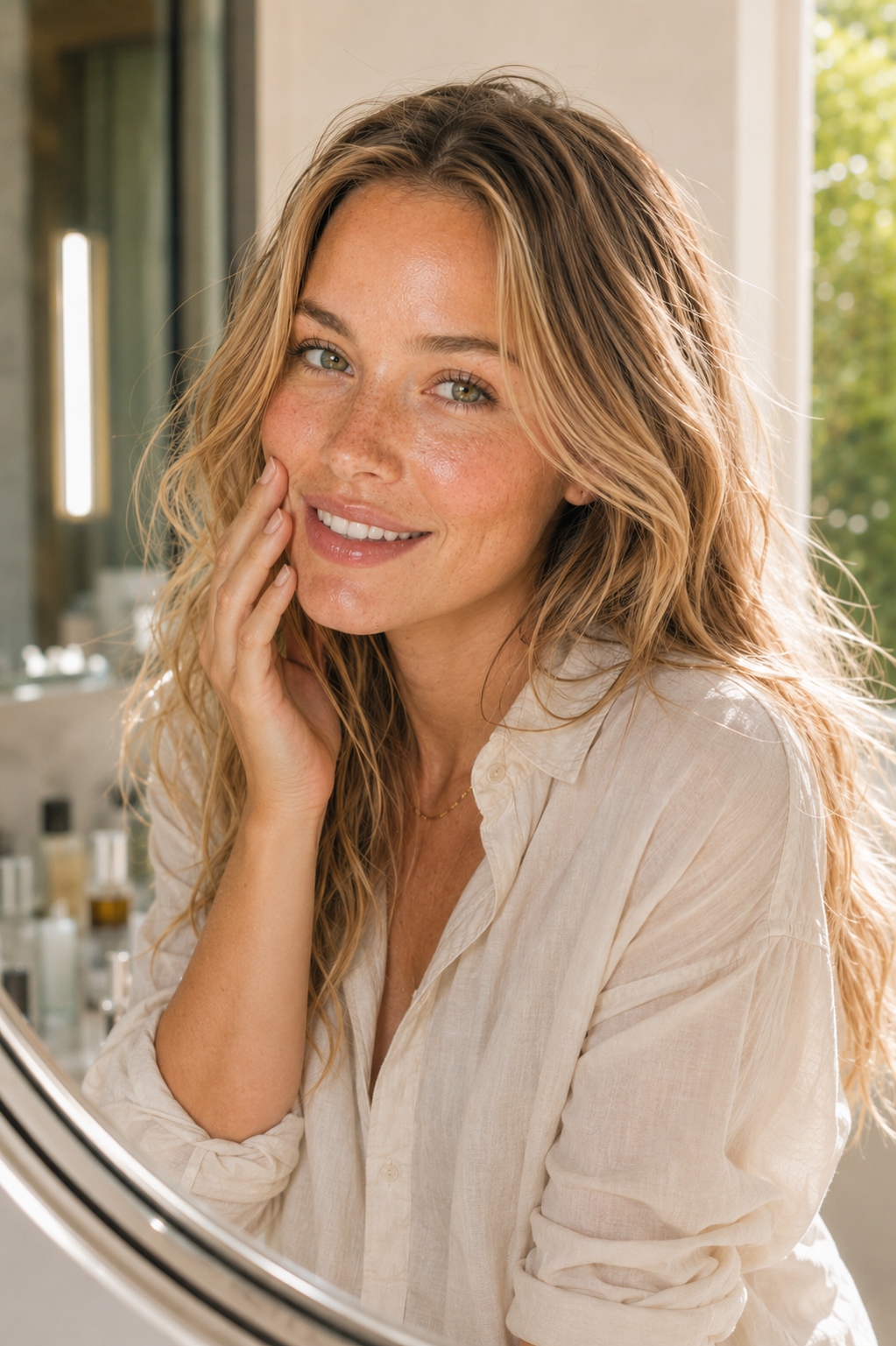
📅 What Actually Happened — Week by Week
-
Day 1–3Skin felt "naked" without serums. Some leftover dryness and redness from previous damage. The iS Clinical emulsion absorbed beautifully — no stinging, no reaction. First good sign.
-
Day 4–7Redness visibly reduced. Flaking slowed dramatically. Skin stopped feeling tight after washing. The MDSolarSciences SPF 50 went on smoothly with zero white cast.
-
Day 8–14Breakouts calmed significantly. Texture started smoothing out on its own. No new irritation whatsoever. Started waking up with genuinely softer, calmer skin.
-
Day 15–21Skin fully calm. Redness gone. Natural moisture back. Even tone. Literally no flaking. My skin looked better than it ever did during my 6-product "minimalist" phase.
The results weren't dramatic in a before-and-after influencer way. They were better — quiet, sustainable, and real. My skin wasn't performing for a camera. It was just healthy.
The Real Takeaway
A skincare routine is not minimalist just because it has fewer products than before. It's minimalist when each product serves a single, clear purpose — and when your skin barrier is healthy enough to actually benefit from it. The Skinimalism 2.0 trend sold us a new aesthetic, not a new philosophy. Stop chasing trends. Start listening to your skin. And when it starts screaming at you in flakes and redness — that's not a detox phase. That's damage.
Get The Skincare Detox Guide — Free
The exact barrier-repair protocol my dermatologist gave me — ingredient checklist, rebuild timeline, and product criteria — delivered straight to your inbox. Free.
❓ Frequently Asked Questions
According to most dermatologists, 3–4 well-chosen products are sufficient for healthy skin: a gentle cleanser, a moisturizer, and a sunscreen (daytime). A targeted treatment can be added once your barrier is stable. More is not better — more is just more.
Key signs include: unusual tightness or dryness, redness or blotchiness, skin that stings when you apply products (even gentle ones), increased breakouts, flaking or peeling without using exfoliants, and a dull texture that doesn't respond to moisturizer. Sound familiar?
On a healthy skin barrier, they can be used — but with careful timing and formulation. On compromised or sensitive skin, mixing these two is a common trigger for redness and irritation due to pH conflicts. When in doubt, separate them (one morning, one evening) or skip one entirely.
Most people see significant improvement within 2–4 weeks of stripping back to basics — moisturizer and SPF. Full barrier repair can take 4–8 weeks depending on the level of damage and your skin type. Consistency and patience are the only active ingredients you need during this phase.
Not at all — Retinol is clinically one of the most effective skincare ingredients available. But it requires a healthy, intact skin barrier to work safely. If you introduce Retinol while your barrier is damaged, or combine it with too many other actives, it accelerates irritation instead of delivering results. Start slow, use it 2x per week, and never layer it with acids.
Skinimalism 2.0 is a social media-driven skincare trend that advocates for fewer, more targeted products. The concept itself is solid. The execution — as sold by brands and influencers — often still involves 5–6 active-ingredient-heavy products, which defeats the entire purpose. True skinimalism means fewer products AND fewer actives, not just a curated-looking shelfie.
Yes — both are specifically formulated for sensitive and compromised skin. iS Clinical's Reparative Moisture Emulsion is fragrance-free, dye-free, and clinically tested for barrier repair. MDSolarSciences Mineral Crème SPF 50 uses only physical mineral filters (zinc oxide) which are the gentlest option for reactive skin. Always patch test first regardless of your skin type.


