I Only Did Skincare While Half Asleep for 30 Days — My Skin Has Never Been Better
The lazy girl skincare method nobody told you about — and why doing less might be the best thing you ever do for your skin.
Let Me Be Completely Honest With You
I am not a dermatologist. I am not a licensed esthetician. I do not have a degree in cosmetic science or a lab coat hanging in my closet. What I do have is six years of obsessive skincare habits, a bathroom cabinet that looked like a Sephora stockroom, and a face that — despite all of that effort — never quite looked the way I wanted it to.
For six years — six whole exhausting years — I washed my face twice a day, every single day, without fail. Morning and night. Like clockwork. Like the good, obedient skincare student I thought I was. And for those same six years, my skin remained a constant source of frustration. A struggle I felt like I was always losing.
“I was doing everything ‘right’ — and somehow my skin kept looking worse. More reactive. More dull. More confused. Sound familiar?”
So what happened 30 days ago that changed everything? I got exhausted. Not just tired — completely, utterly done. Done with the 12-step routine. Done with waking up 40 minutes early just to apply serums that may or may not be doing anything. Done with feeling guilty when I skipped a step. Done with spending hundreds of dollars chasing a glow that never seemed to arrive.
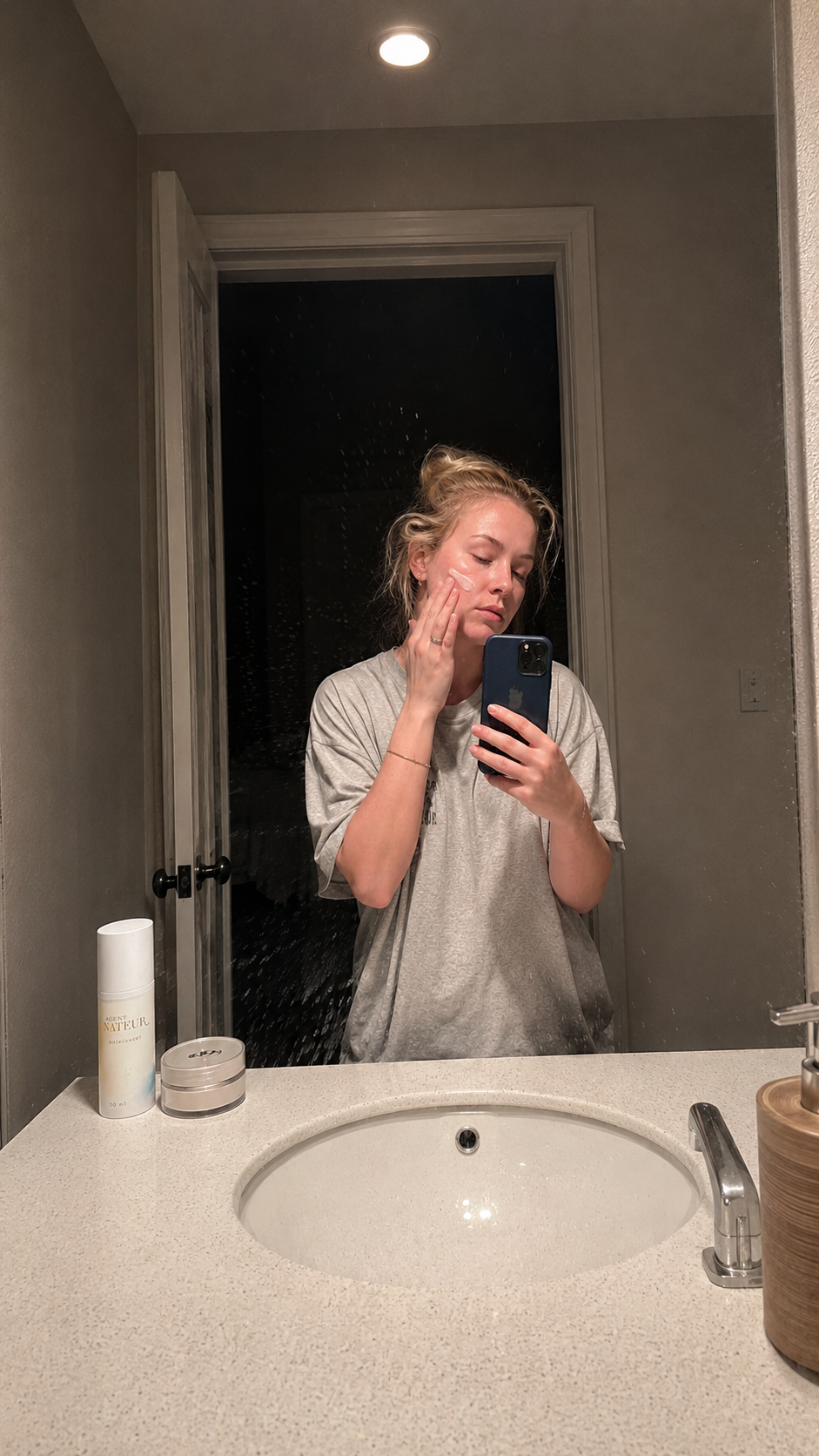
One night, I crawled into bed at 11:47 PM after a particularly brutal work week. I was already half asleep when I realized I hadn’t done my skincare. And instead of dragging myself back to the bathroom — I just didn’t. I grabbed the one thing on my nightstand, slathered it across my face in approximately 11 seconds, and passed out cold.
That accidental night of laziness started something I never expected. A 30-day experiment I’m calling the Lazy Girl Skincare Method — and the results genuinely shocked me.
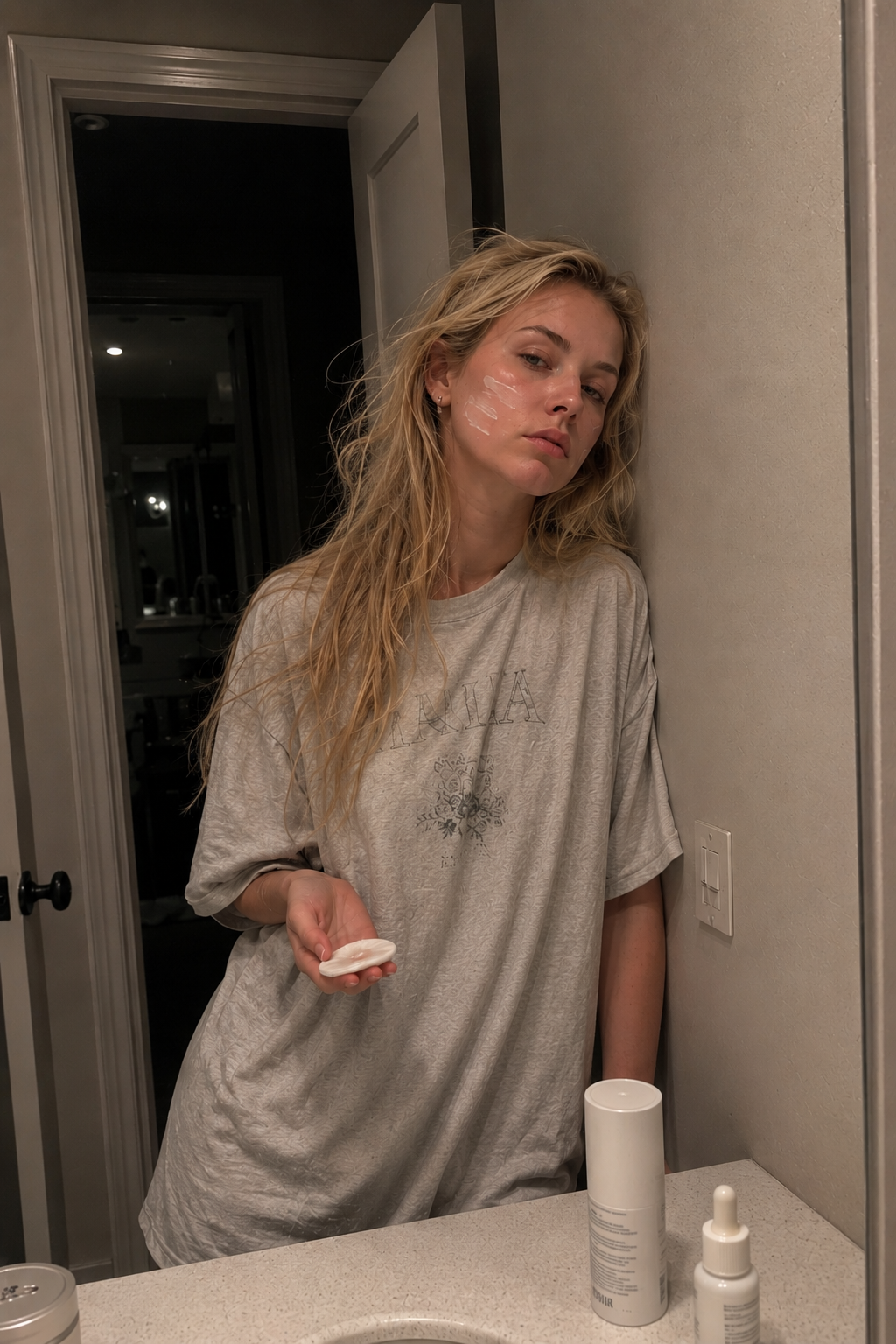
What My Old “Dedicated” Routine Actually Looked Like
If you want to understand why doing less worked so dramatically, you need to understand what I was doing before. My old morning routine — the one I was absolutely convinced was helping me — went something like this:
My Old Morning Routine (The Overcomplicated Disaster)
6:30 AM — Foaming cleanser. The kind that makes your face feel squeaky, which I thought meant clean. Turns out squeaky means stripped.
6:35 AM — Alcohol-containing BHA toner. I was proudly “exfoliating” every single morning, stripping my skin barrier down to nothing while thinking I was glowing up.
6:38 AM — Niacinamide serum layered directly on top of a vitamin C serum. If you know skincare science, you already know this is a combination that can cause problems — but I didn’t know that yet.
6:42 AM — Eye cream. Then a separate moisturizer. Then SPF sprayed over the top. Then a setting mist because apparently I thought my face was a dessert that needed a glaze.
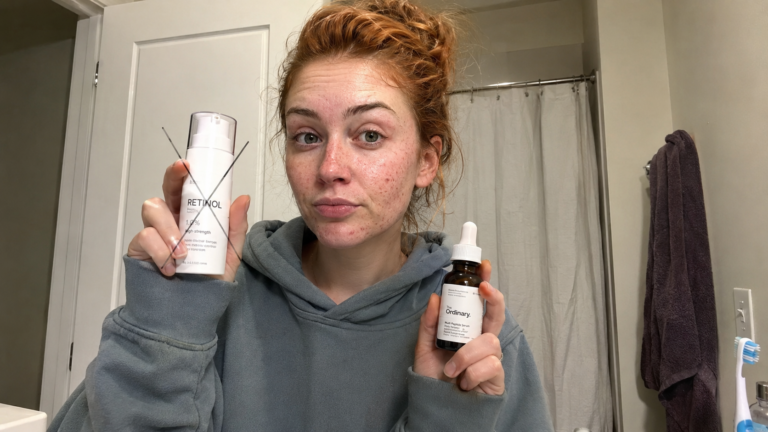
And at night? The night routine was arguably worse. Double cleansing with an oil cleanser that felt luxurious but was slowly wreaking havoc on my congestion. Then a second foaming cleanser. Then a prescription-strength retinol every single night — no rest days, no adjustment period, just maximum strength from day one because I thought more equals better.
Then another toner. Then an AHA exfoliant every other night — layered on the same nights as retinol, sometimes even on the same nights. Then a peptide serum. Then a sleeping mask packed on top of everything. I was essentially drowning my face in active ingredients every night and wondering why it was angry at me every morning.
I wasn’t caring for my skin. I was attacking it — repeatedly, religiously, and with very good intentions that completely backfired.
Here’s the thing about skincare overconsumption in America right now: we’ve been sold the idea that more products, more steps, more actives equals better skin. TikTok dermatologists recommend 7-step routines. Instagram aestheticians are selling 11-step glass skin regimens. And we — sleepy, overworked, budget-stretched Americans — buy in completely. Because we want to believe that a serum or a toner or a $120 moisturizer is going to fix what we don’t love about our face.
But here’s what nobody tells you in the algorithm: your skin has a barrier. A real, biological, protective barrier made up of lipids, proteins, and living cells. And when you overload it with chemical exfoliants, harsh surfactants, and layered actives every single day — you compromise that barrier. And when your barrier is compromised, everything gets worse. Dryness. Redness. Breakouts. Sensitivity. Inflammation. All of the things I was desperately trying to fix were being caused by the very routine I thought was helping me.
The Lazy Girl Skincare Method — What It Actually Is
Let me be very clear about what this is and what it isn’t. The Lazy Girl Skincare Method is not a skincare brand. It is not a product line. It is not a specific routine you can purchase or download. It is a philosophy — a simple, skin-barrier-first approach to caring for your face when you have approximately zero energy left at the end of the day.
The Three Rules of the Lazy Girl Method
Maximum Three Steps — Always
No matter how awake or asleep I was, I capped myself at three steps. Cleanse, moisturize, protect. That’s the ceiling. On the laziest nights, it was just one step — a single pass with micellar water and a thick balm moisturizer. And that was completely allowed.
No Active Ingredients Every Night
I completely eliminated the idea that I needed to use retinol, AHA, BHA, or any chemical exfoliant every single night. If I was too tired to remember which actives I’d used the night before, it was automatically a rest night. Rest nights became something I looked forward to instead of dreaded.
Skincare Counts Even Done Half-Asleep
The biggest mental shift: I gave myself full credit for any skincare I did, even if I did it wrong, in the dark, while already lying down. Messy skincare beats skipped skincare. An imperfect routine is infinitely better than no routine at all.
Your skin is a living organ with its own repair system. When you get out of the way — when you stop flooding it with actives, stop over-cleansing, stop layering incompatible ingredients — it starts doing what it was designed to do. It heals. It regulates. It glows. Not because of what you applied, but because of what you finally stopped applying.
My Honest 30-Day Journal — Week by Week
I want to share exactly what I experienced, week by week, during these 30 days. No filters, no dramatic before-and-after claims, no exaggeration. Just honest observations from someone who was genuinely surprised by what happened to her face when she stopped trying so hard.
The first week was mentally hard. Not physically — physically, nothing catastrophic happened. But emotionally, every lazy skincare night felt like a mistake I was going to pay for later. I kept waiting for the punishment breakout. The one that would confirm that I needed my full routine.
The breakout never came. What did come, by day five, was something quieter. My skin felt less tight in the morning. Not dramatically — just a little softer. A little less pulled. Like it had exhaled slightly while I wasn’t looking.
By day ten, I noticed something I hadn’t seen in years: my cheeks weren’t red when I looked in the mirror first thing in the morning. Not bright red, not pink, not flushed. Just neutral. The redness that I had always attributed to rosacea, to genetics, to “just the way my skin is” — was noticeably fading.
I had been exfoliating so aggressively and so often that my skin had become chronically inflamed. When I stopped, the inflammation started to calm down. It wasn’t magic. It was biology. By day fourteen, my skin was holding moisture better. My moisturizer seemed to be actually working — because for the first time in years, there was an intact barrier for the moisture to be locked behind.
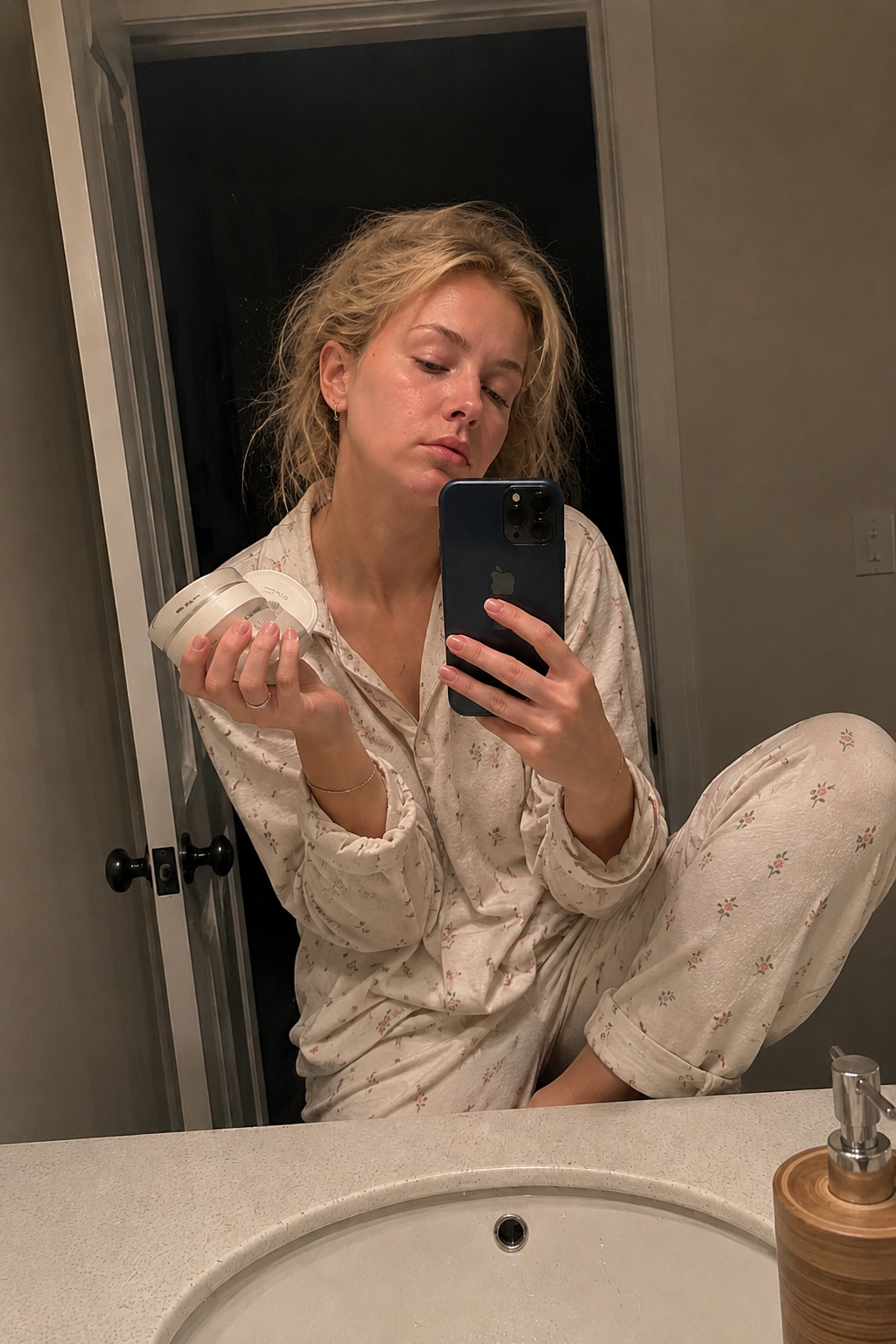
Week three is when other people started noticing. My coworker asked me — completely unprompted — if I had started using something new because my skin looked “really good lately.” My sister, who is not the type to hand out skincare compliments freely, told me I looked “well rested” even on a day when I had gotten approximately five hours of sleep.
The texture on my cheeks had improved dramatically. The rough, slightly peeling texture I had always blamed on “needing more exfoliation” was smoothing out on its own. Because that texture wasn’t a sign that I needed more exfoliation. It was a sign of a damaged, over-exfoliated barrier that was desperately trying to protect itself.
By the final week, the transformation felt complete. My skin tone had evened out more in four weeks of doing almost nothing than it had in the previous six months of doing everything. My skin felt genuinely comfortable — not tight, not greasy, not reactive. Just balanced. Calm. Content. Like a face that had finally been given permission to rest.
And the glow — the natural, no-filter glow I had been chasing through product after product — had shown up quietly, without fanfare, somewhere around day twenty-two. Not because I applied anything special. But because my skin was finally healthy enough to produce it on its own.
Get The Skincare Detox Guide — Free
Everything I wish I had known before I started. The exact steps, the science, and a simple checklist to repair your barrier starting tonight.
🔒 No spam, ever. Unsubscribe anytime. Your email stays safe with us.
Why Less Skincare Actually Works — The Science Behind It
I am not going to pretend my 30-day experiment is a clinical study. It is not. But the results I experienced align closely with what dermatologists and skincare scientists have been quietly saying for years — and what the skincare industry has been somewhat reluctant to amplify, for obvious financial reasons.
Your skin’s protective outer layer is called the stratum corneum. It is made up of dead skin cells held together by lipids — think of it like bricks and mortar. This barrier keeps water in your skin and keeps environmental irritants out. When the barrier is healthy, your skin looks plump, smooth, and radiant. When the barrier is damaged — by over-cleansing, over-exfoliating, or using too many actives — it cannot hold moisture effectively, becomes reactive, and loses its natural glow.
What Damages the Skin Barrier Most
- Over-cleansing: Washing with a foaming, surfactant-heavy cleanser twice daily strips away the natural oils your skin produces to protect itself. Morning cleansing with a harsh cleanser is almost never necessary.
- Daily chemical exfoliation: AHAs and BHAs are powerful tools — when used correctly, meaning one to three times per week, not every single morning and night combined. Daily exfoliation breaks down the barrier cells faster than they can regenerate.
- Using retinol too often too fast: Retinol is transformative, but the body needs adjustment time. Daily use of high-strength retinol without rest nights causes chronic inflammation that looks like aging, not the reversal of it.
- Layering incompatible actives: Mixing vitamin C with niacinamide incorrectly, layering AHA on top of retinol — these combinations don’t multiply benefits. They multiply irritation.
- Alcohol-based toners applied daily: Denatured alcohol in toners strips lipids from your barrier layer by layer, creating chronic dryness that you then try to fix with more products — a cycle that never ends.
What Rebuilds the Skin Barrier
- Rest: Simply not attacking your barrier for 30 days gives it time to repair itself. Skin cell turnover happens whether you intervene or not — sometimes you just need to stop interrupting the process.
- Gentle cleansing only when necessary: A mild, low-pH cleanser at night is usually all you need. Morning cleansing can often be replaced with a simple lukewarm water rinse.
- Consistent moisture occlusion: Applying a barrier-supporting moisturizer every night — even imperfectly, even half-asleep — gives your skin the lipid support it needs to repair itself while you sleep.
- Consistent SPF in the morning: UV damage is the single biggest cause of premature aging, hyperpigmentation, and barrier compromise. This step never got lazy in my experiment.
- Sleep itself: Your skin repairs the most between 11 PM and 4 AM. If your bedtime routine is so long that you’re not in bed until midnight, you are literally stealing repair time from your skin.
Before vs. After — An Honest Comparison
I want to be transparent about what changed and what didn’t. This was not a miracle transformation. My skin did not become a completely different face. But the changes were real, measurable, and lasting enough that I have not returned to my old routine.
| Skin Concern | Before (Old Routine) | After (Lazy Method) |
|---|---|---|
| Redness | Chronic, daily | Rare, minimal |
| Dryness | Constant midday tightness | Balanced all day |
| Texture | Rough, peeling patches | Noticeably smoother |
| Glow | Dull, even after makeup | Natural radiance |
| Breakouts | Hormonal + random ones | Hormonal only (expected) |
| Sensitivity | Reacted to everything | Significantly calmer |
| Morning feel | Tight, uncomfortable | Soft, plump |
| Pore appearance | Enlarged, congested | Visibly tighter |
| Morning routine time | 35–45 minutes | Under 8 minutes |
| Skincare guilt | Constant | Completely gone |
Measuring My Skin Progress — The Numbers
I kept a daily log during these 30 days, rating different aspects of my skin on a scale I created for myself. Here’s where I ended up by day 30 compared to where I started:
That last one is the most important. I had full consistency for 30 days — because the routine was so simple that there was nothing to skip, nothing to forget, nothing to feel guilty about. The lazy method is, paradoxically, the most sustainable method I have ever tried.
The Exact Lazy Girl Routine I Followed for 30 Days
I want to share this without recommending any specific products — because the Lazy Girl Method is not about products. It is about principles. You can apply these principles with whatever gentle, barrier-supporting products you already own or choose based on your own skin’s needs and your dermatologist’s guidance.
Morning — Maximum 3 Minutes
Lazy Morning Routine
Step 1 — Rinse: I stopped using a cleanser every morning. I rinse with lukewarm water for thirty seconds and pat dry gently. On days when I want to use something, I use micellar water applied with a soft cotton pad — no rubbing, just gliding.
Step 2 — Moisturize: A single, gentle moisturizer with ceramides or similar barrier-supporting ingredients. Applied quickly, imperfectly, with clean hands. This step takes forty-five seconds.
Step 3 — SPF: This is the non-negotiable. A broad-spectrum SPF 30 or higher every single morning, rain or shine. UV protection is the most evidence-backed anti-aging and skin health step that exists. Full stop.
Night — 2 to 5 Minutes Depending on Energy Level
Lazy Night Routine
High-energy nights (3 per week): A gentle, low-pH cleanser to remove SPF and the day. Then one active — either retinol twice a week OR a mild lactic acid once a week, never both on the same night. Then a barrier-supporting moisturizer applied generously.
Medium-energy nights: Micellar water to remove SPF and day makeup. Moisturizer. Done. Two steps, two minutes, completely sufficient.
Half-asleep nights: Grab the moisturizer from the nightstand. Apply it to my face while lying down, in the dark, probably with my eyes half closed. Done. Full credit given. Barrier supported. Sleep earned.
“The night you’re half asleep is the night your skin is about to do its most important repair work. Even one product applied badly is better than lying down bare-faced with nothing to support that process.”
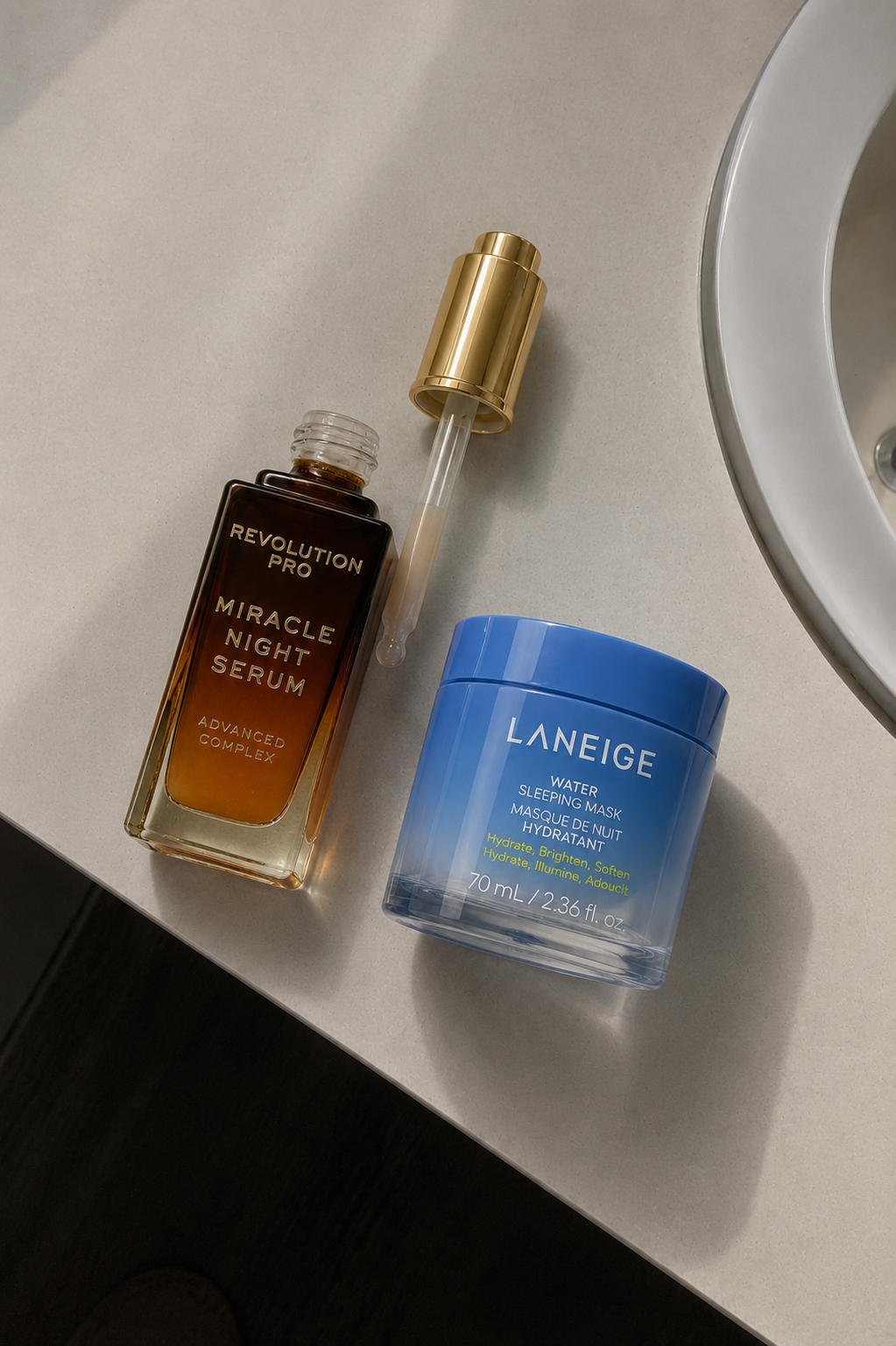
✦ The Two Products I Actually Use Now ✦
After 30 days of doing less, these are the two things that earned a permanent spot on my nightstand — and why I love them both.
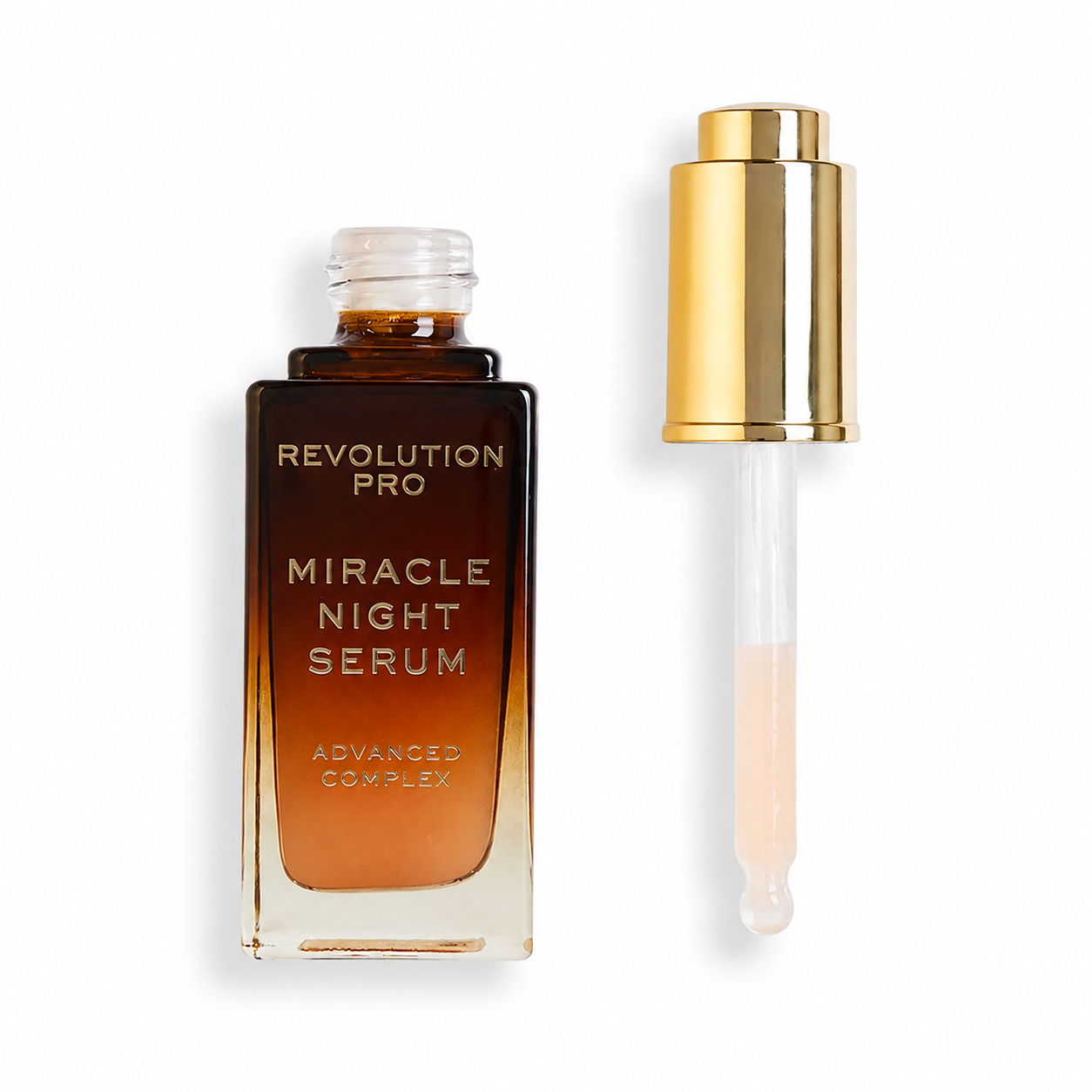
Revolution Pro
Miracle Night Rescue Serum Advanced Complex
An overnight face serum designed to work with your skin’s natural nighttime repair cycle. Lightweight, deeply hydrating, and gentle enough for even the most compromised barriers. This is the one I grab when I’m half asleep and it has never let me down.
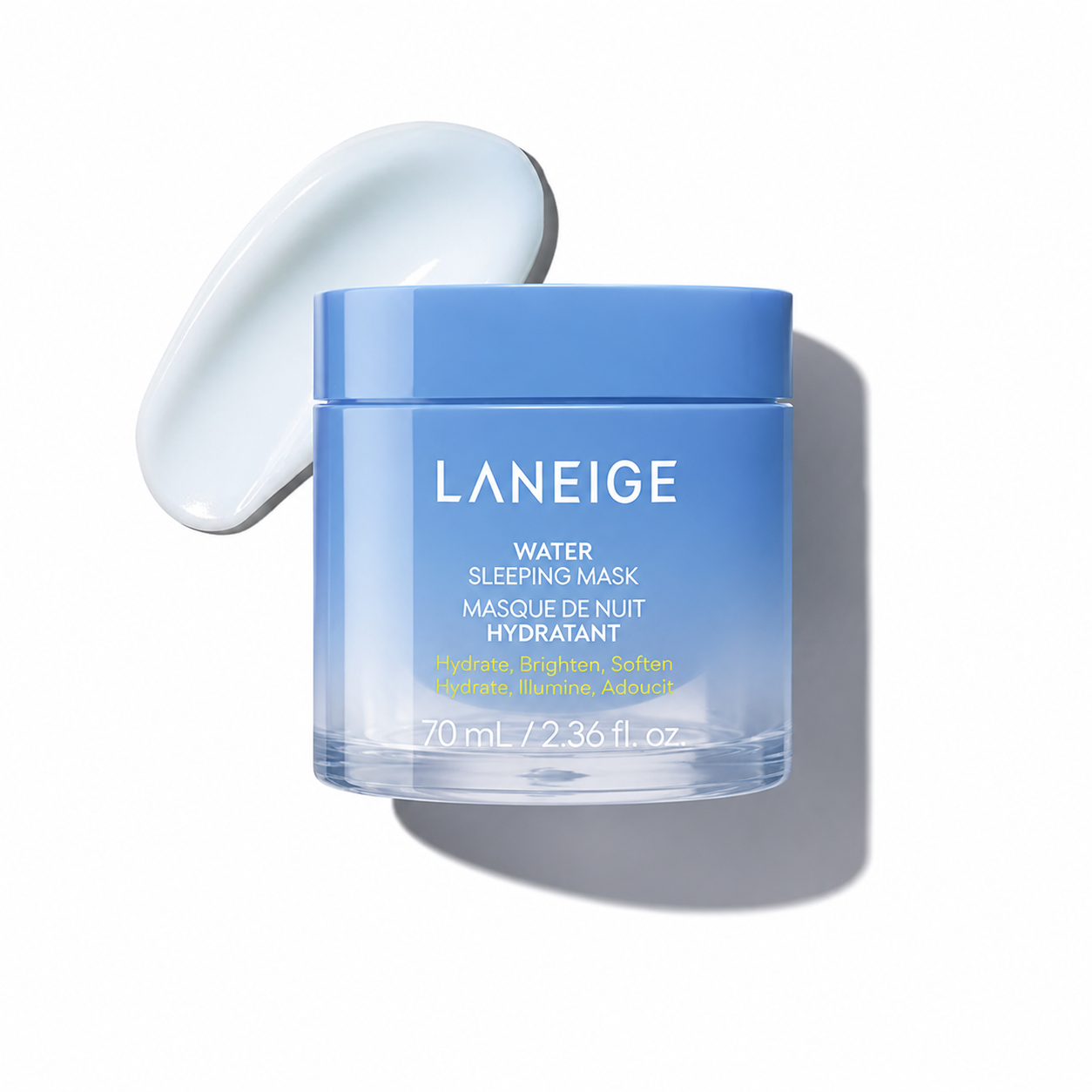
LANEIGE
Water Sleeping Mask — Overnight Hydration with Squalane & Probiotic Complex
The Korean overnight mask that made me realize a sleeping mask could replace half my routine. Squalane locks moisture in, probiotics support the microbiome, and you wake up with the plumpest, most dewy skin of your life. This is my lazy girl luxury move.
✦ Disclosure: Links above are affiliate links. GlowingSkinhub earns a small commission at no extra cost to you. We only share products we genuinely believe in. ✦
The Mental Shift That Changed Everything
I need to talk about this, because it was arguably more transformative than the physical results. For six years, my relationship with skincare was built on guilt. Guilt when I skipped steps. Guilt when I couldn’t afford the newest serum. Guilt when I broke out after a “perfect” routine week.
The Lazy Girl Method, without me expecting it to, completely dismantled that guilt structure. When your routine is three steps on a good night and one step on an exhausted night — there is nothing to feel guilty about. There are no skipped steps. There are no failing grades. There is just: did you care for your skin tonight? Yes or no. And almost always, the answer became yes — because yes was finally achievable.
Skincare is supposed to be an act of self-care. Not self-punishment. Not self-optimization. Not a performance for social media. Just a quiet, kind thing you do for your face at the end of a long American day.
There’s something uniquely American about skincare overconsumption. We are a culture that deeply believes in working harder. In doing more. In optimizing every system and maximizing every outcome. And that productivity mindset has bled into our bathroom cabinets in a way that is genuinely costing us money, time, and skin health.
The beauty industry in the United States is worth over 100 billion dollars annually. It profits enormously from the belief that more products equal better results. Your insecurity is literally their revenue model. The moment you discover that your skin thrives on less — that conviction is worth protecting fiercely.
What I Learned About Skin Minimalism
- Your skin is not a problem to be solved. It is an organ to be supported. Approach it that way and everything changes.
- Consistency with three steps beats perfection with twelve. A routine you actually do is infinitely more effective than a routine you plan to do.
- Redness, dryness, and texture issues are often signs of barrier damage — not signs that you need more products. They are signs you may need fewer.
- Your skin does its best work when you’re asleep. The products you apply right before sleeping are the most important ones you own. Make sure they’re barrier-supportive, not barrier-stripping.
- Rest is a skincare ingredient. Real sleep, real recovery, real downtime from actives — these are as important as anything you put in a bottle.
Is the Lazy Girl Method Right for Your Skin?
I want to be honest: the Lazy Girl Method is not the answer to every skin concern that exists. If you have a medical skin condition — cystic acne, severe rosacea, eczema, psoriasis, or anything that has been diagnosed by a dermatologist — please work with that dermatologist before changing your routine based on a blog post, including this one.
The Lazy Girl Method May Be For You If:
- Your skin feels tight every morning despite moisturizing heavily at night.
- You have persistent redness that no product seems to fix, and you’ve been using chemical exfoliants regularly.
- You have rough texture that gets worse the more you exfoliate — a sign of barrier damage, not a sign you need more exfoliation.
- Your skin seems to react badly to almost everything new you try — heightened sensitivity is a classic barrier damage symptom.
- You are exhausted by your current routine and dread doing it on tired nights — which means you skip it, which means you have zero consistency.
- You feel guilty about your skincare more than you feel good about it — and you’re ready to change that relationship entirely.
The Lazy Girl Method May NOT Be Right For You If:
- You have a diagnosed skin condition being managed by a dermatologist who has prescribed a specific regimen. Always follow your doctor’s guidance.
- You have active severe cystic acne that requires medical treatment — this is not a situation for skincare minimalism alone.
- You’re currently in the middle of a retinol adjustment period prescribed by a professional — do not stop midway without consultation.
The Biggest Lazy Skincare Mistakes to Avoid
Being lazy with skincare doesn’t mean being reckless. There are right ways and wrong ways to simplify. Here are the mistakes I see most often — and made myself before I understood the difference.
Skipping SPF Because You’re Lazy
This is the one step that never gets to be optional. UV radiation causes barrier damage, accelerates pigmentation, and breaks down collagen. Going SPF-free on lazy days will erase the progress your skin makes every night while you sleep.
Sleeping in Full Makeup Without Any Cleansing
The lazy method allows for micellar water as a one-step cleanse. It does not allow for sleeping in a full foundation, SPF, and concealer situation. Sleeping in makeup clogs follicles and causes the kind of congestion that takes weeks to resolve.
Applying Retinol Extra Nights to “Make Up for Lost Time”
If you’ve been off retinol for a few lazy days, do not apply it twice as many nights to compensate. Your skin doesn’t work on a reward-punishment system. Use retinol exactly as recommended — never more, to make up for rest nights.
Calling “Doing Nothing” the Lazy Girl Method
There is a difference between simplified skincare and zero skincare. The Lazy Girl Method means doing the minimum that your skin actually needs — one to three steps — not eliminating care entirely.
Frequently Asked Questions — Answered Honestly
Not necessarily — and often the opposite. When you strip your barrier with harsh cleansers and daily actives, your skin overproduces oil as a protective response. That excess oil, combined with a compromised barrier, creates the perfect environment for breakouts. Simplifying your routine often calms this cycle significantly.
Yes — and this is one of the most persistent skincare myths. Oily skin still needs moisture. Oil and water are not the same thing. When your skin is dehydrated, it produces more oil to compensate. Moisturizing your oily skin with a lightweight, non-comedogenic moisturizer at night can actually reduce oiliness over time.
You can reduce steps relatively quickly. If you’ve been using prescription actives like tretinoin, consult your dermatologist before changing the regimen. For over-the-counter products, transitioning to a simpler routine gradually over one to two weeks is a gentle approach — but stopping most of the excess steps immediately is also fine for most people.
Absolutely. More mature skin often has a more easily compromised barrier — meaning over-exfoliation and harsh actives cause even more damage than they do on younger skin. A simplified, barrier-focused routine is deeply beneficial at any age. Retinol twice a week and consistent SPF remain excellent choices for anti-aging — you don’t need to eliminate them, just use them correctly.
Skin cell turnover takes approximately 28 days in younger adults and slightly longer as we age. Most people notice reduced redness and improved comfort within seven to fourteen days. Texture improvements and natural glow typically become visible around weeks three and four. Consistency — even imperfect, half-asleep consistency — is the most important factor.
Yes, retinol is one of the most evidence-supported skincare actives available. The Lazy Girl Method doesn’t eliminate actives — it uses them correctly. Retinol two to three nights per week, with rest nights in between, is appropriate for most adults. The change is moving away from using it every single night.
You don’t have to throw them away. But I’d encourage you to audit them honestly. Ask: is this product barrier-supporting or barrier-stripping? You may find that many products you own can be rotated into very occasional use rather than daily use — and that your skin responds better to less of them, less often.
There’s some overlap — skin cycling is a structured rotation of active nights and rest nights. The Lazy Girl Method is less structured and more philosophy-based, centered on doing the minimum your skin actually needs with zero guilt. Both approaches share the core principle that rest nights are not failures — they are essential.
What My Routine Looks Like Now — 30 Days Later
After 30 days, I had no intention of going back to my old routine. But I did want to thoughtfully reintroduce a few things I’d missed — specifically retinol, which I genuinely believe in as a long-term skin investment, and an occasional gentle exfoliant for the nights when my skin feels like it would benefit from one.
My Current Morning Routine
Rinse only with lukewarm water — no morning cleanser on most days. Then a lightweight, ceramide-containing moisturizer. Then broad-spectrum SPF 30 or higher — every single day, without exception. Total time: under five minutes. Total steps: three. Total guilt: zero.
My Current Night Routine
Active nights (2x per week): Gentle low-pH cleanser, retinol, barrier moisturizer. Done.
Rest nights (3–4x per week): Micellar water if I wore SPF or makeup. Thick barrier moisturizer. Done.
Half-asleep nights: Grab the moisturizer from the nightstand. Apply. Sleep. No guilt. No exceptions to the no-guilt rule.
That’s it. Six products total in my current bathroom: a gentle cleanser, micellar water, a ceramide moisturizer, retinol, a heavier barrier balm for the laziest nights, and SPF. Six products. Previously? I had counted 23 different skincare items on my shelf.
My skin is the best it has been in six years. Six years of overcomplicated effort, four weeks of strategic simplicity, and a completely different face looking back at me in the mirror every morning.
A Letter to Every Tired, Overwhelmed Skincare Girl Reading This
If you’ve read this far, I want to talk to you directly. Not as a writer on a skincare blog. As someone who has genuinely been exactly where you might be right now.
You are not failing your skin because you fell asleep before your full routine. You are not destroying your progress because you used micellar water instead of double cleansing last Thursday night. You are not behind because you can’t afford the trending serum or because you skipped your retinol on a bad week.
Your skin is not a project you are failing to complete. It is your body’s largest organ, doing its best every single day — regenerating, protecting, regulating — whether or not you showed up for all twelve steps of your evening routine.
You are allowed to be tired. You are allowed to do the bare minimum some nights. You are allowed to grab one product, smear it on your face in the dark at 11 PM, and go to sleep knowing that counts. It counts. It is enough. You are enough.
And if my 30-day experiment shows you anything, I hope it shows you this: sometimes the most radical act of skincare is to stop. To rest. To get out of your own skin’s way and let it do what it was always capable of doing — glowing, quietly, on its own.
Your skin has been waiting for you to trust it. Give it the chance. Do less. Sleep more. Apply the moisturizer half-asleep. And watch what happens.
Topics Covered in This Post
You Might Also Love
Ready to Try the Lazy Girl Method?
Join readers who are simplifying their routines, rebuilding their skin barriers, and discovering that glowing skin doesn’t require a 12-step routine — just consistency and a little self-compassion.
✦ Start Your Glow Journey ✦Editorial Disclaimer
This article represents a personal 30-day skincare experience and is intended for informational and entertainment purposes only. It does not constitute medical advice. Skincare results vary between individuals. If you have a diagnosed skin condition, please consult a board-certified dermatologist before making changes to your routine. GlowingSkinhub may earn affiliate commissions from product links. We only feature products we genuinely believe in. Always do a patch test before introducing new skincare to your regimen.